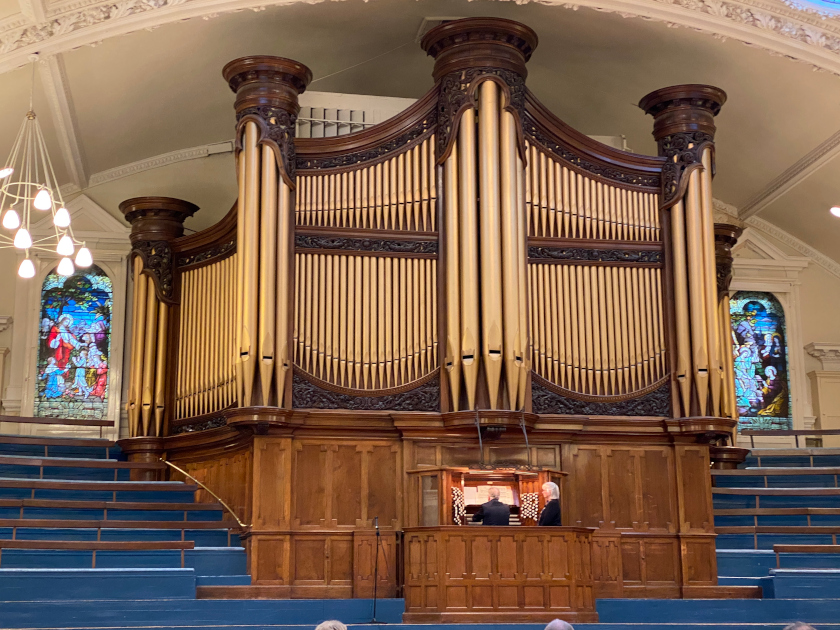
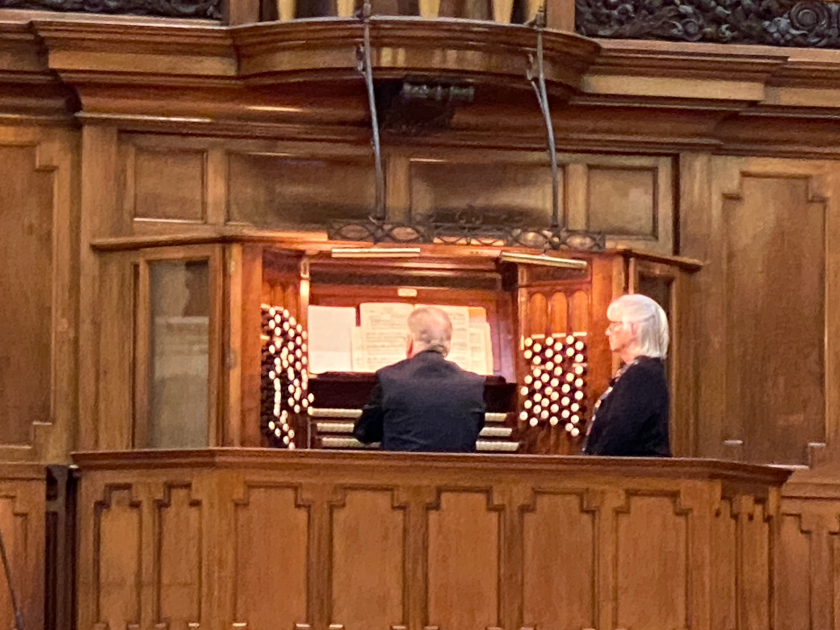
Three musical events enhanced the first week of November: David Hill giving a masterly lunchtime recital on the mighty Binns in Nottingham’s Albert Hall; the CBSO conducted by the irrepressible Kazuki Yamada on top form in Birmingham’s Symphony Hall, with Isata Kanneh-Mason impeccably playing Rachmaninov’s fiendish third piano concerto; and Choral – a film about a small Yorkshire choral society attempting to put on a performances of The Dream of Gerontius during World War 1. I warmly recommend this moving and thoughtful film, directed by Nicholas Hytner and Alan Bennett (who wrote it), which stars Ralph Fiennes, Roger Allam and Alun Armstrong and has Simon Russell Beale in a cameo rôle as a grumpy Elgar, not least for its being filmed at Saltaire – the village created by Sir Titus Salt for his mill workers.
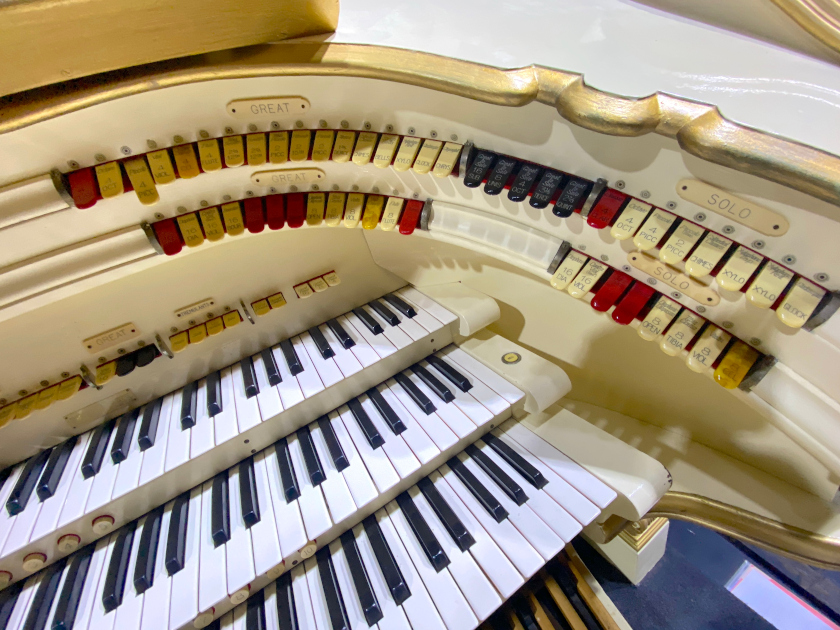
On November 12th I visited four organs in the Burton-upon-Trent area. First was the Wurlitzer in Burton-upon-Trent Town Hall, which is kept in apple-pie condition.
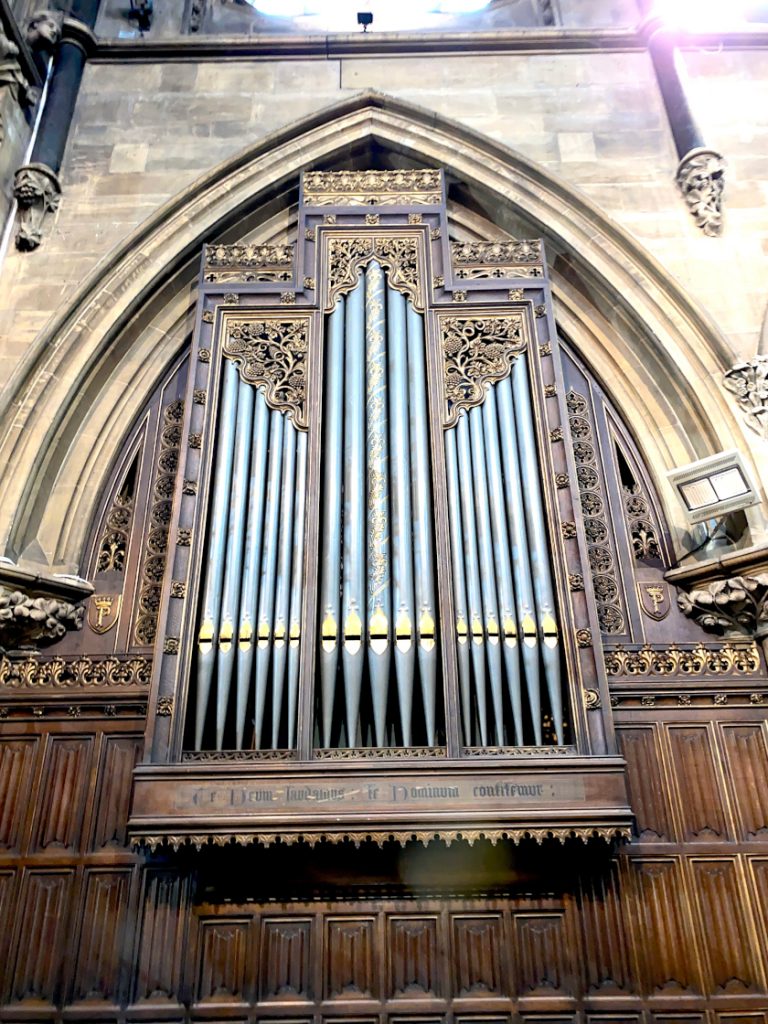
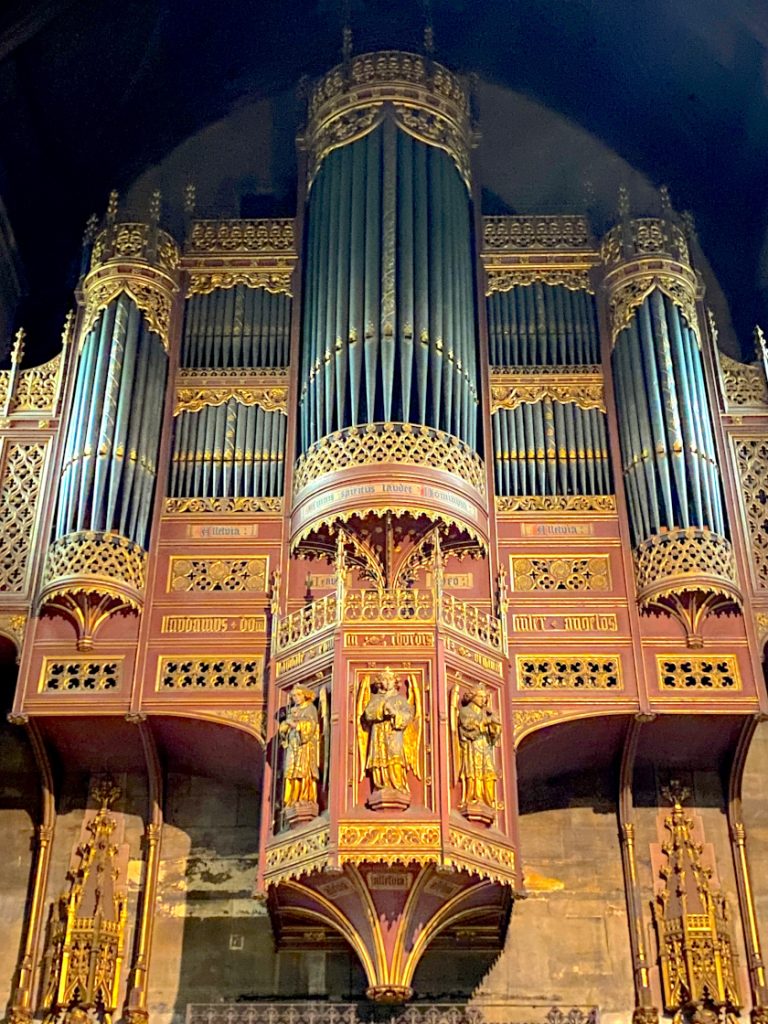
Next (to see the beautiful organ cases only) was St Paul’s church, where once there was a 4-manual Hope-Jones rebuild of a Hill. Of the two contrasting G.F. Bodley cases, the chancel case now contains a transplanted Conacher, whereas in the huge south transept case sits – silent – the Hope-Jones Solo Organ. All rather reminiscent of the Worcester Cathedral organ situation, where the 32ft case in the south transept still awaits the promised second organ.
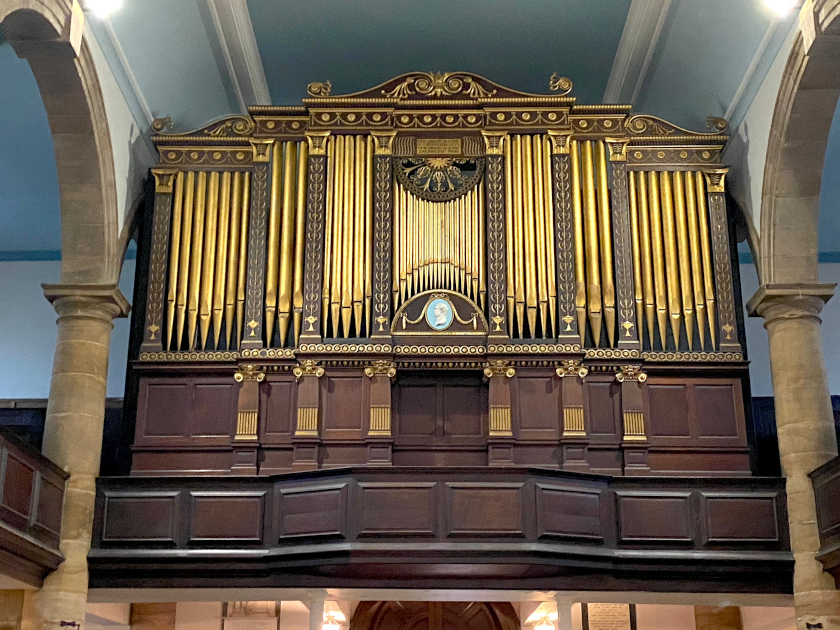
St Modwen’s church also had a 4-manual organ in the Hope-Jones style, though built in 1901 by Norman & Beard. There is most unusual west-end case, originally by Snetzler and cunningly extended. The organ now is a distinctly successful 1972 HN&B, somewhat in the Gloucester cathedral mould, and akin to successful small ‘multum in parvo’ organs HN&B installed elsewhere (such as Carrs Lane chapel in Birmingham) in the late 1960s and very early 1970s.
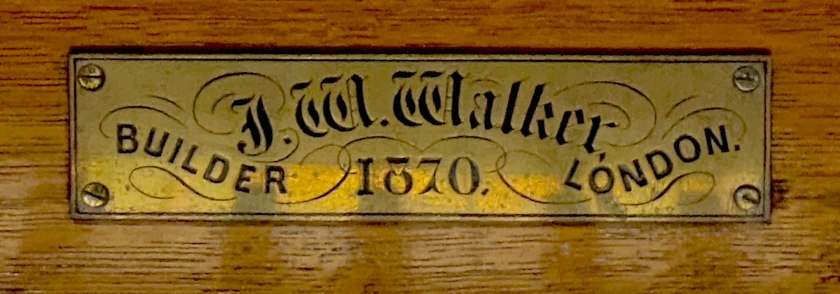
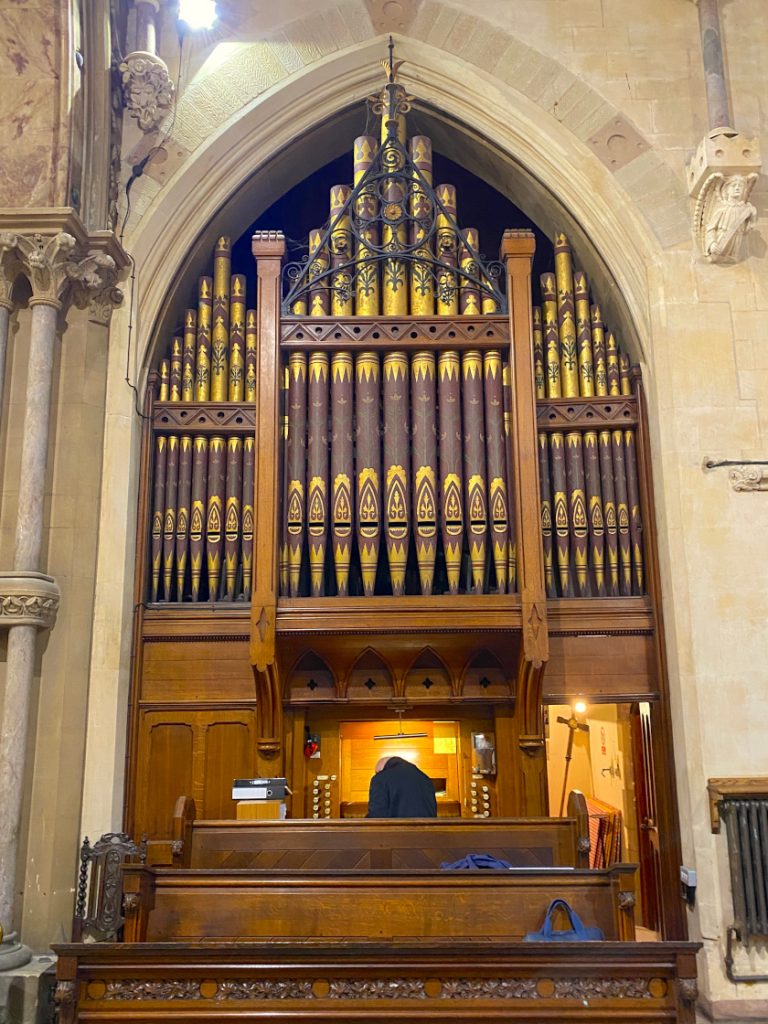
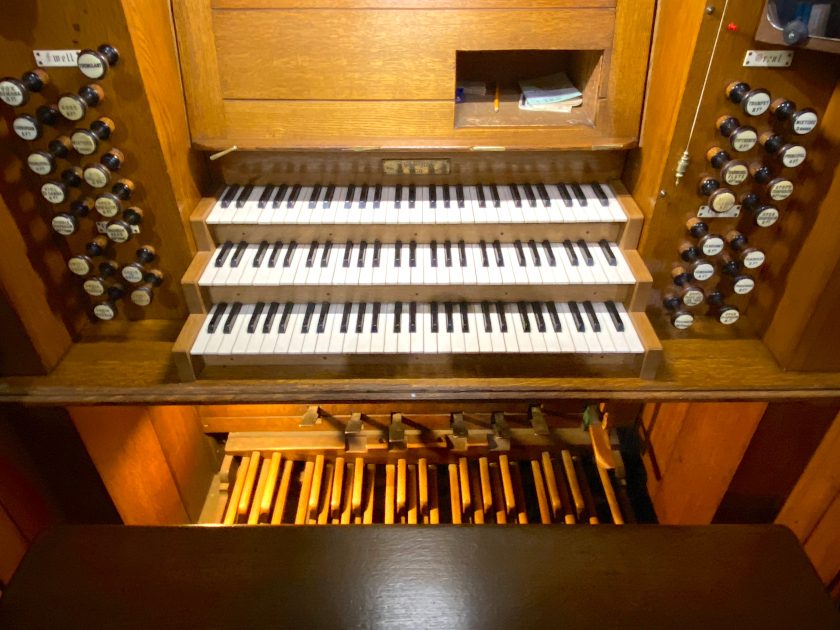
Outside Burton, in St Mark’s, Winshill, is found a remarkable 3-manual 1870 J.W. Walker which is little-known. Despite a heavy action and a disappointing Great Mixture, this is a fine instrument, deserving to be better known.
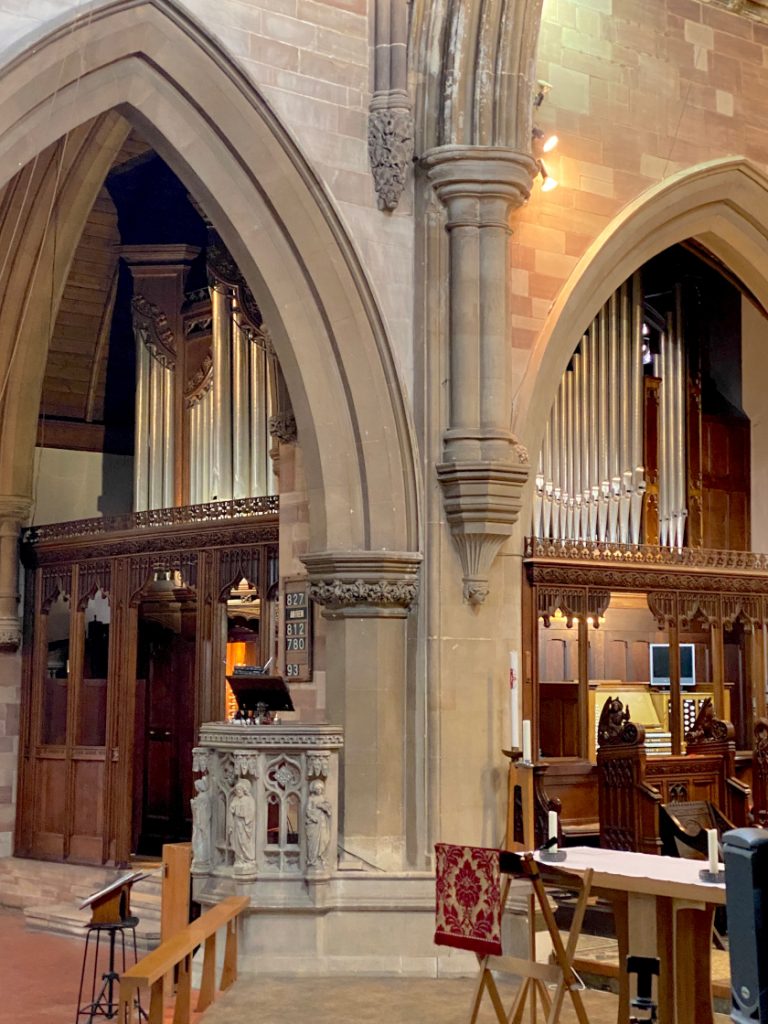
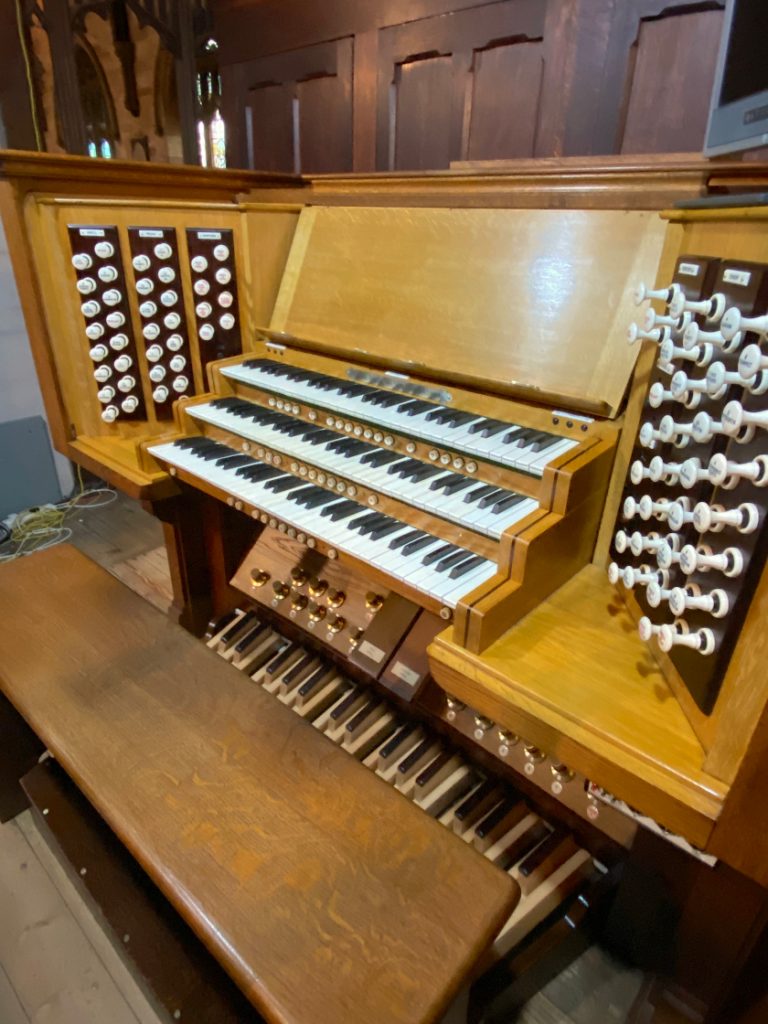
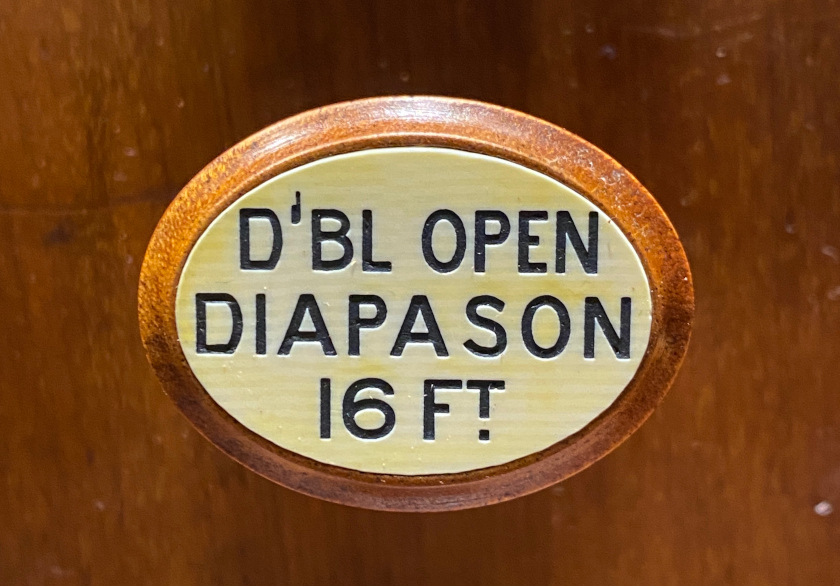
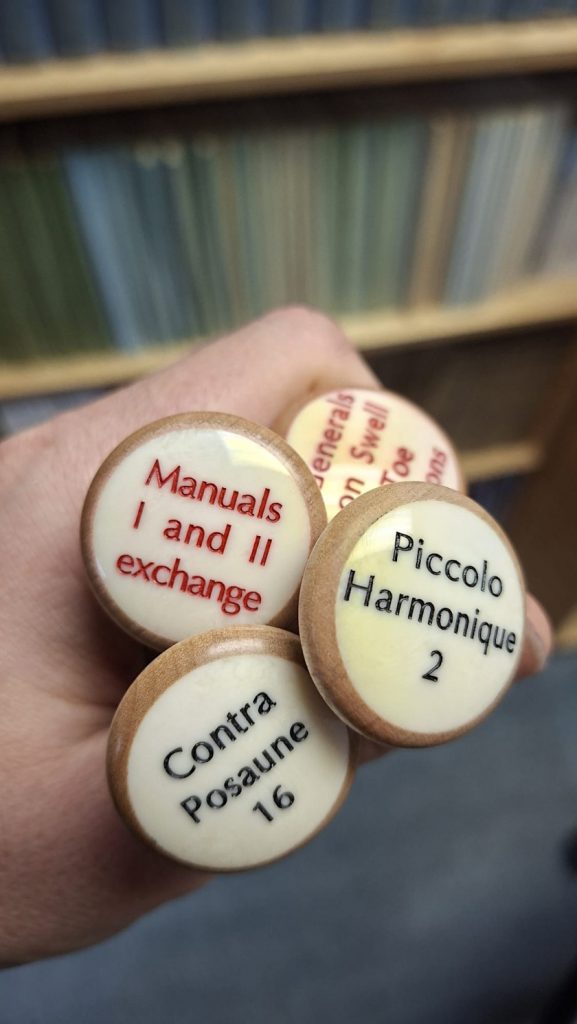
One of my projects (St Mary’s Moseley, Birmingham) was completed this month; I visited on November 18th to sign it off. Originally a Henry Jones organ from 1885, it was rebuilt by Nicholsons in 1966 and now has been again by Clevedon. The Nicholson console has been rebuilt and a great deal of work was carried out to the organ, both to reclaim something of its Henry Jones tonality and also to project its tone better down the nave, which totally lacks resonance. The Henry Jones console remains, as a museum-piece, and a handful of stolen stop-knobs (of ?unique oval shape) have been replaced by matching new ones, crafted by Renatus of Bideford.
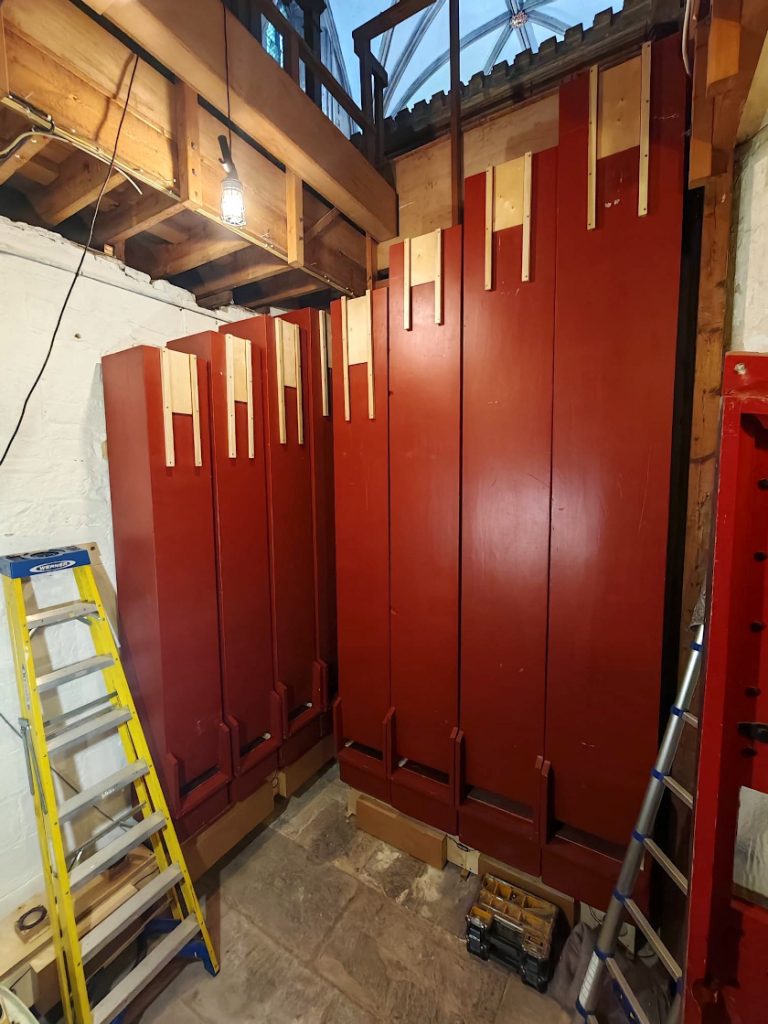
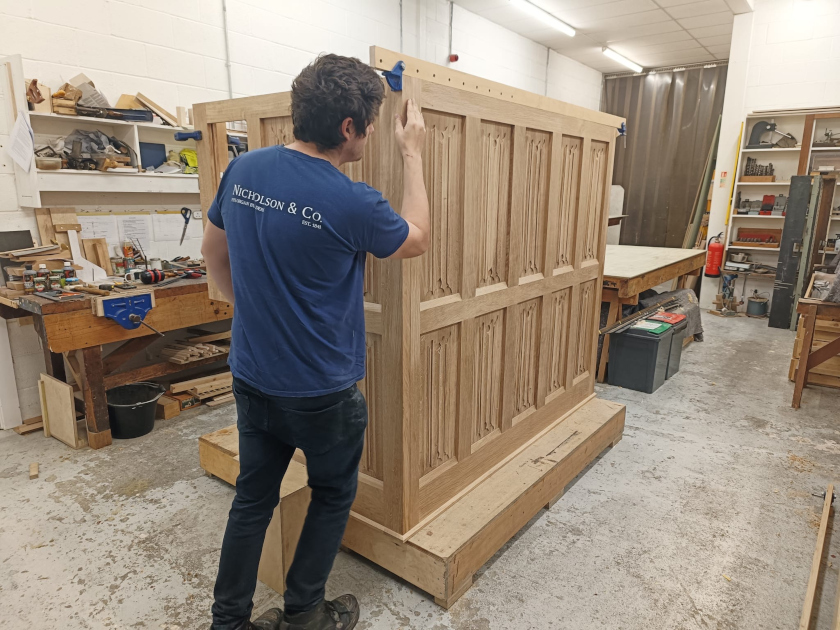
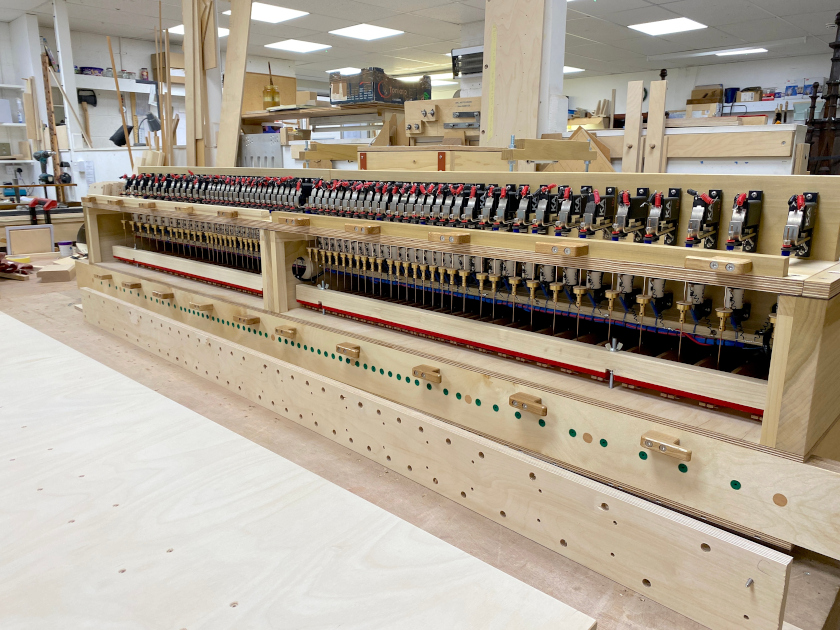
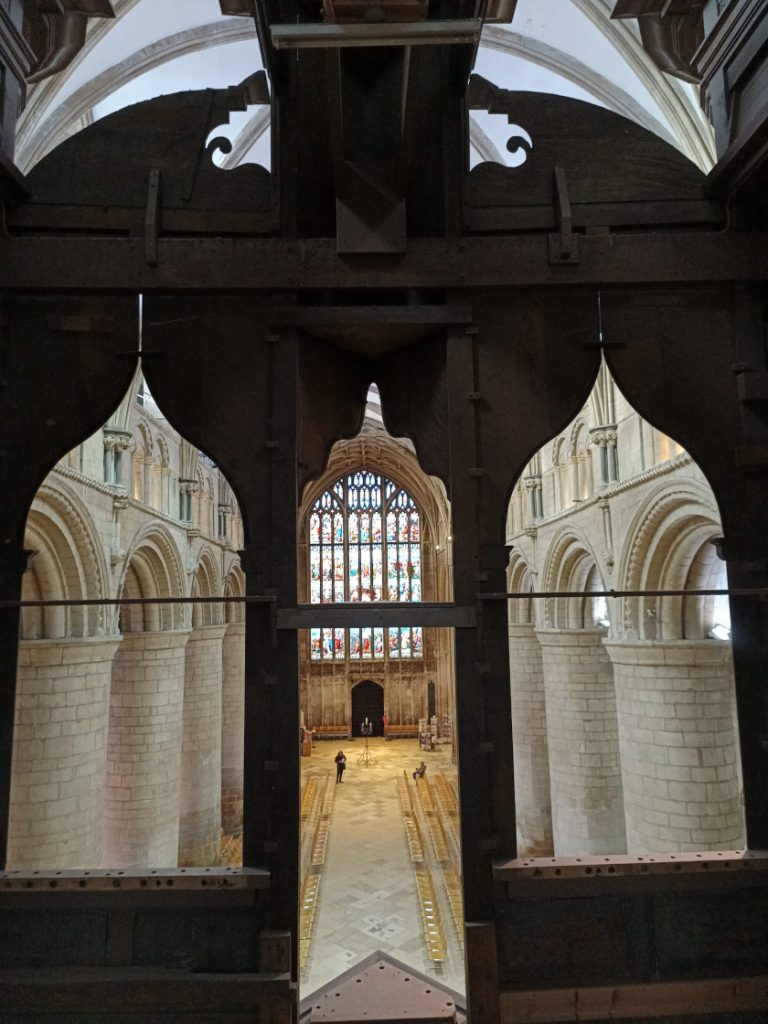
During the month I have been liaising with Nicholsons and Gloucester Cathedral about progress with the new organ, as I have been constantly since October 2024. The largest pipes (the 1831 Bishop Open Wood pipes, now restored) have recently been installed inside the Screen, the console has been started (note the linenfold panelling) and the Swell soundboard has just been finished. All the pipes are made, all the flues voiced, all the chests and wind system made, along with the Swell shutters and parts of the building-frame. Installation in earnest begins in January.