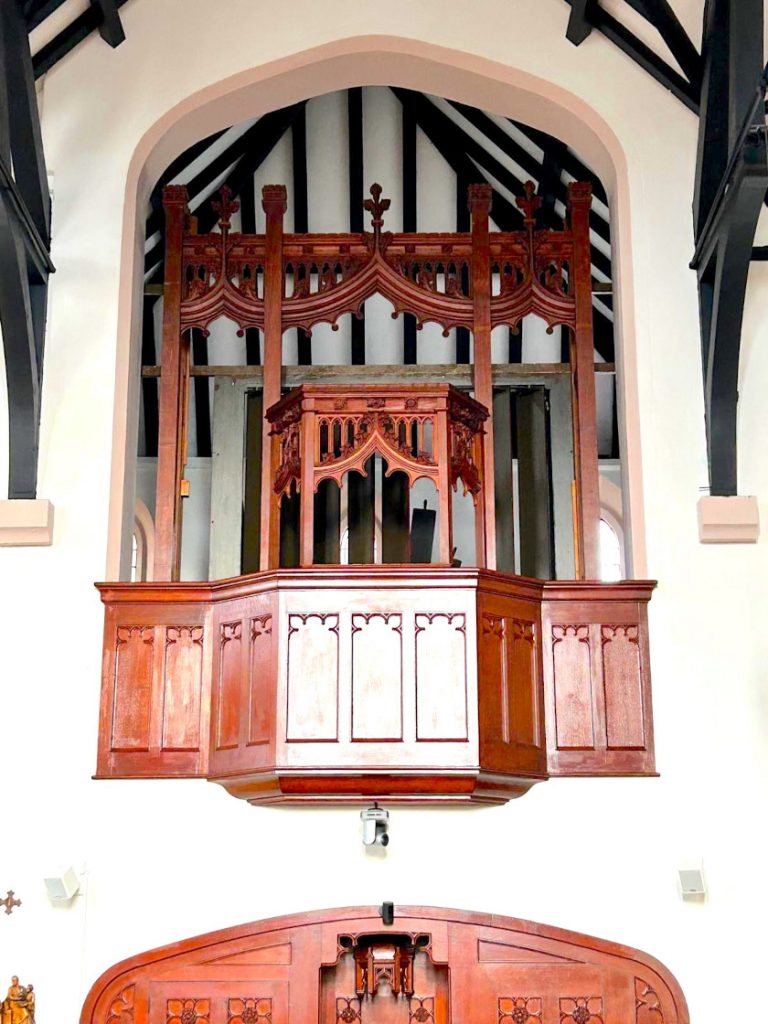
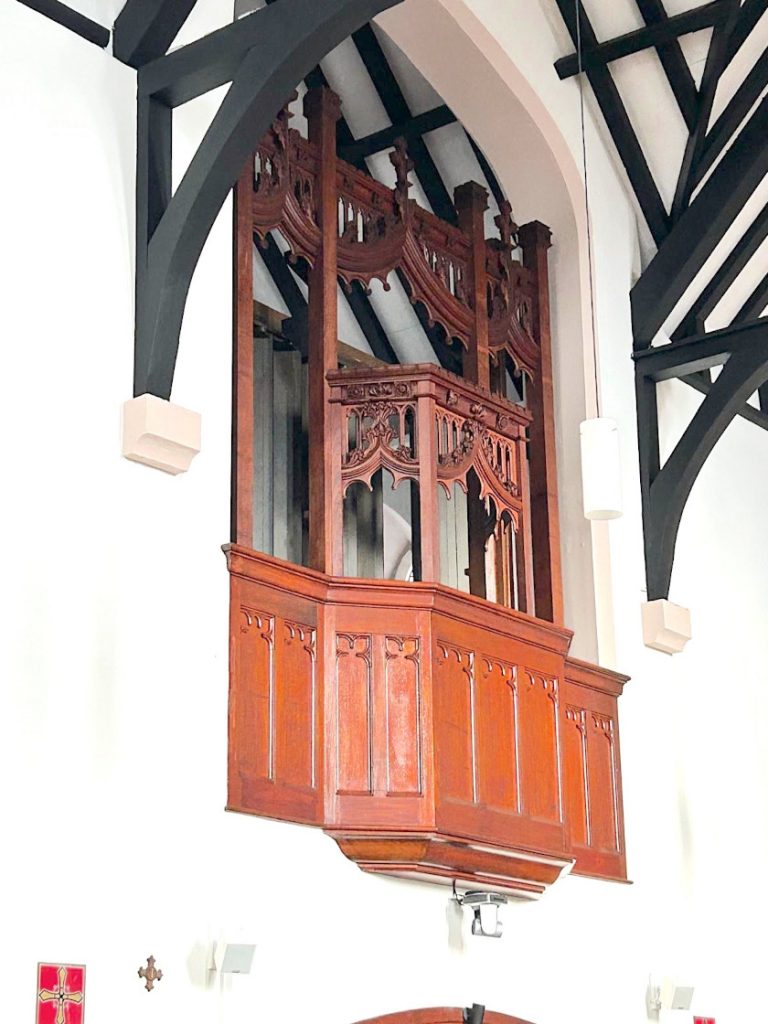
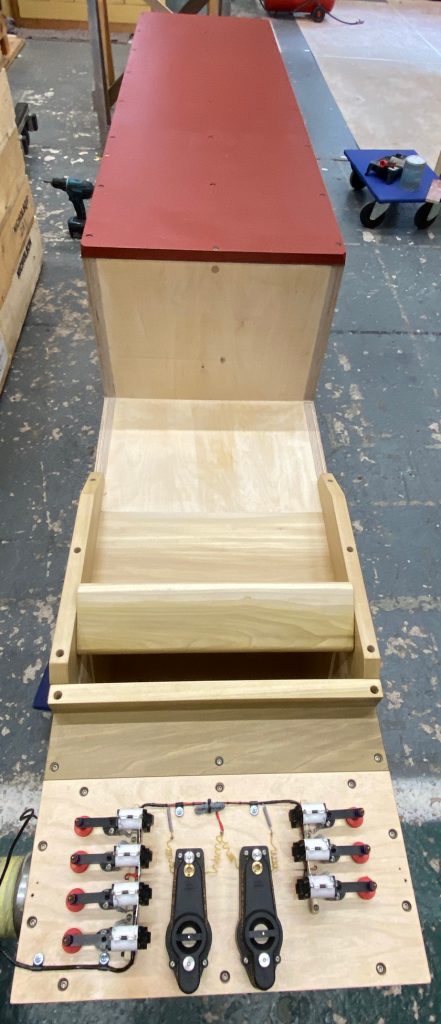
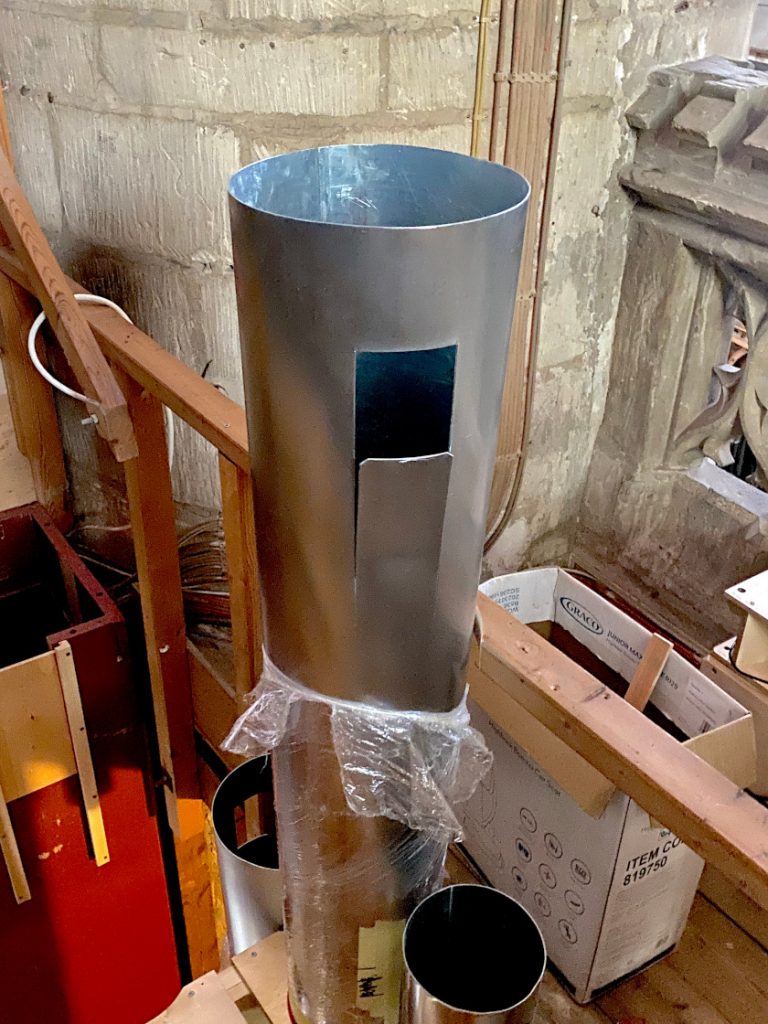
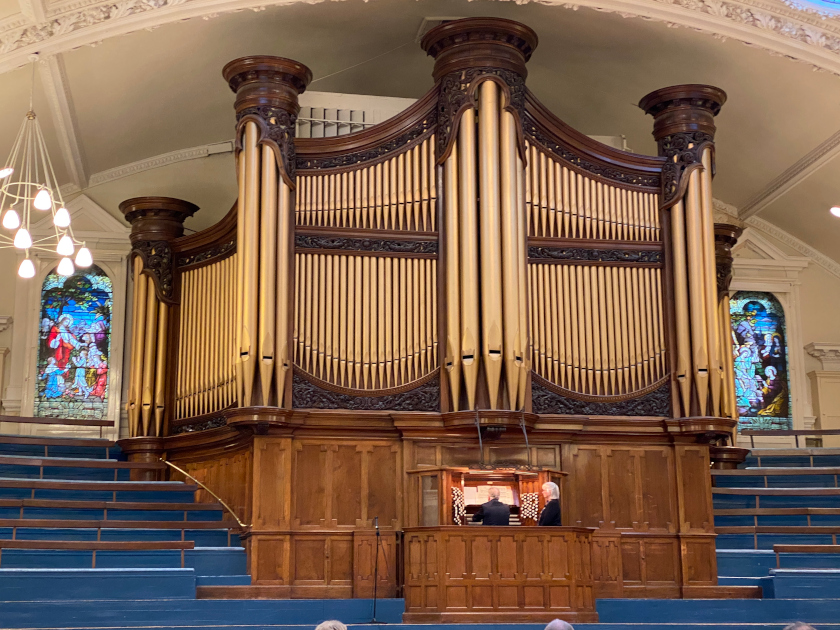
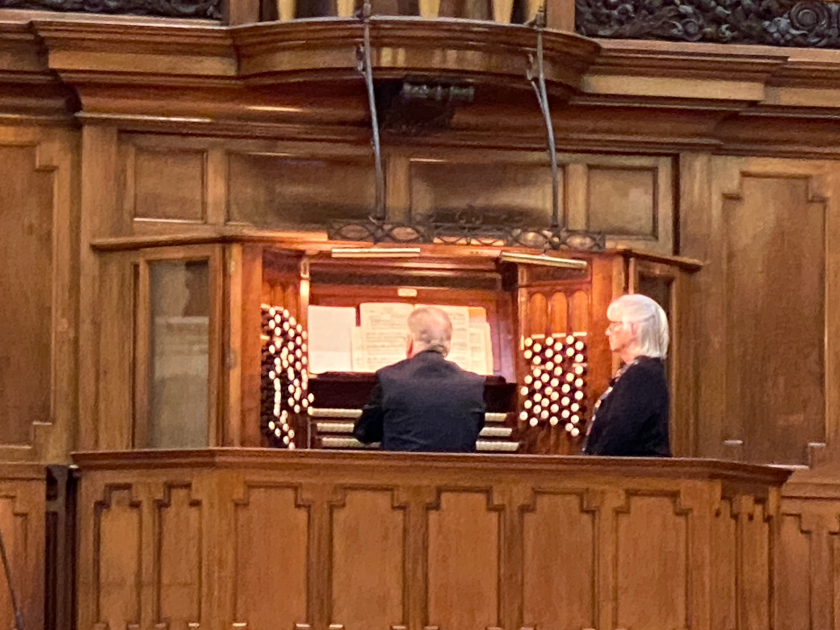
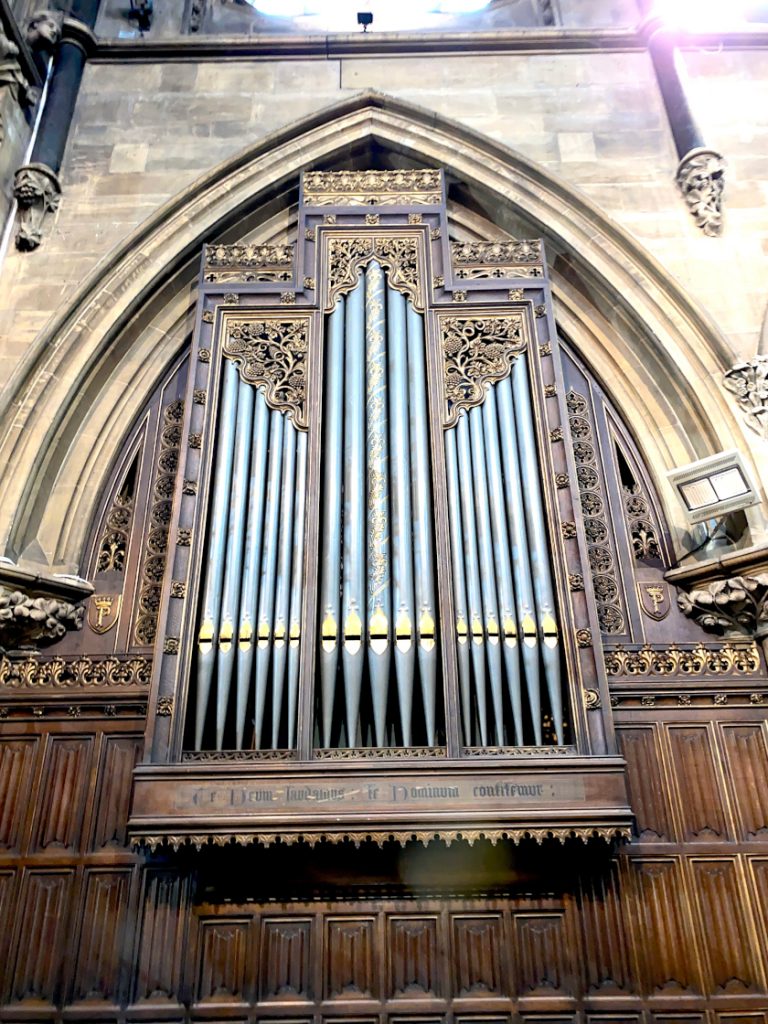
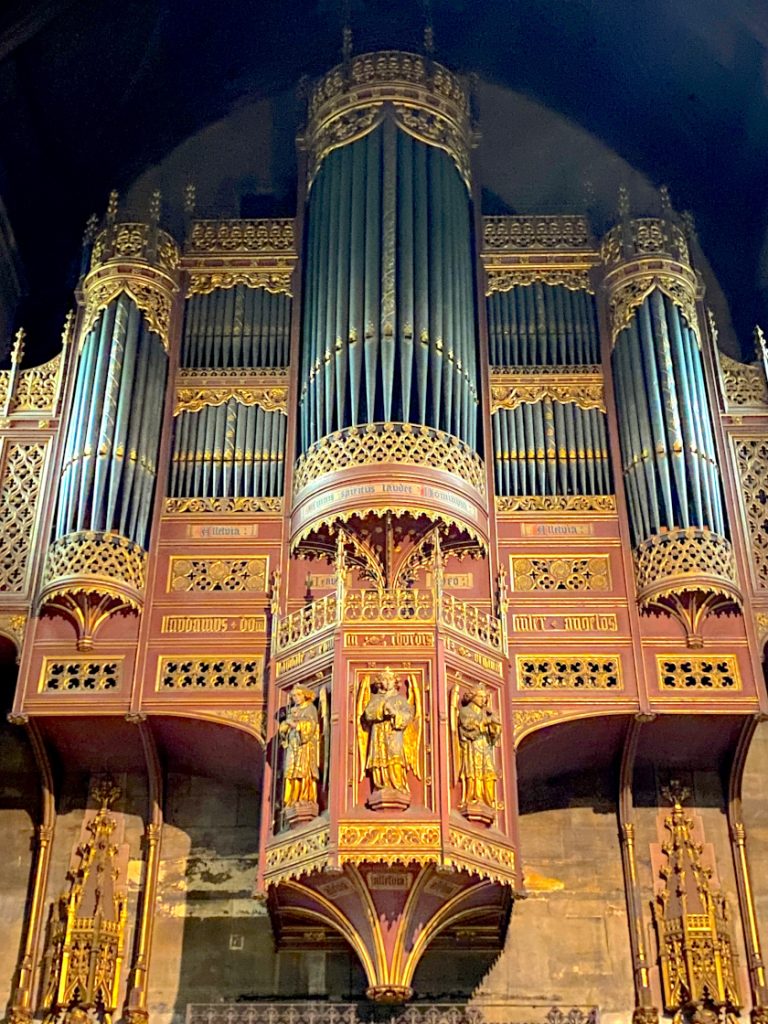
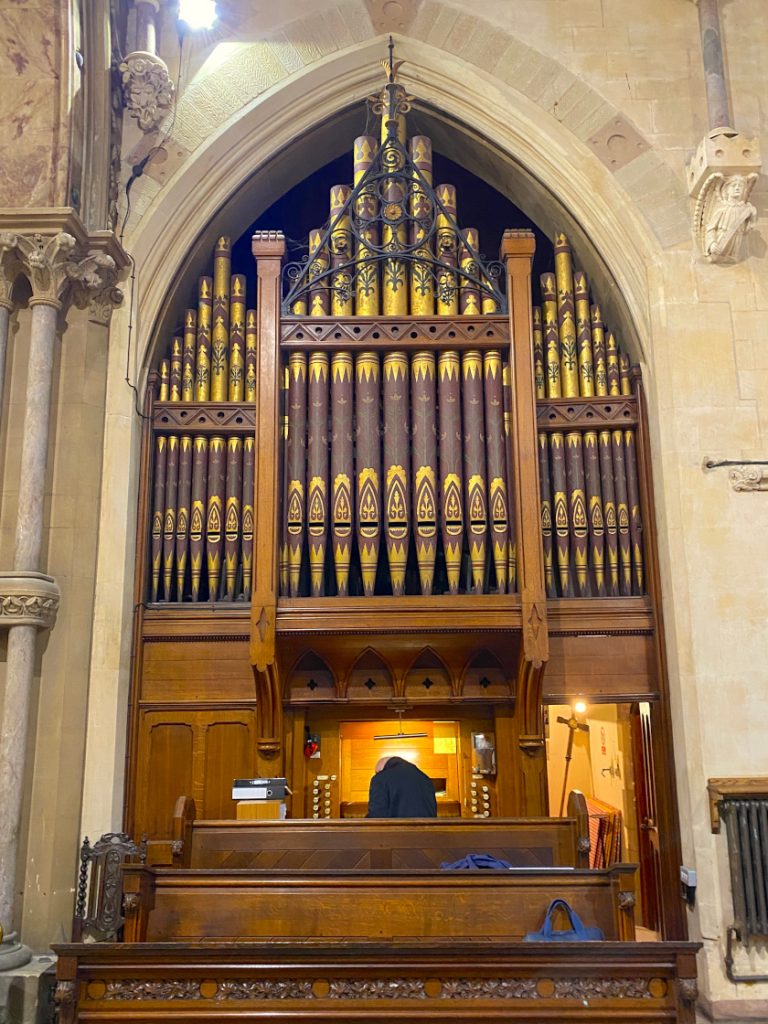
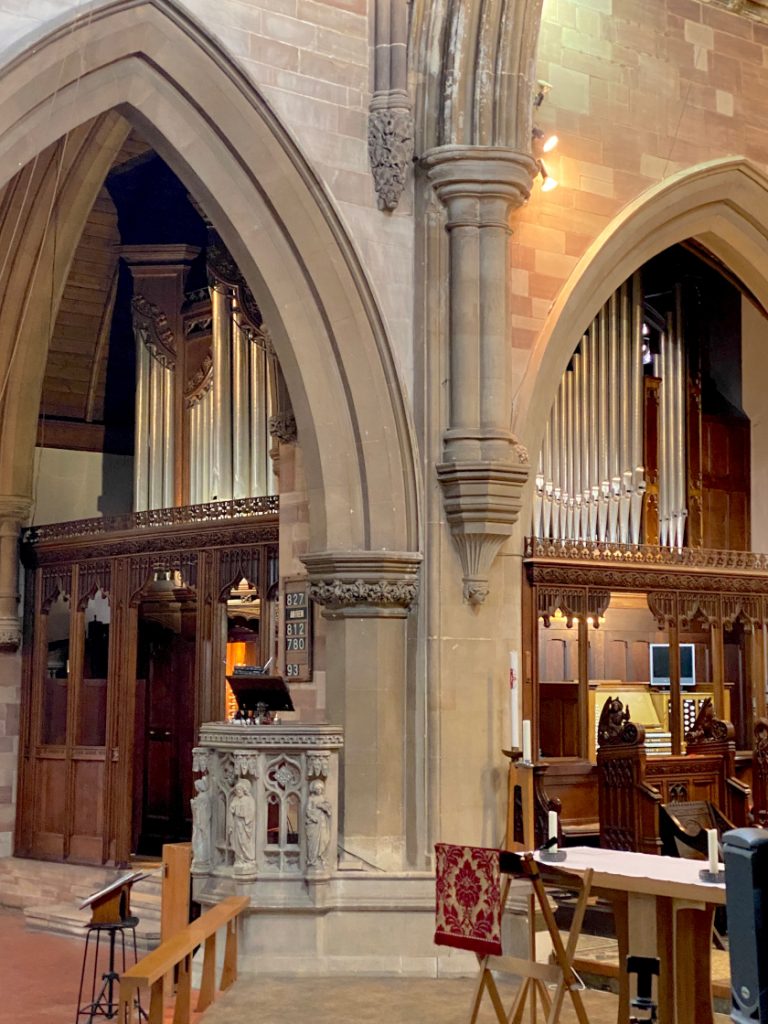
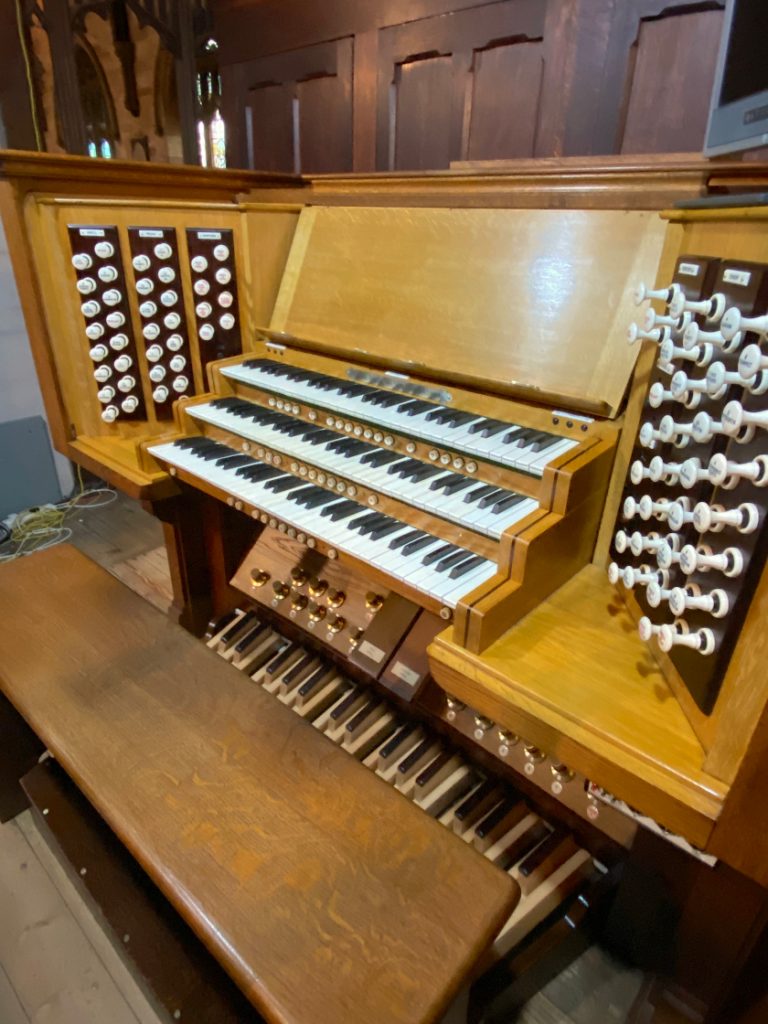
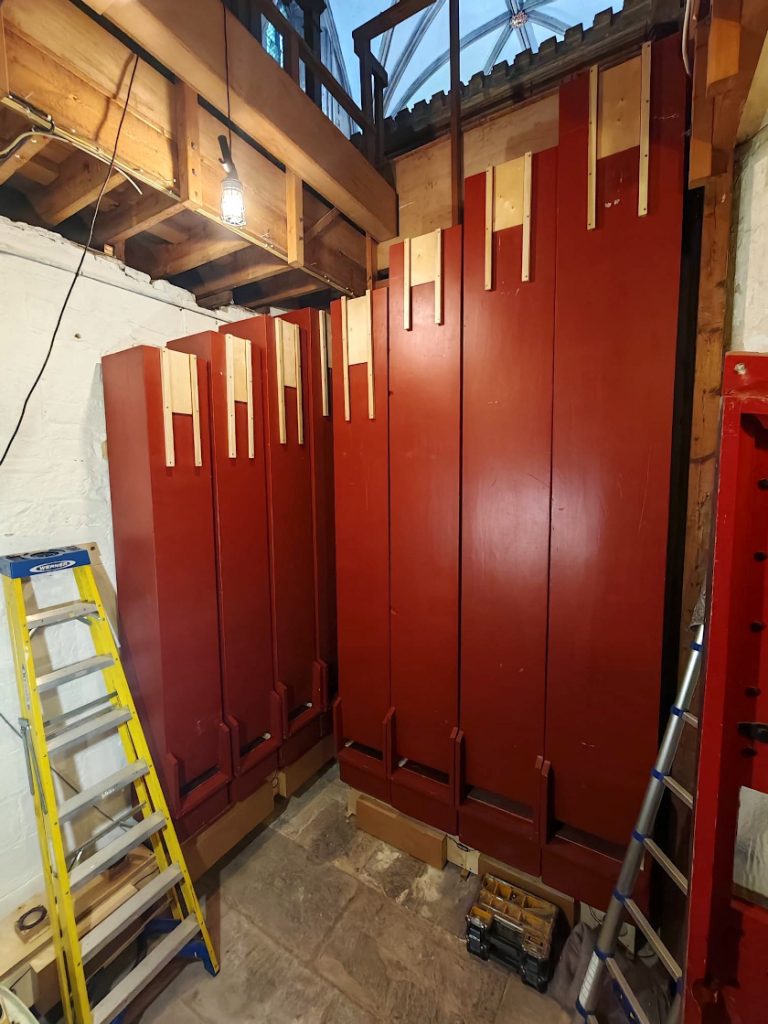
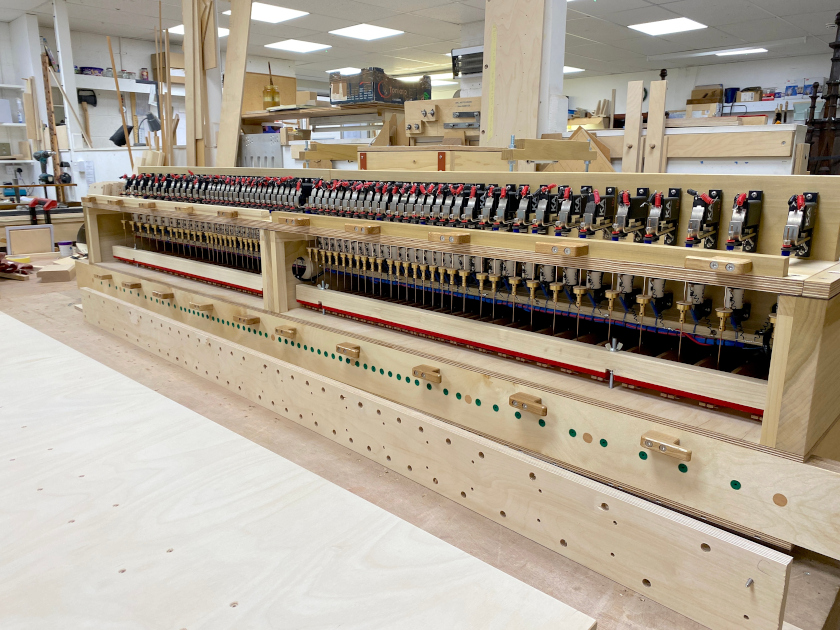
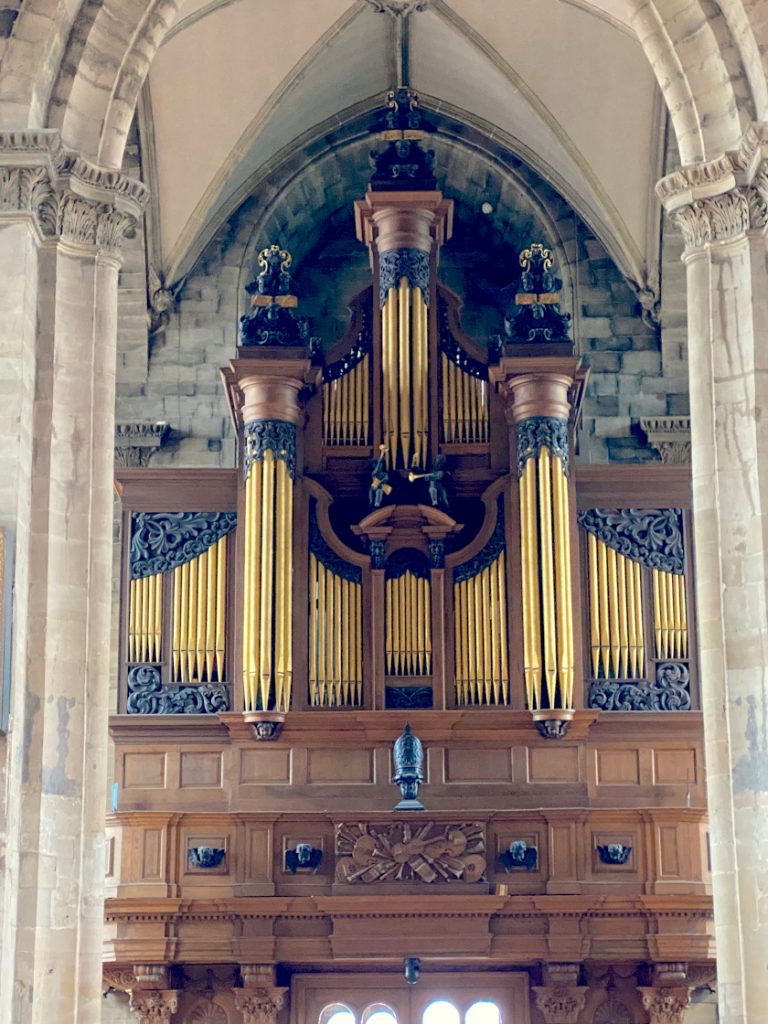
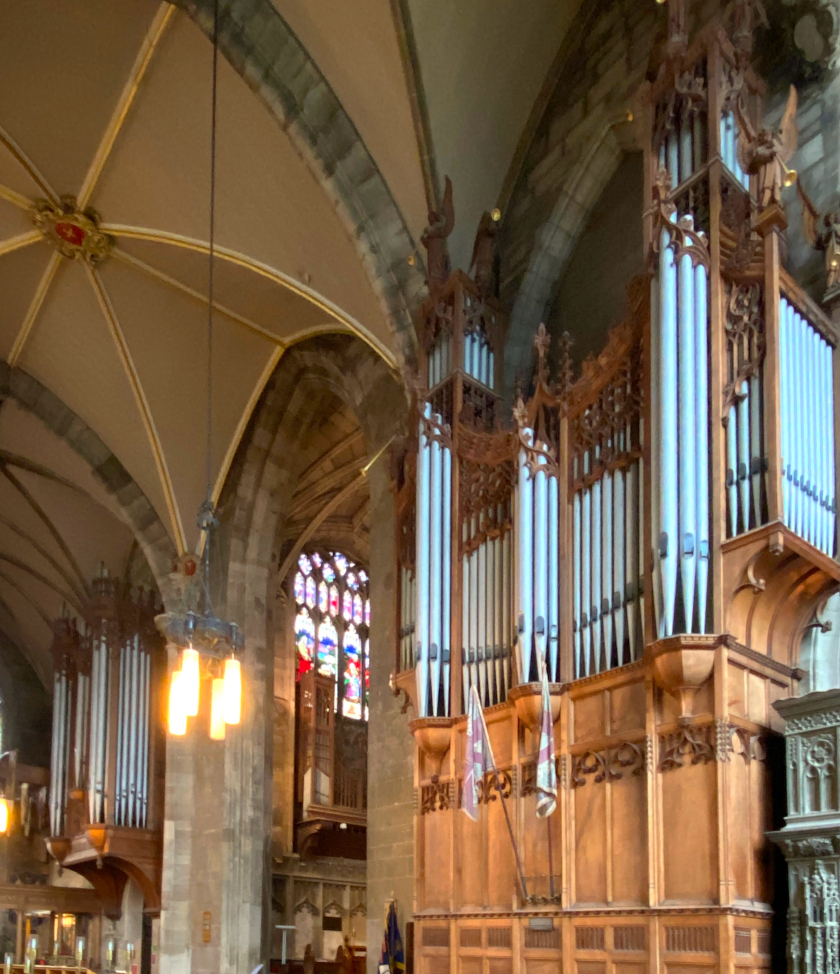
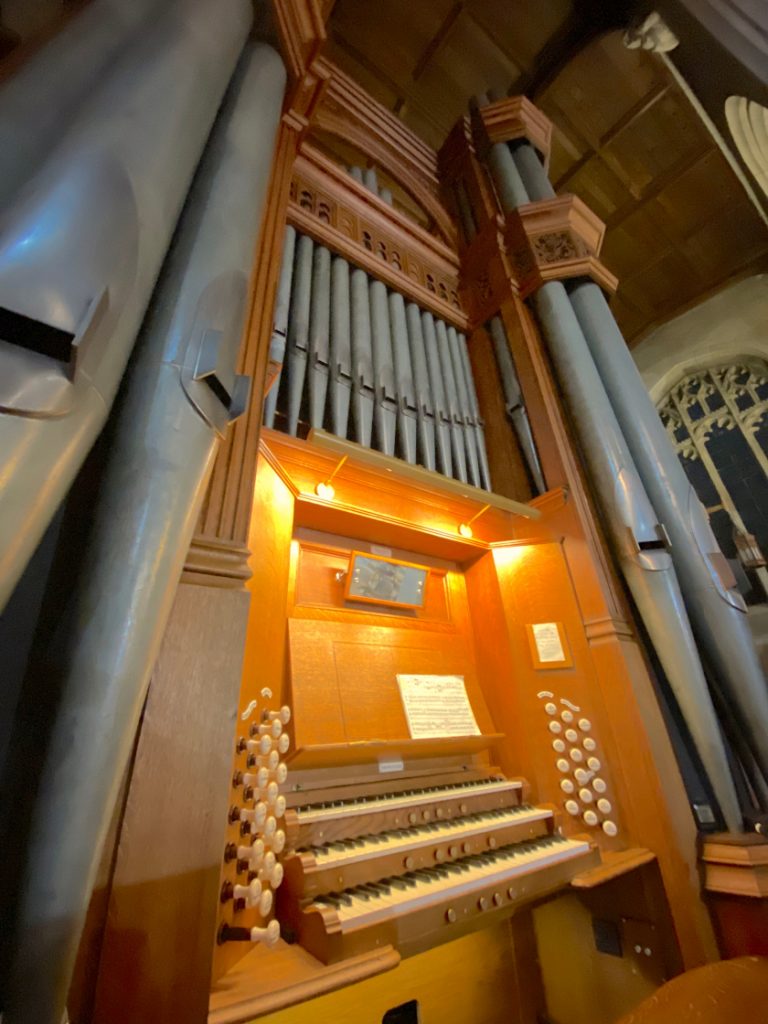
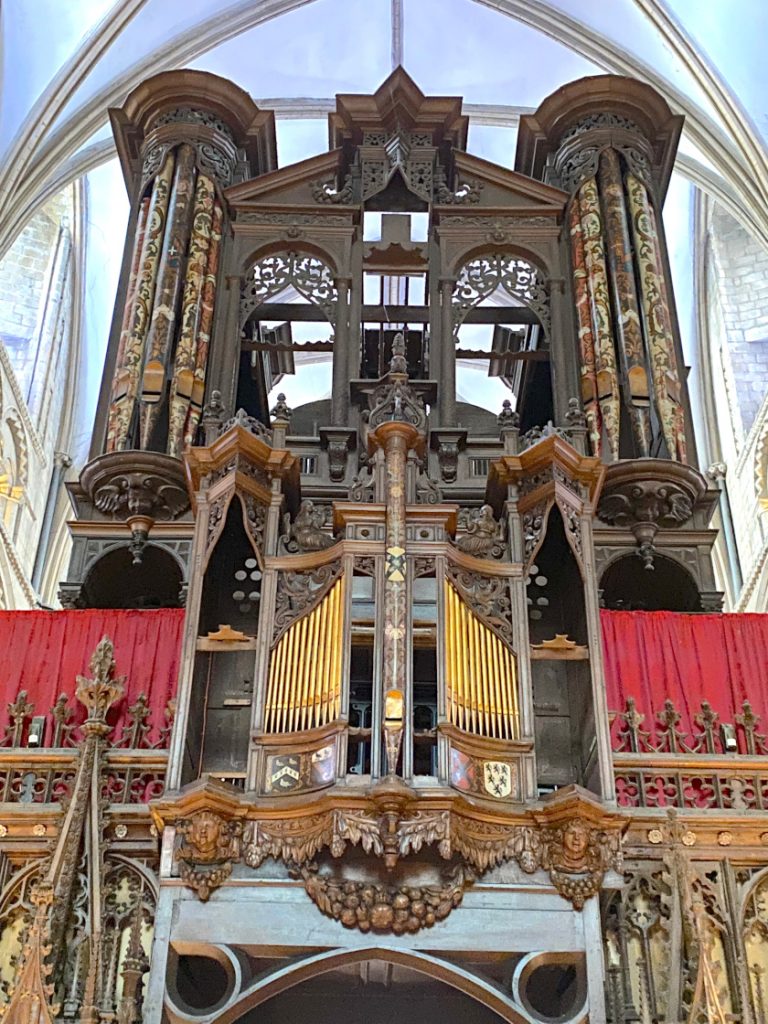
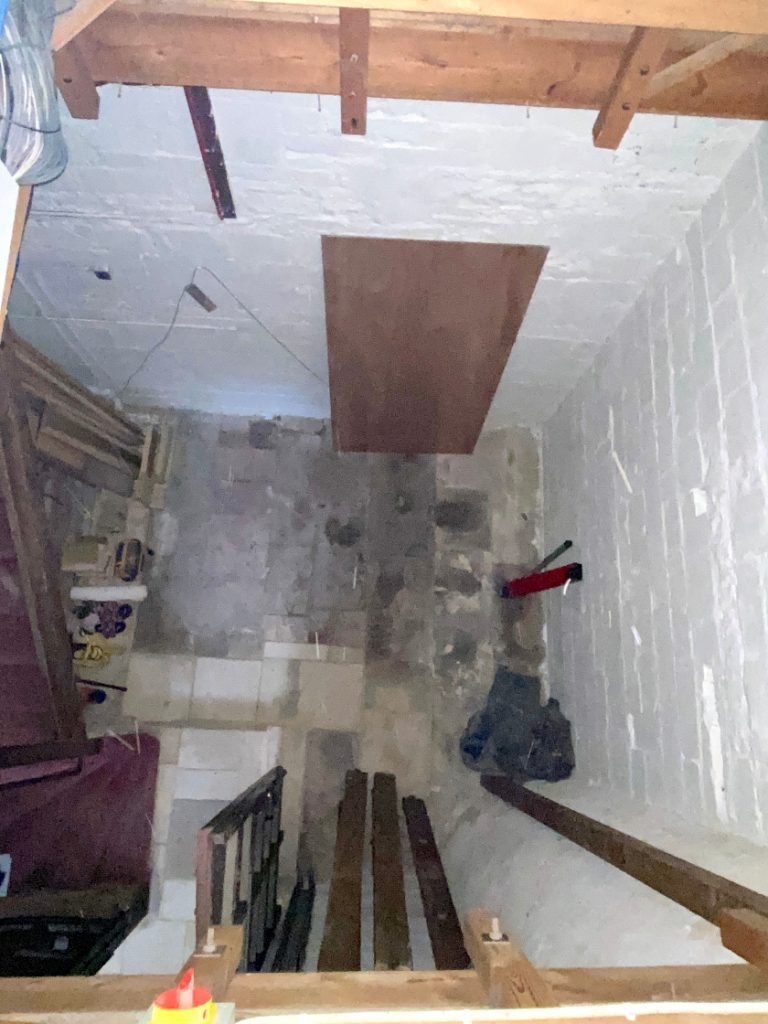
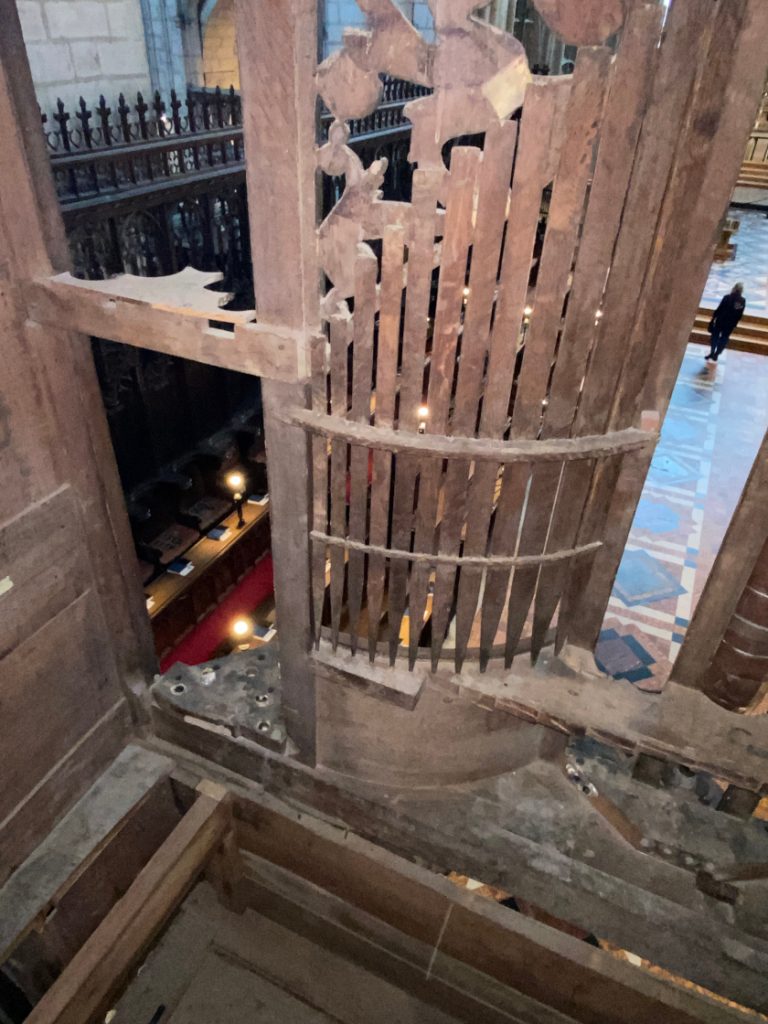
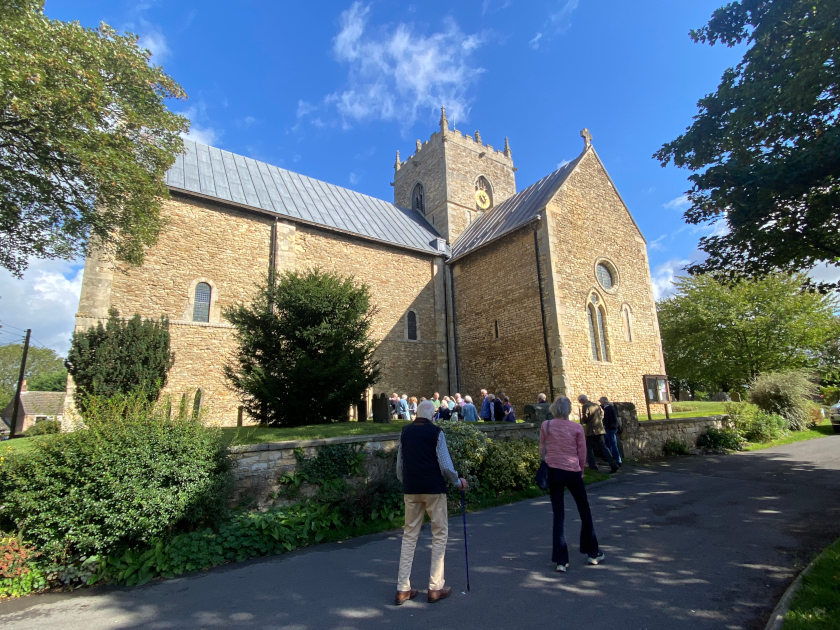
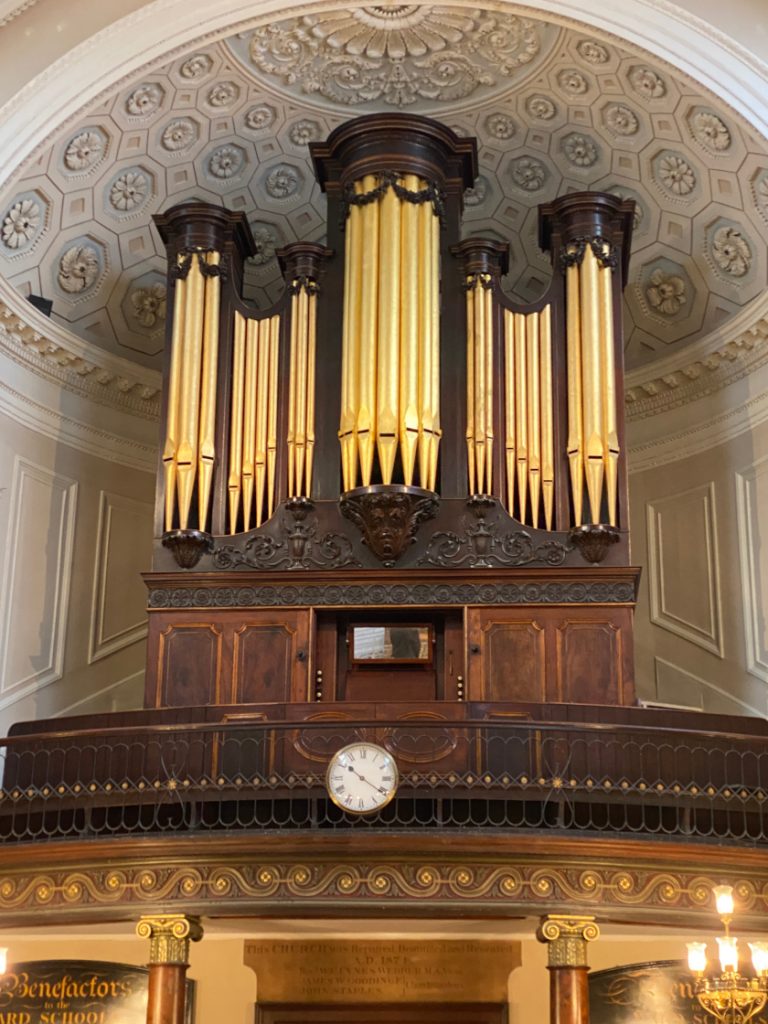
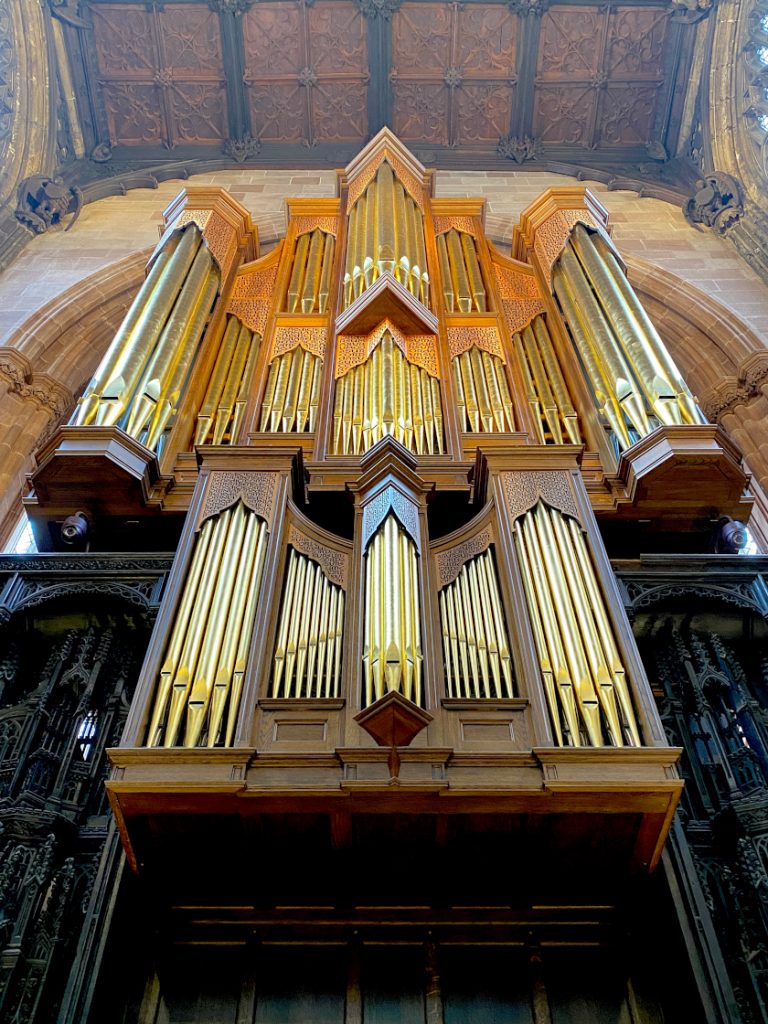
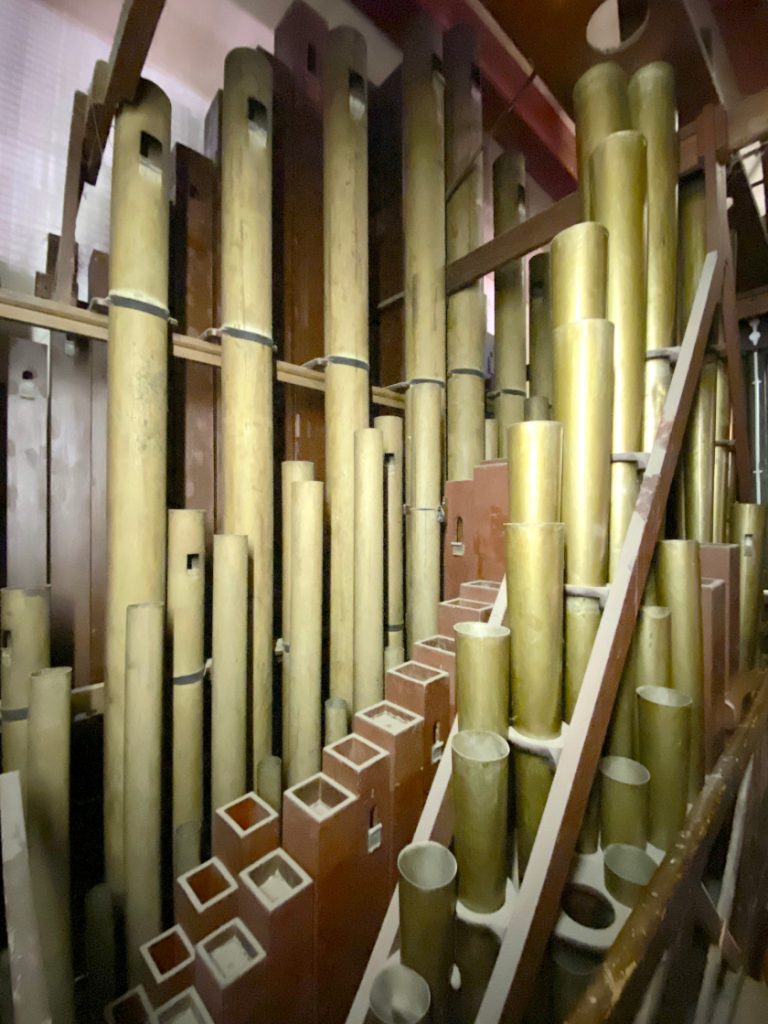
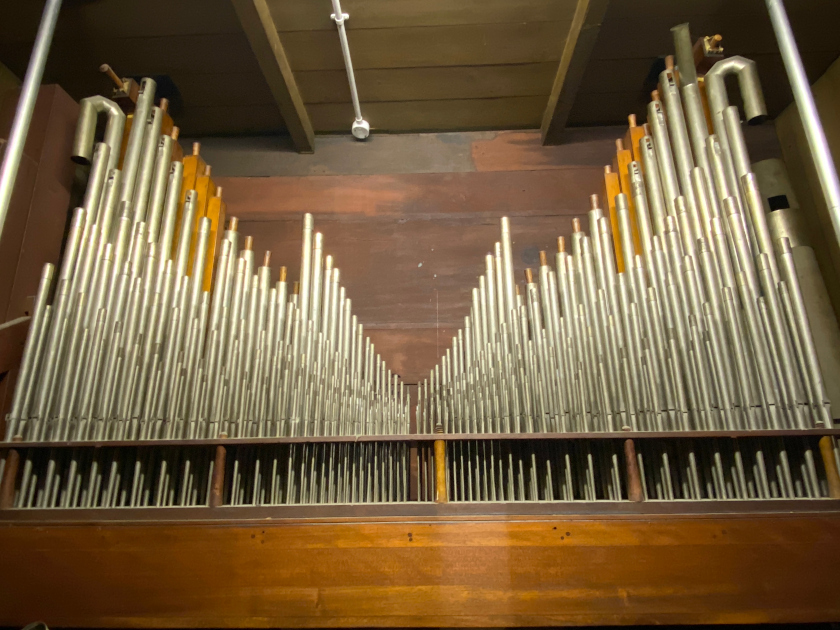
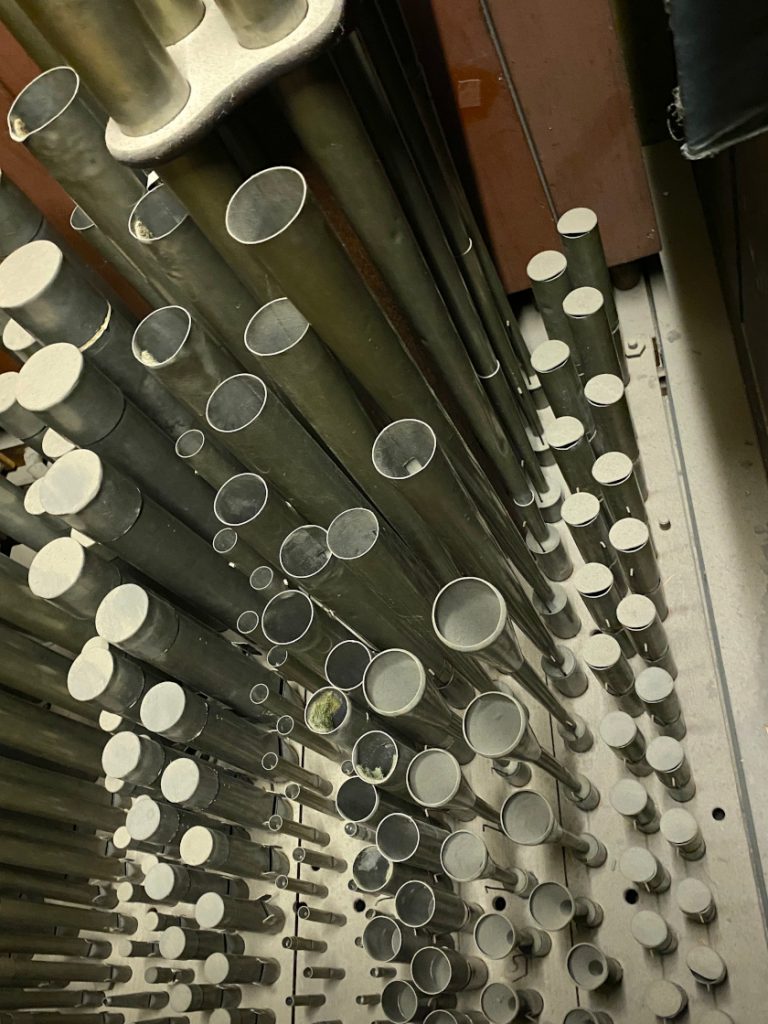
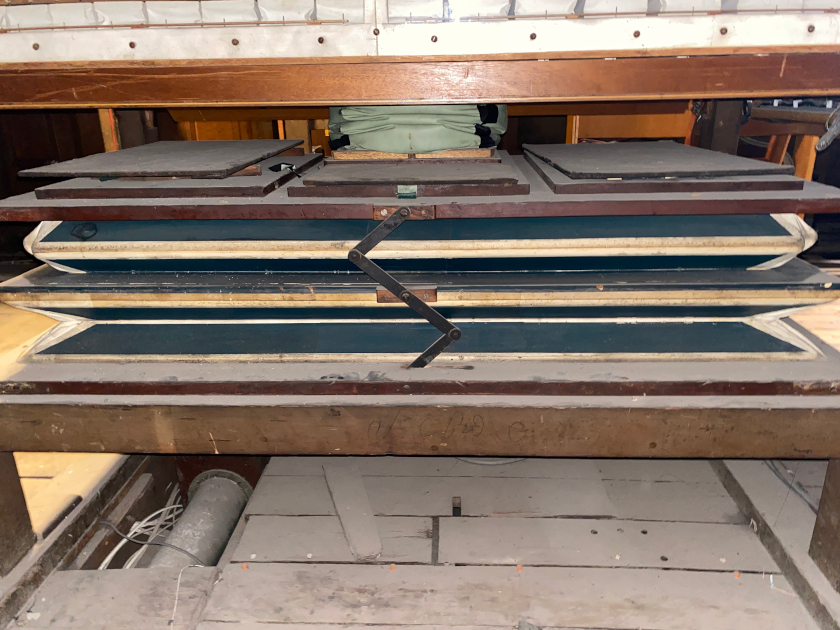
[Section of Southwell Minster 1892 case now at Ilkeston Catholic church]
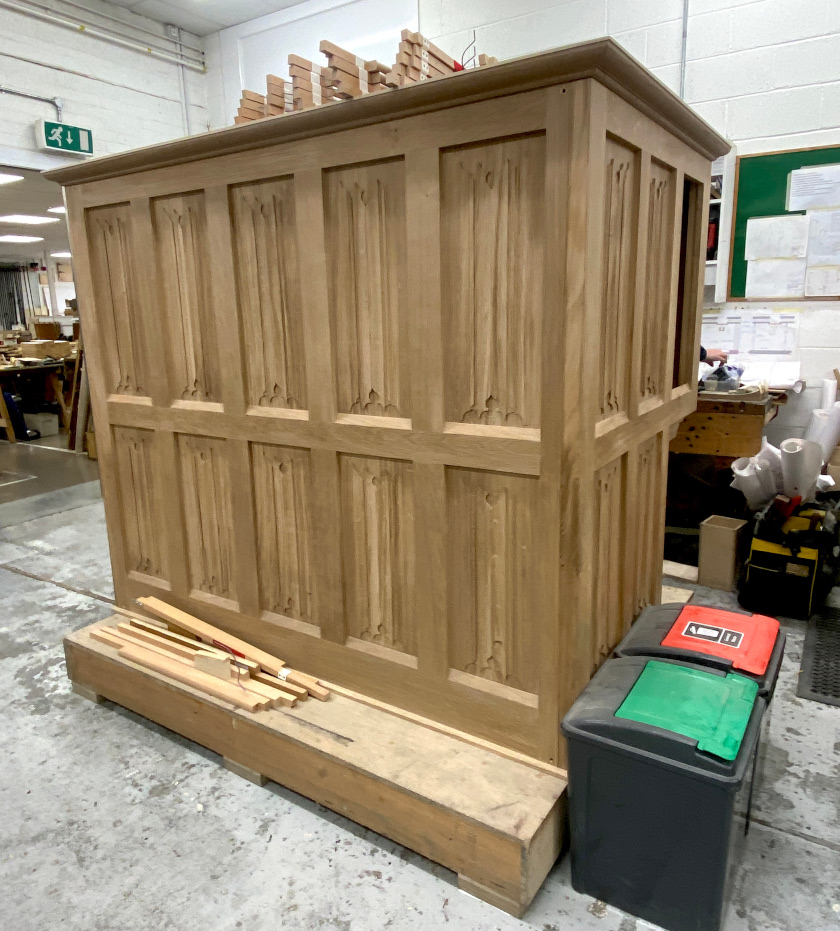
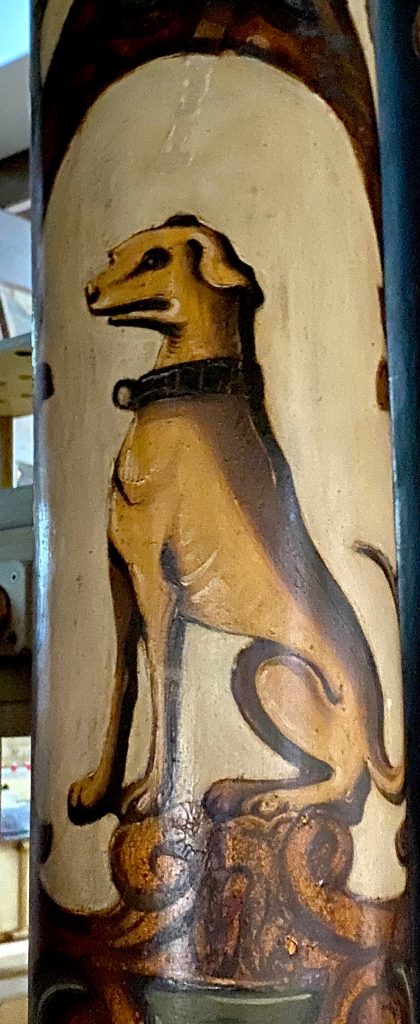
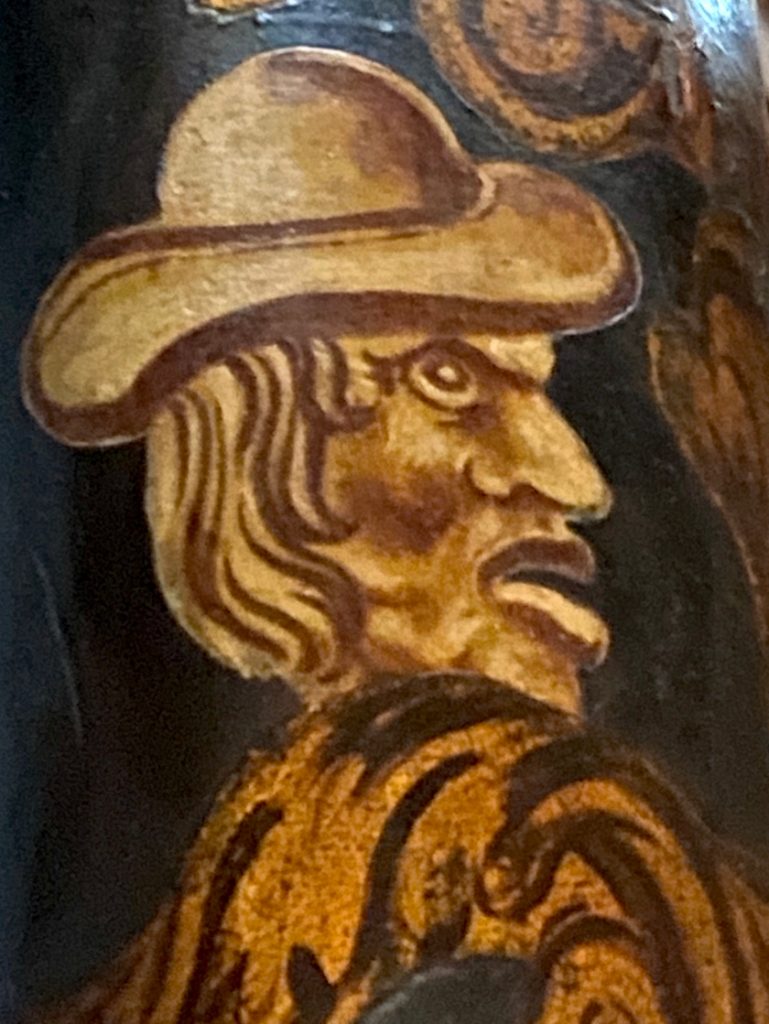
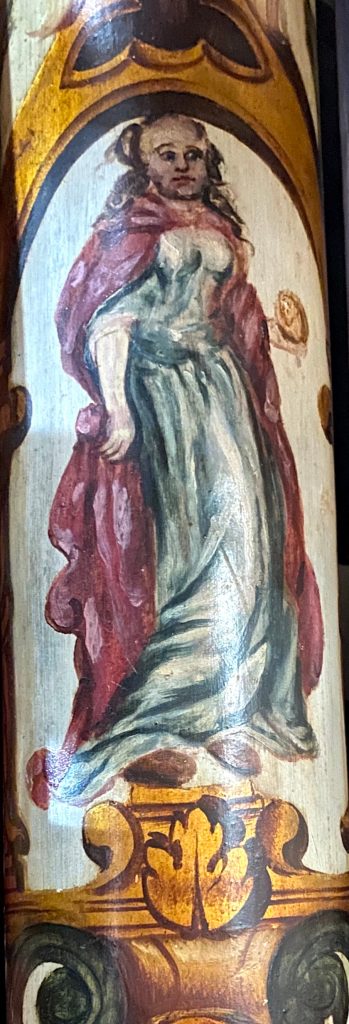
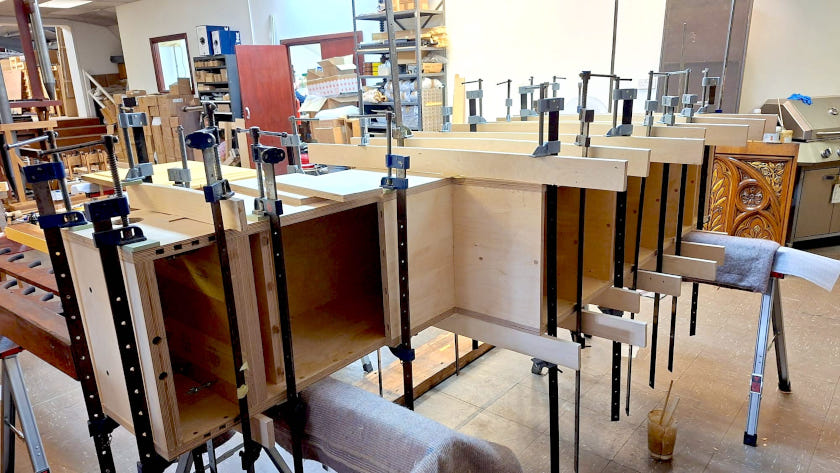
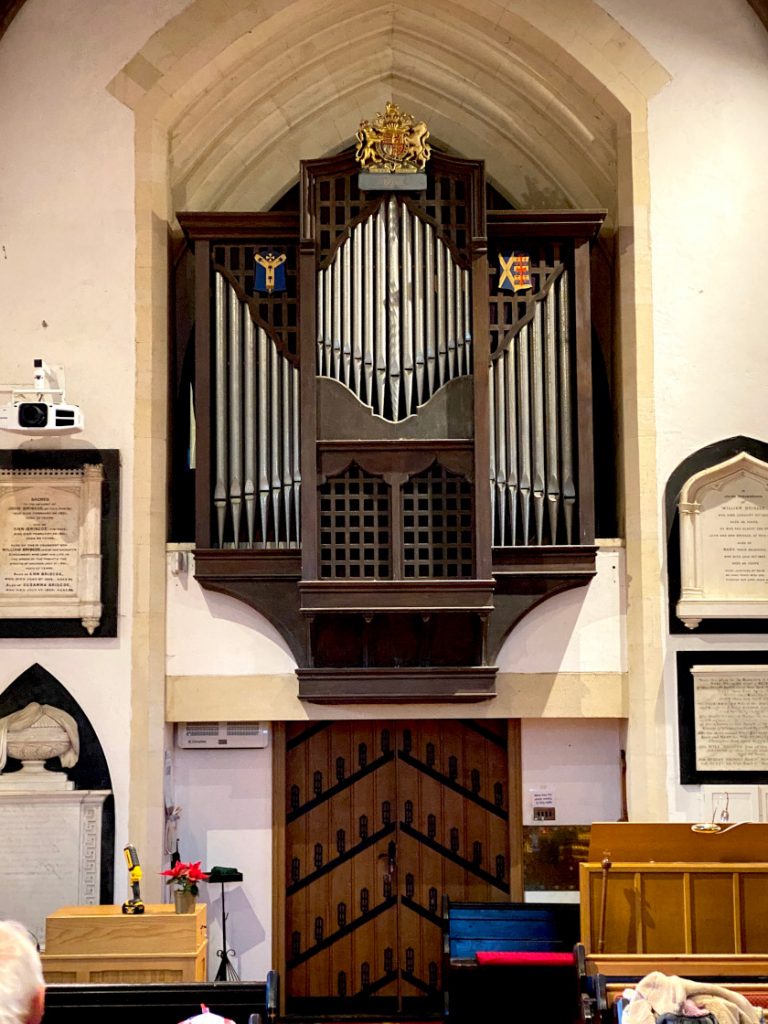
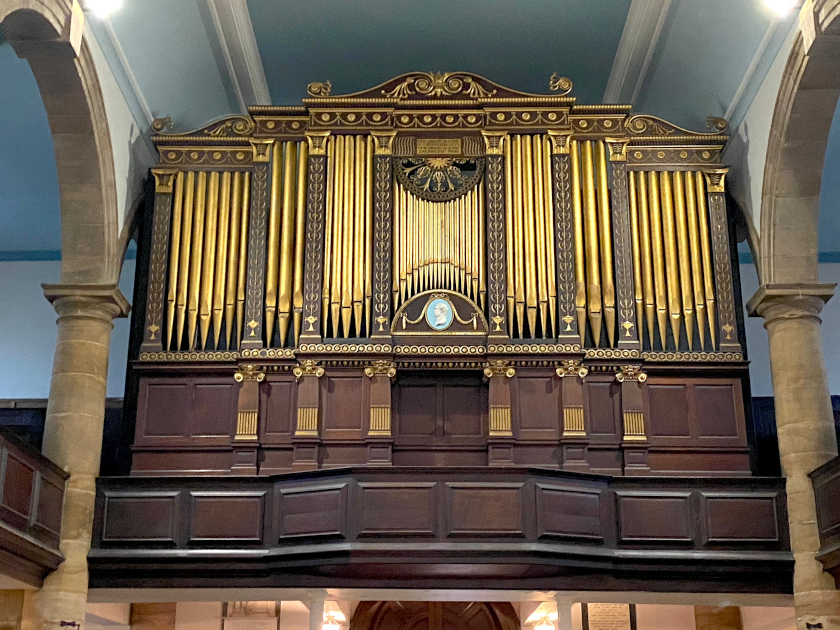
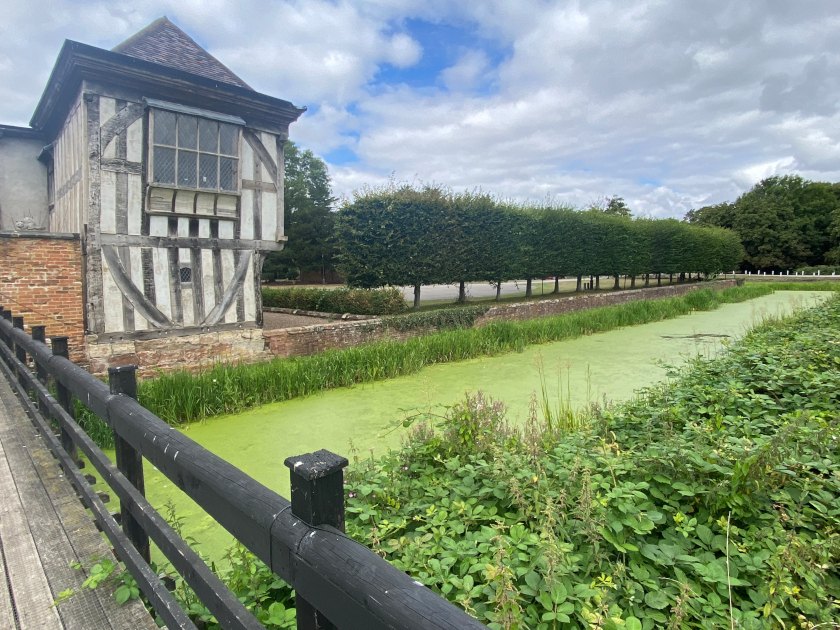
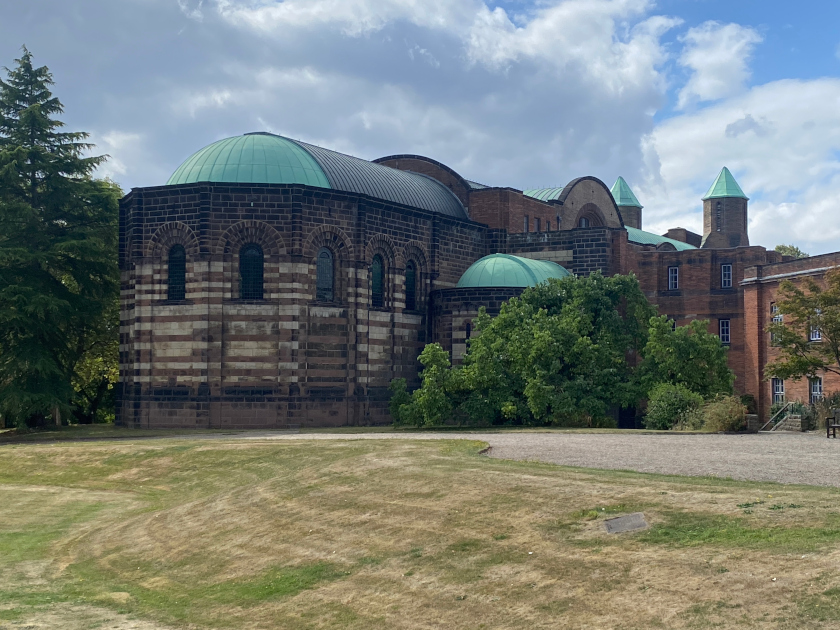
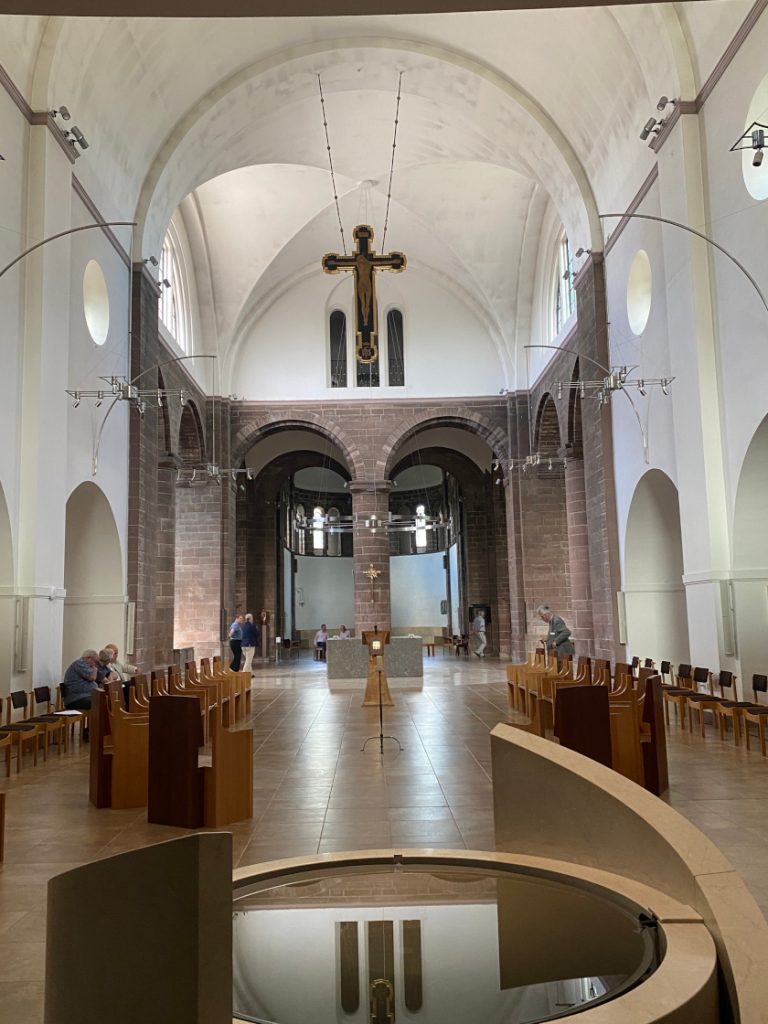
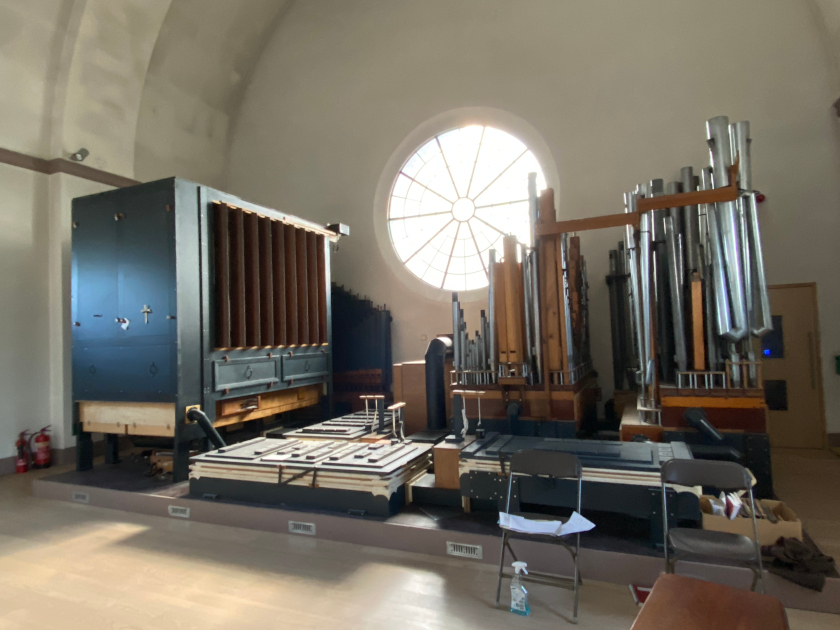
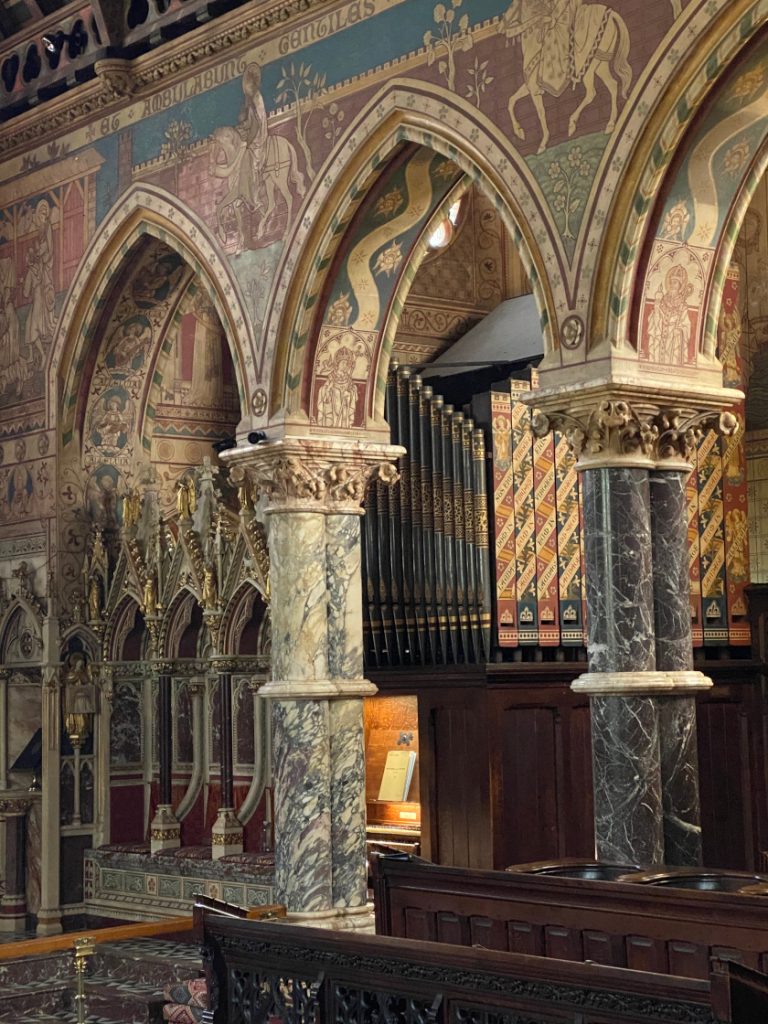
Here are two photos of one of four sections of the 1892 organ cases at Southwell Minster. When the cases (of solid teak) were removed by HN&B in 1934, four identical sections went to grace organs they built over the next two or three years – Cromer parish church, Hay on Wye parish church, St Saviour’s church, Weston super Mare, and Park Chapel, Llanelli. When the Hay on Wye case became redundant in 2010, Henry Groves & Son took it into storage until a new home presented itself. Some fifteen years later this has come to pass, as it fits perfectly the gallery in Ilkeston Catholic church, behind the existing gallery front, which had to remain in place. Groves are building a new organ behind it and the front pipes will be the original Southwell Minster 1892 gilded Bishop & Son dummies.
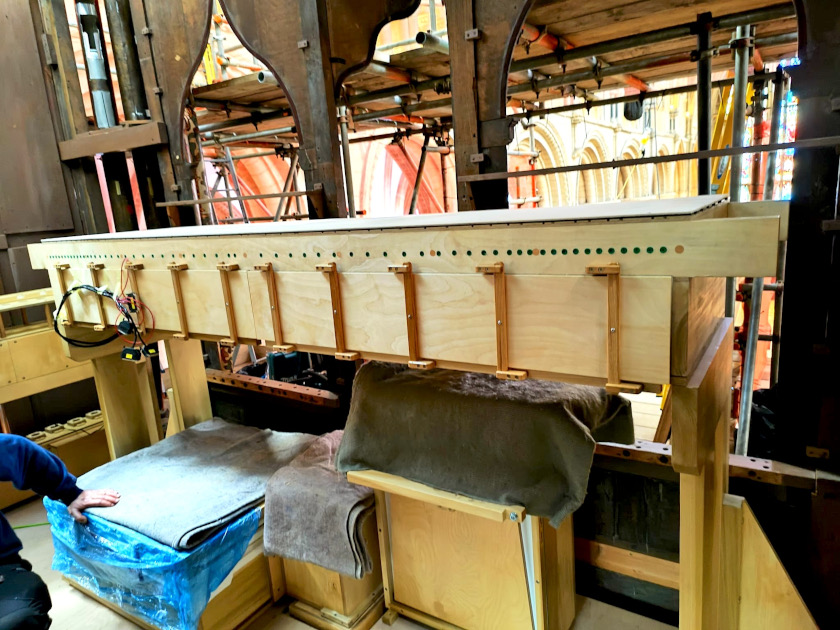
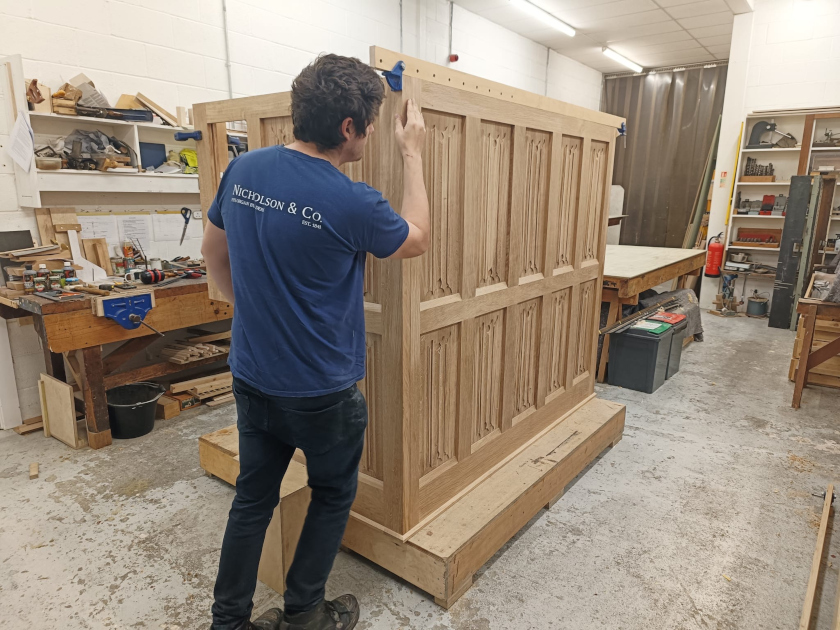
I’ve been working at home for much of February, on three books, as it happens. However, work on the Gloucester Cathedral organ has been proceeding well at Nicholsons and in the cathedral, to both of which I have been making my monthly inspection visits. Here is a selection of photos which I hope are found interesting.
Gloucester console under construction – note linenfold solid oak panellingGloucester nave soundboard now in place in the caseGloucester case pipes – painted figures from 1665/6Gloucester case pipes – painted figures from 1665/6Gloucester case pipes – painted figures from 1665/6Gloucester polyphone being glued and crampedGloucester polyphone being paintedGloucester 32ft Contra Bombarde bottom C; note large scale
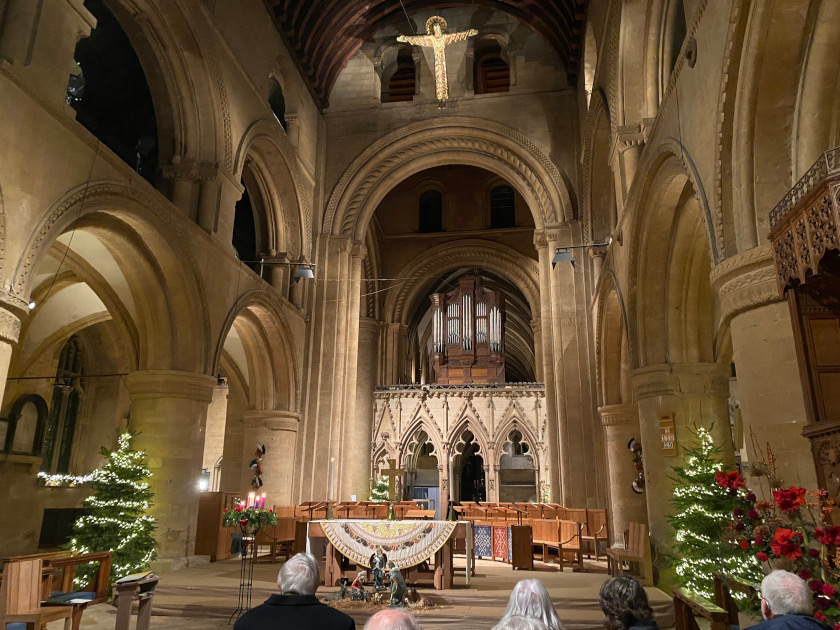
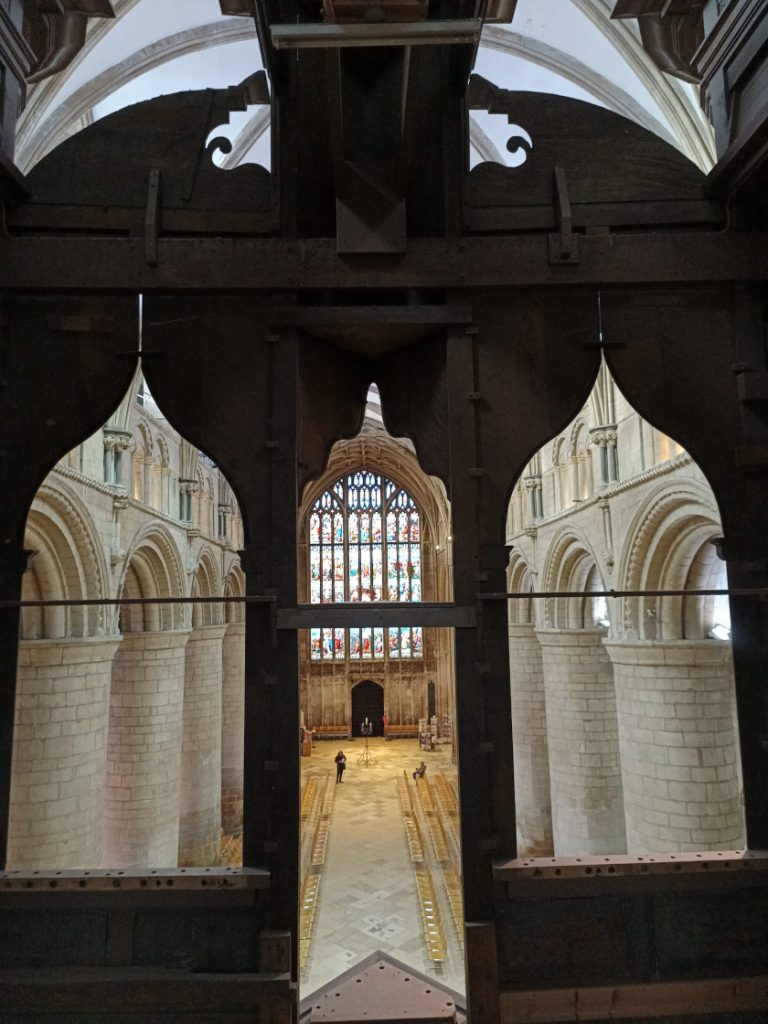
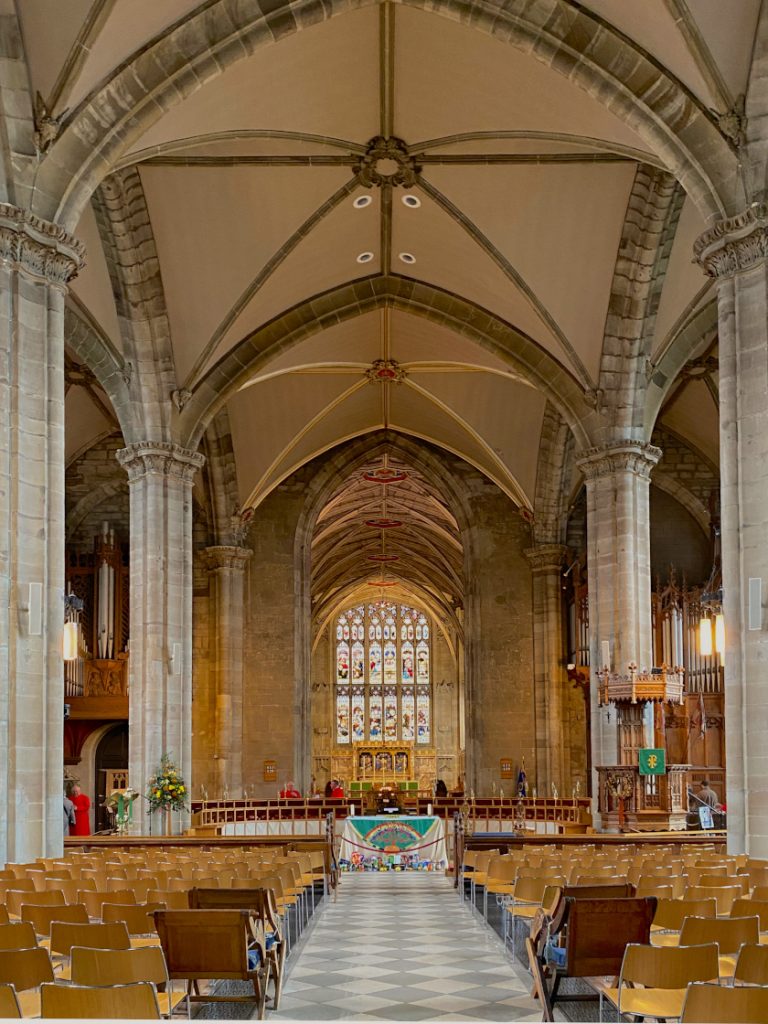
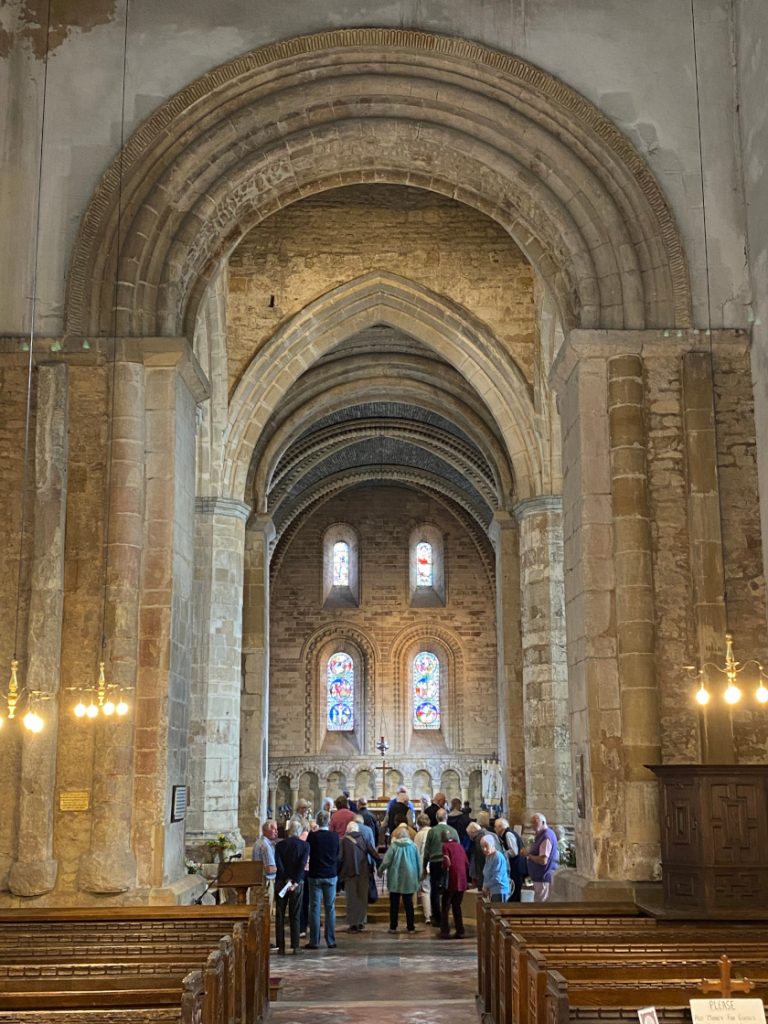
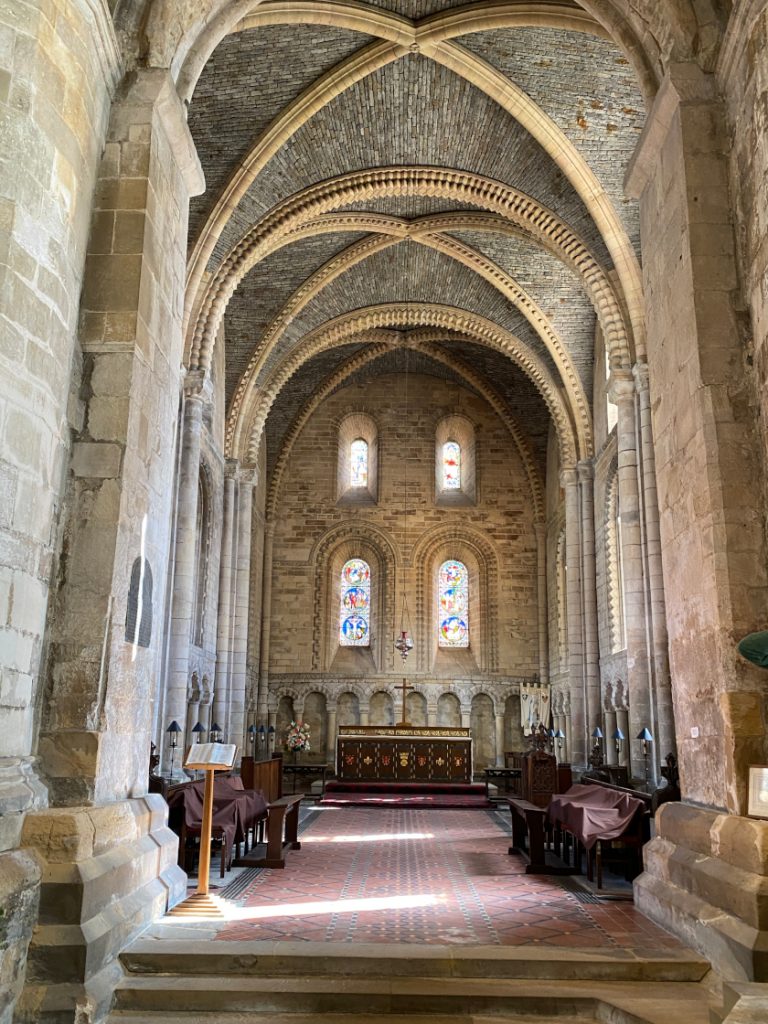
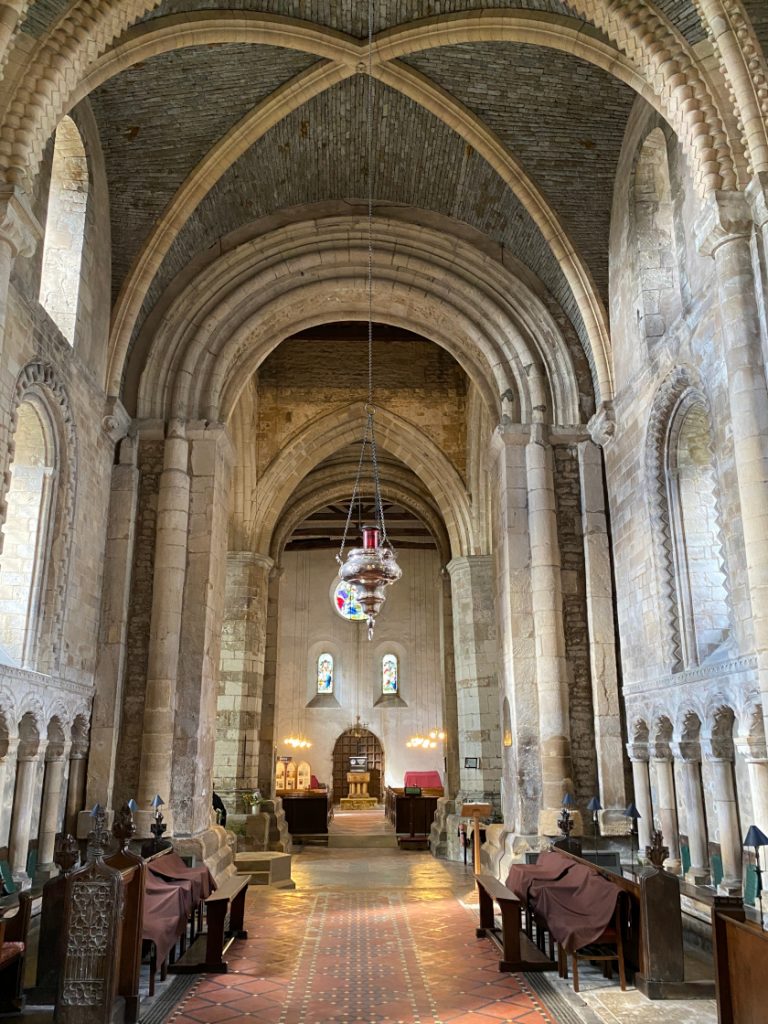
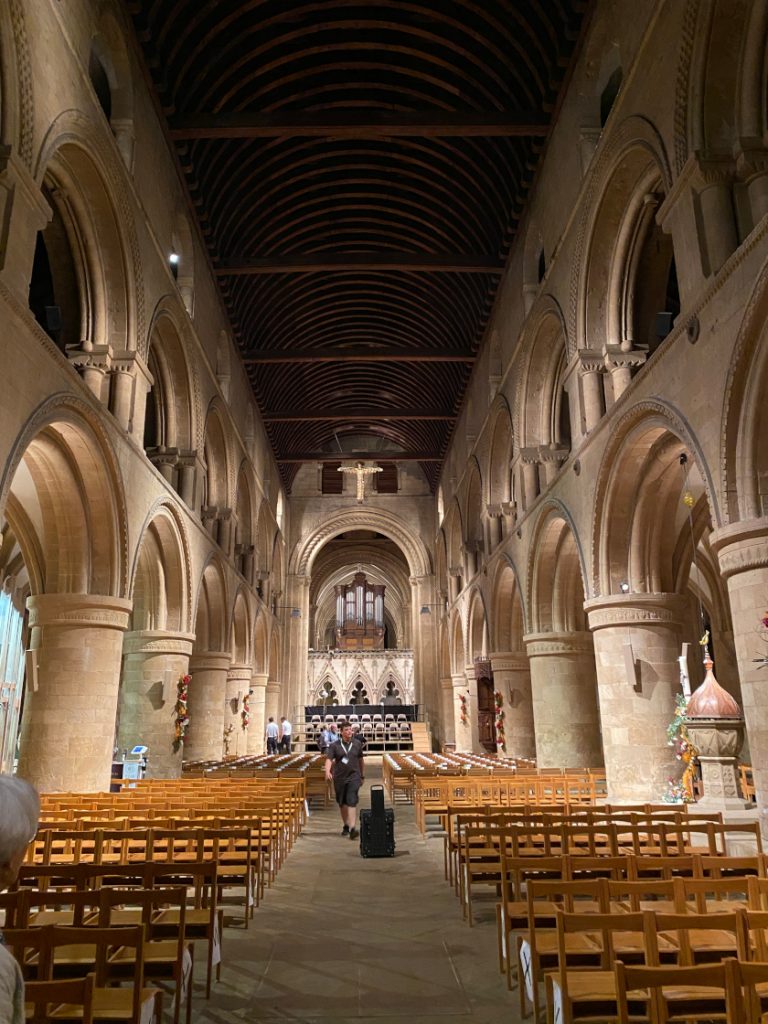
January has been a refreshingly quiet month. Anne’s choir (St Peter’s Nottingham) sang Evensong at Southwell on Saturday 3rd; I joined them in the congregation. This photo was taken at the head of Southwell’s beautiful nave, just before the service, held in the nave as the Quire organ had just blown a fuse. Nave organ to the rescue! So glad they allowed me to install two large organs, back in 1992-4. Lovely to be back and hard to believe nearly a decade has passed since I retired as cathedral organist and Rector Chori at Southwell, after 27 very fulfilling years.
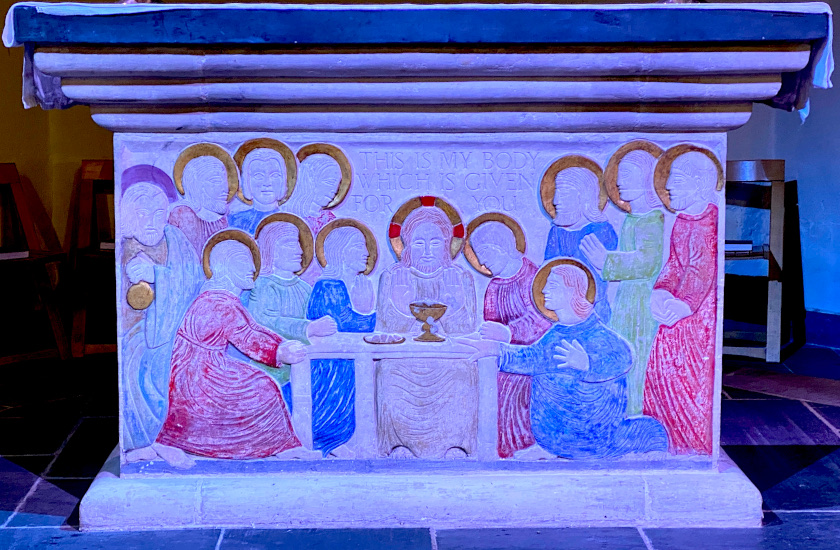
Eric Gill altar at Blundell’s School
On the 8th-9th I surveyed the organ in the fine chapel of Blundell’s School (Tiverton, founded in 1604). To be honest, the organ itself is not (yet!) worth writing about, but the chapel’s beautiful altar, the front carved by Eric Gill, certainly is. The stone altar, and its surrounding sanctuary setting, were created by pupils in 1937, under the direction of the Art Master, Mr Phillips. It is called the ‘Gorton’ altar to celebrate the Headmaster of the time, Neville Gorton, who had been determined to create a really fine Sanctuary in the early Victorian chapel and make the Eucharist more central to chapel life. Unbelievably, a later Headmaster disliked it so much that it was removed in 1947, being reinstalled only in 1993, after having been bought back at auction from a mother and baby home in Coventry!
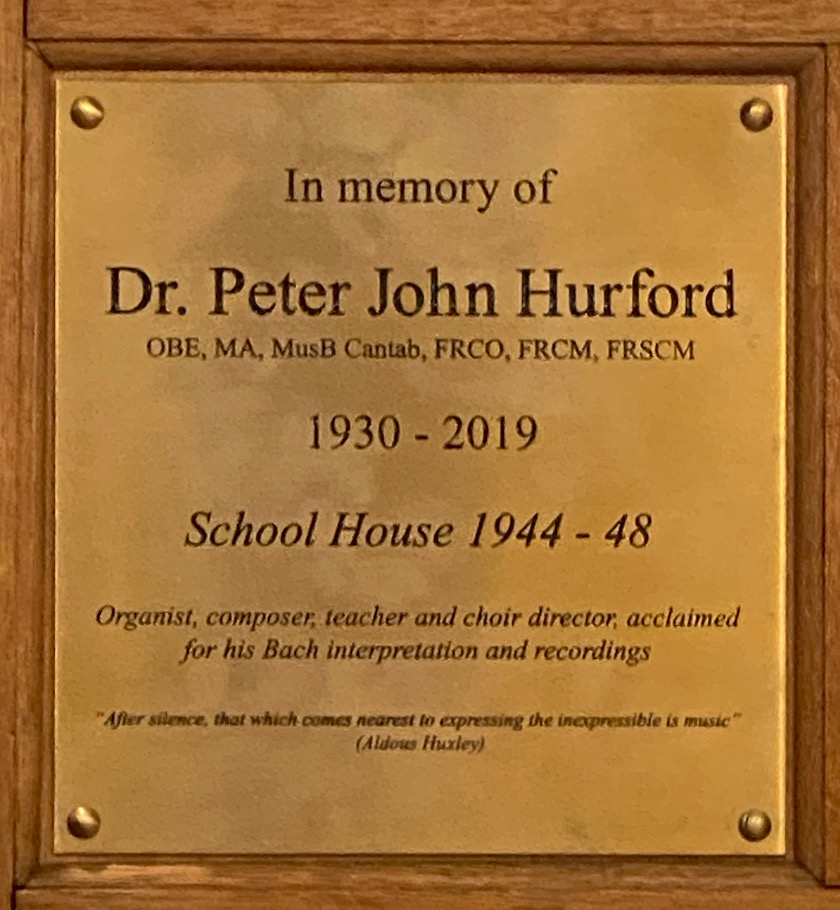
Peter Hurford plaque
Peter Hurford was a pupil at Blundell’s, and the School continues to maintain a particularly high standard of music, instrumental, choral and academic. We need to return the organ to a standard and musical quality of which he would have approved.
Alan Rome case on the 1972 HN&B organ at Bathford
Recently I’ve been helping Chetham’s Music School in Manchester look for a compact, high-quality, vertically-arranged, small modern pipe organ, to replace that lost in a 2021 fire in their main hall. To be honest, I thought there was only the slimmest of chances that anything suitable would turn up, when, to our delight, St Swithun’s church, Bathford, advertised their 1971 Hill, Norman & Beard organ for disposal. This is a bright and articulate little thing with 17 speaking stops (the same size as the burnt Nigel Church organ), contained in a fine case by Alan Rome (he who, at much the same time, transformed the cases at Bath Abbey and Wells Cathedral). The plan is to build lower casework (matching, of course) beneath the Alan Rome case (repainted in a lighter colour scheme) so that it stands on the floor where the previous Chetham’s organ stood, with an attached console, new electrics and no tonal changes save the addition of a Tierce to the Swell to complete the cornet décomposé. Details of the Bathford organ are on the NPOR. Fingers crossed that this comes to pass.
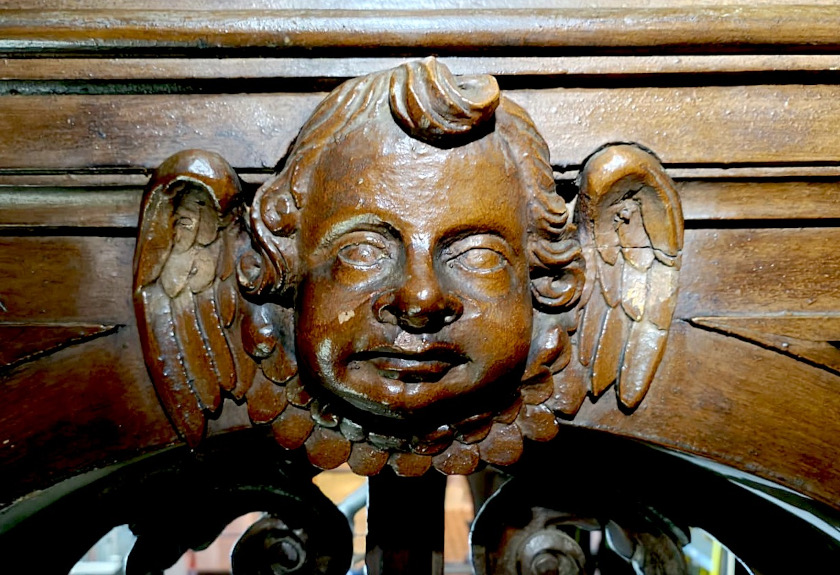
Gloucester Cathedral – a cherub on the organ case, carved in 1665
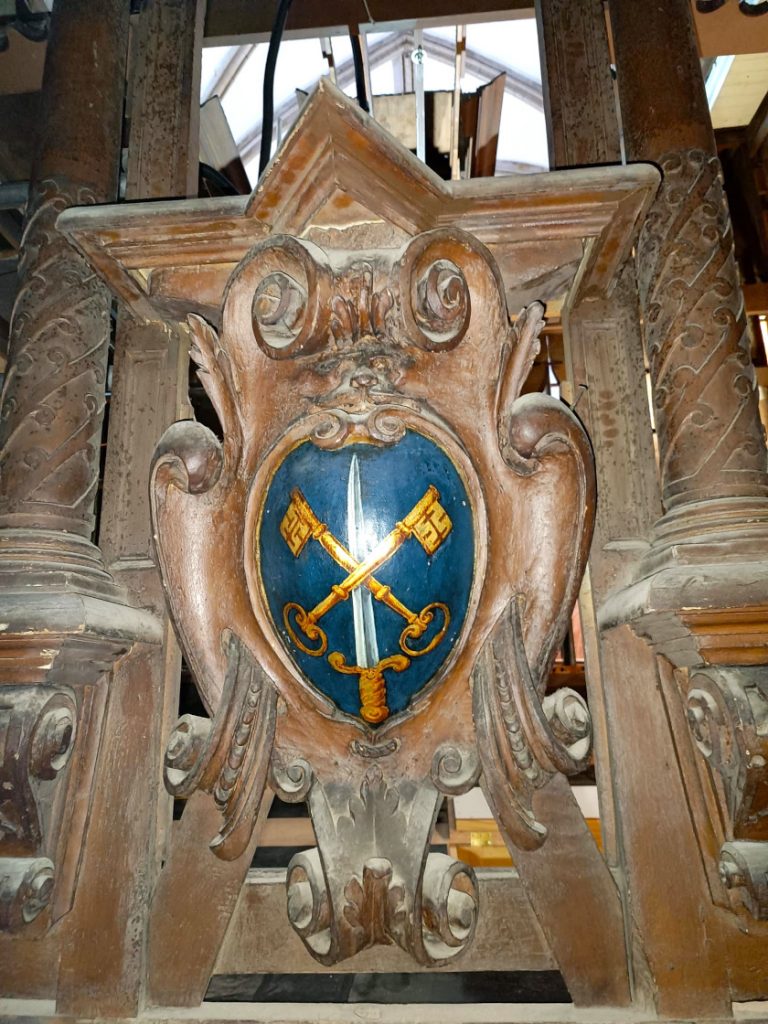
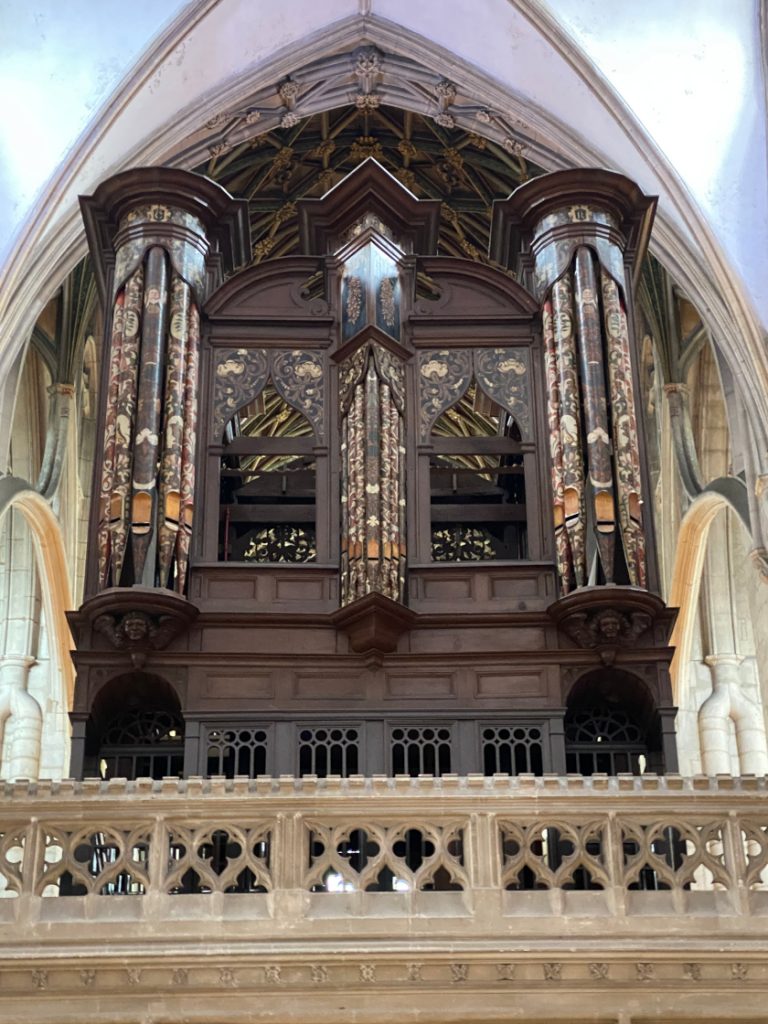
The final two images are close-ups of carved and painted elements on the 1666 Thomas Harris organ case at Gloucester Cathedral, which is being conserved (along with its painted front pipes) by Michelle Pepper, as Nicholsons begin to install the new organ. I visit them monthly to look at progress and advise the cathedral; it’s good to note that all is on track.
A beautiful shield on the Great case at Gloucester
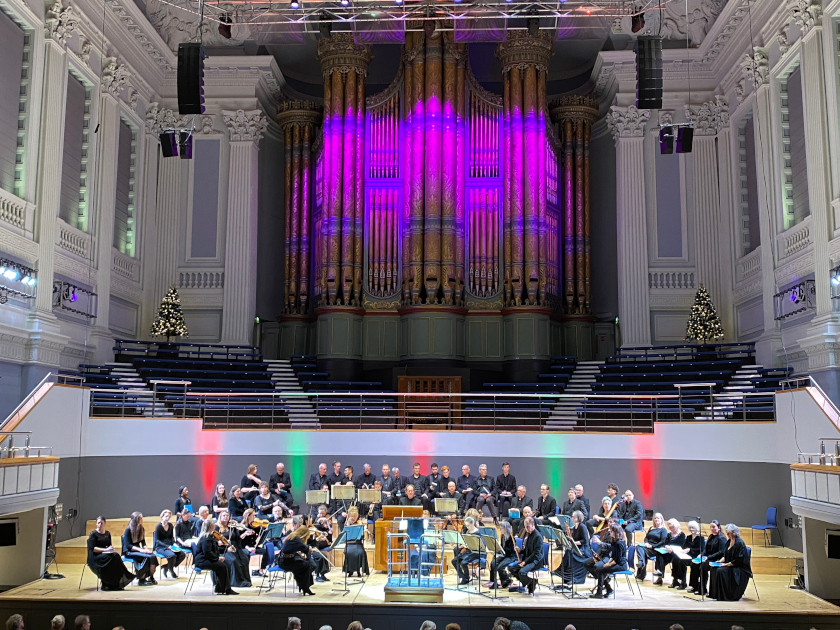
[Ex Cathedra, Christmas Oratorio, 7th December, Birmingham Town Hall]
December was a month happily dominated by several splendid concerts. Here are photos of three of the best. On December 7th, Ex Cathedra (whom we are pleased to support) sang a lively and stylish complete Bach Christmas Oratorio in Birmingham Town Hall.
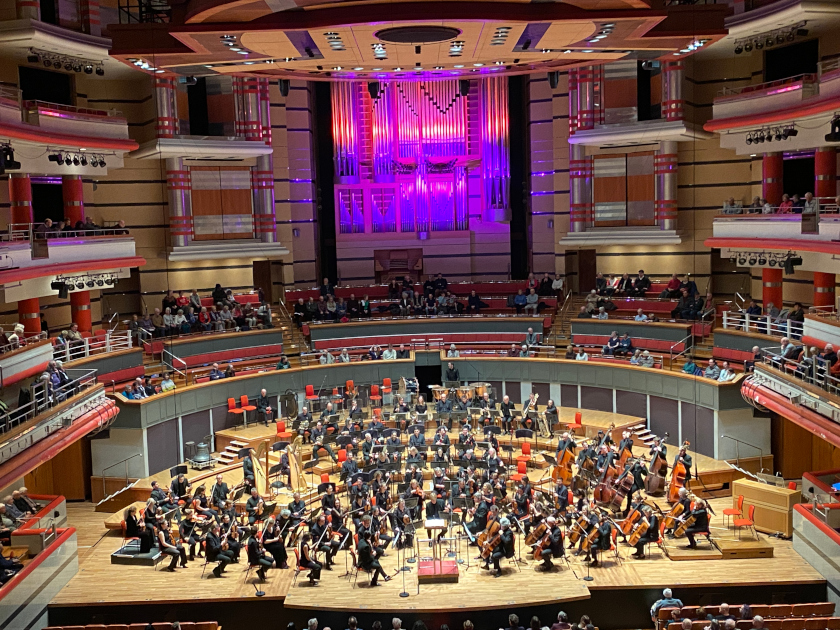
CBSO, 10th December, Symphony Hall
Only a few days later, on the 10th, we were back in Birmingham, this time at Symphony Hall, for the CBSO on typically cracking form in a programme of Richard Strauss, with two of his most famous tone-poems framing his lovely Oboe Concerto.
Ex Cathedra Christmas music, 16th December, St James the Greater, Leicester
At much the same time, Ex Cathedra embarked on its numerous concerts of Christmas music, of which we attended that held in the spacious church of St James the Greater in Leicester. Typical of Jeffrey Skidmore, who founded the choir in 1969 and retires in 2027 (what an innings!) the programme was novel, unusual, musically and historically varied, and used the whole building imaginatively.
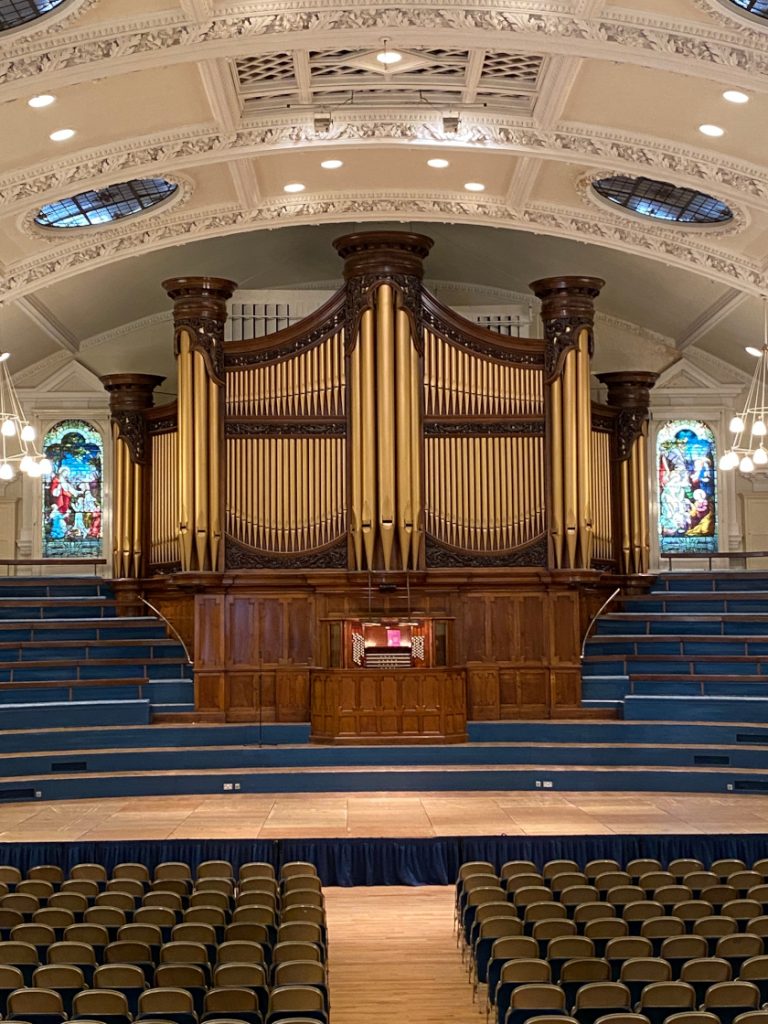
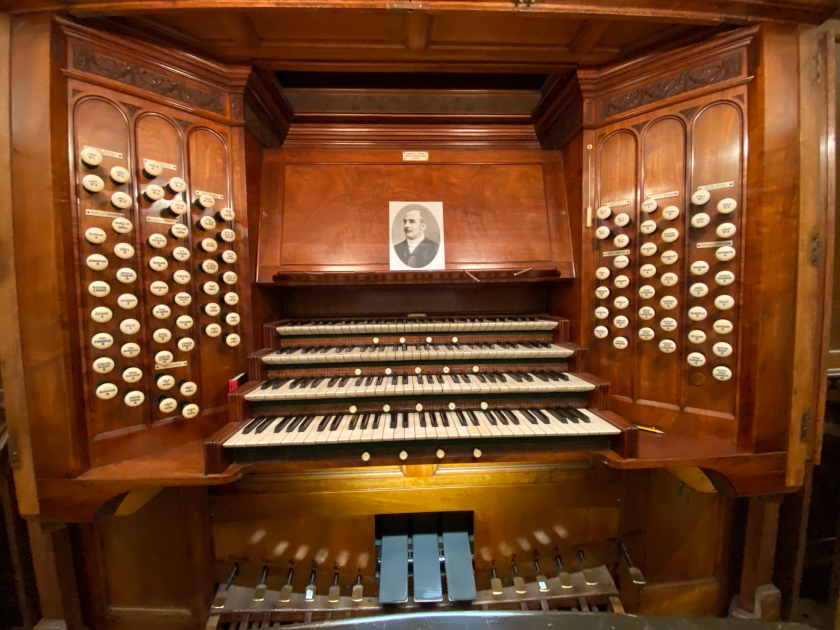
[Nottingham Albert Hall – the Binns]David Hill playing at Nottingham Albert Hall
Three musical events enhanced the first week of November: David Hill giving a masterly lunchtime recital on the mighty Binns in Nottingham’s Albert Hall; the CBSO conducted by the irrepressible Kazuki Yamada on top form in Birmingham’s Symphony Hall, with Isata Kanneh-Mason impeccably playing Rachmaninov’s fiendish third piano concerto; and Choral – a film about a small Yorkshire choral society attempting to put on a performances of The Dream of Gerontius during World War 1. I warmly recommend this moving and thoughtful film, directed by Nicholas Hytner and Alan Bennett (who wrote it), which stars Ralph Fiennes, Roger Allam and Alun Armstrong and has Simon Russell Beale in a cameo rôle as a grumpy Elgar, not least for its being filmed at Saltaire – the village created by Sir Titus Salt for his mill workers.
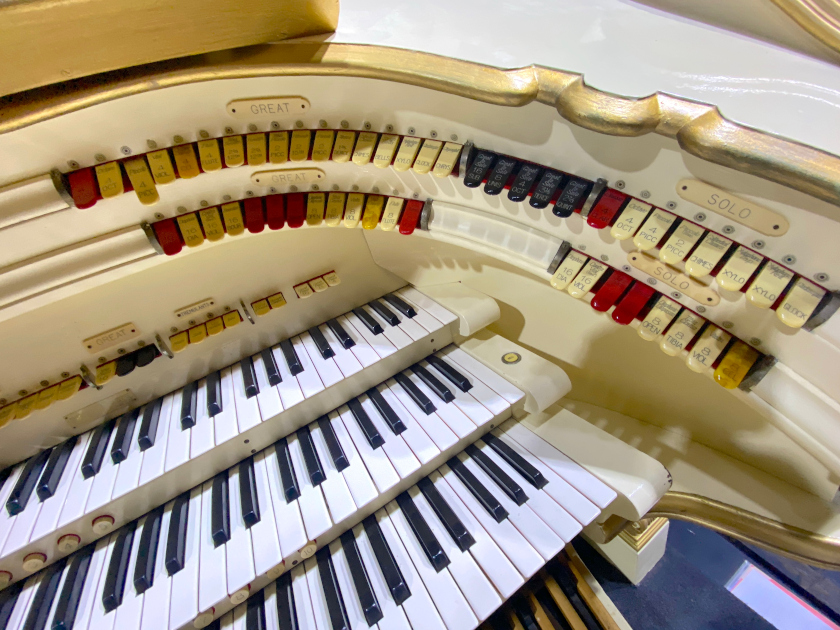
Burton-upon-Trent Wurlitzer – stop keys for the Great and Solo manuals
On November 12th I visited four organs in the Burton-upon-Trent area. First was the Wurlitzer in Burton-upon-Trent Town Hall, which is kept in apple-pie condition.
St Paul, Burton-upon-Trent, chancel case by BodleySt Paul, Burton-upon-Trent, transept case by Bodley
Next (to see the beautiful organ cases only) was St Paul’s church, where once there was a 4-manual Hope-Jones rebuild of a Hill. Of the two contrasting G.F. Bodley cases, the chancel case now contains a transplanted Conacher, whereas in the huge south transept case sits – silent – the Hope-Jones Solo Organ. All rather reminiscent of the Worcester Cathedral organ situation, where the 32ft case in the south transept still awaits the promised second organ.
St Modwen’s, Burton-upon-Trent, west end case
St Modwen’s church also had a 4-manual organ in the Hope-Jones style, though built in 1901 by Norman & Beard. There is most unusual west-end case, originally by Snetzler and cunningly extended. The organ now is a distinctly successful 1972 HN&B, somewhat in the Gloucester cathedral mould, and akin to successful small ‘multum in parvo’ organs HN&B installed elsewhere (such as Carrs Lane chapel in Birmingham) in the late 1960s and very early 1970s.
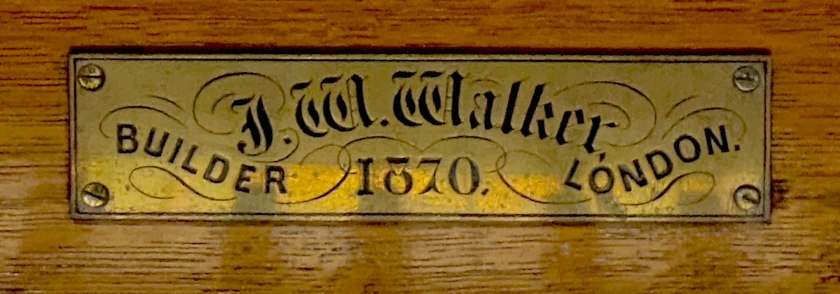
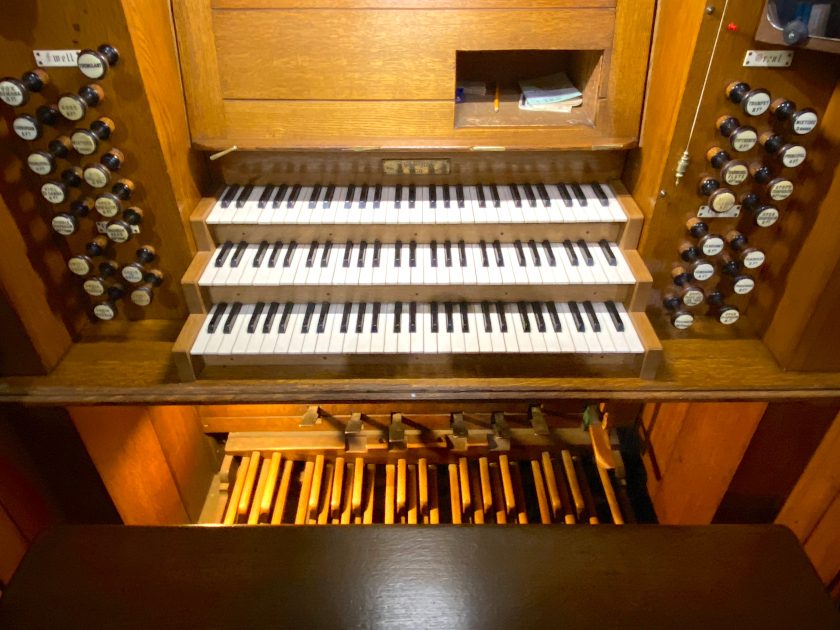
St Mark, Winshill – the 1870 J.W. Walker name-plateSt Mark, Winshill – the 1870 J.W. Walker organSt Mark, Winshill – the 1870 J.W. Walker console
Outside Burton, in St Mark’s, Winshill, is found a remarkable 3-manual 1870 J.W. Walker which is little-known. Despite a heavy action and a disappointing Great Mixture, this is a fine instrument, deserving to be better known.
Moseley, St Mary, Jones nave case, Clevedon chancel case, all spotted metal pipes freshly burnishedMoseley St Mary, the Nicholson / Clevedon consoleMoseley St Mary – a reproduction Henry Jones stop-knob
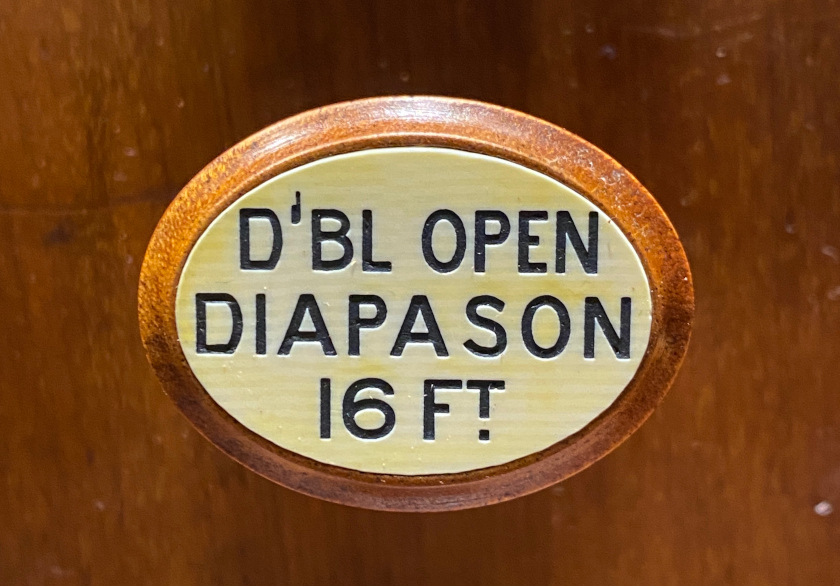
One of my projects (St Mary’s Moseley, Birmingham) was completed this month; I visited on November 18th to sign it off. Originally a Henry Jones organ from 1885, it was rebuilt by Nicholsons in 1966 and now has been again by Clevedon. The Nicholson console has been rebuilt and a great deal of work was carried out to the organ, both to reclaim something of its Henry Jones tonality and also to project its tone better down the nave, which totally lacks resonance. The Henry Jones console remains, as a museum-piece, and a handful of stolen stop-knobs (of ?unique oval shape) have been replaced by matching new ones, crafted by Renatus of Bideford.
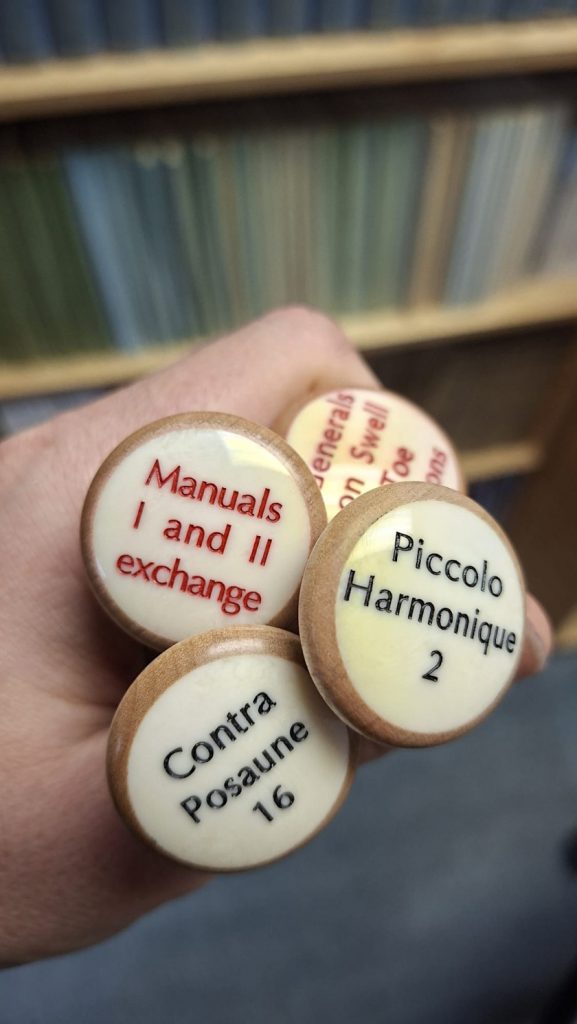
Gloucester cathedral Open Wood in placeGloucester cathedral console caseworkGloucester cathedral – Swell soundboard upside downGloucester stop-knobsGloucester Cathedral – view of nave from inside the empty 1666 Great case
During the month I have been liaising with Nicholsons and Gloucester Cathedral about progress with the new organ, as I have been constantly since October 2024. The largest pipes (the 1831 Bishop Open Wood pipes, now restored) have recently been installed inside the Screen, the console has been started (note the linenfold panelling) and the Swell soundboard has just been finished. All the pipes are made, all the flues voiced, all the chests and wind system made, along with the Swell shutters and parts of the building-frame. Installation in earnest begins in January.
St James the Less, Vauxhall Bridge Road. Conference of The Ecclesiological Society
During October I attended significant meetings of two interesting organisations to which I belong.
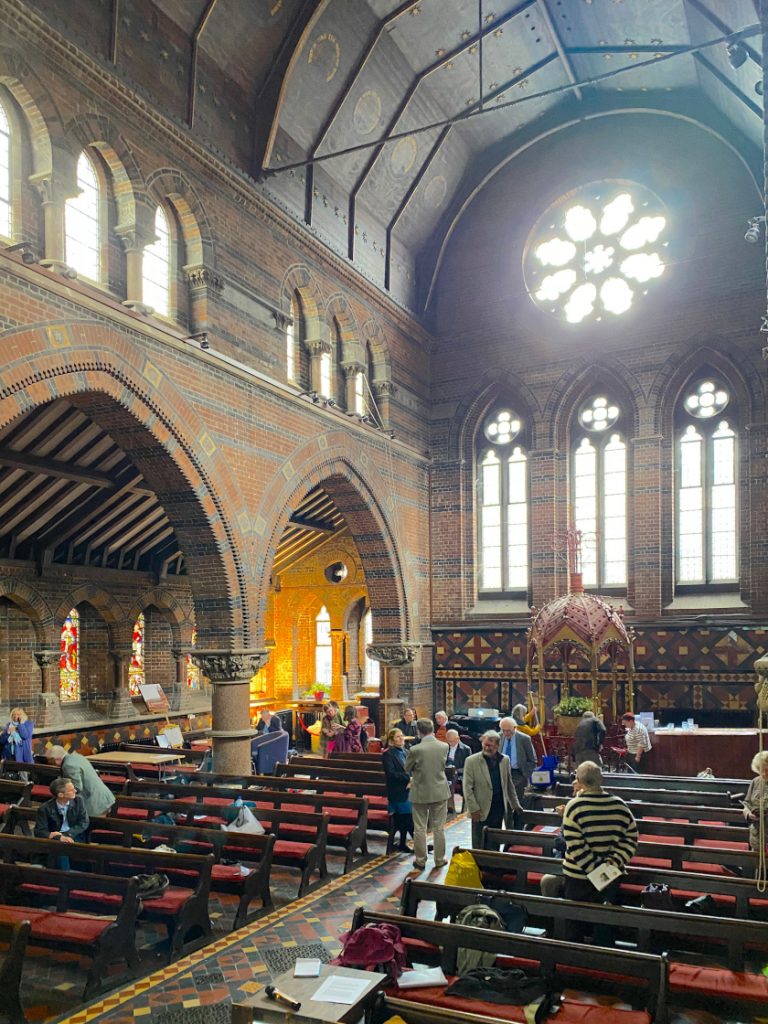
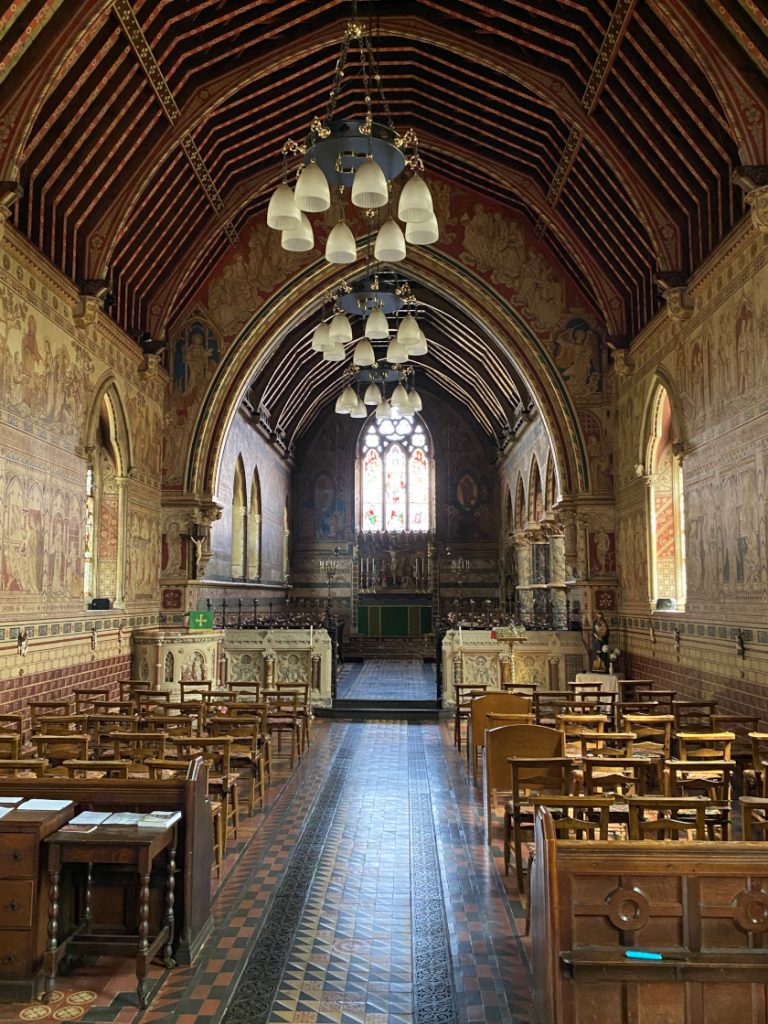
On Saturday 4th the Ecclesiological Society (founded in 1879 as the successor to the original Cambridge Campden Society) held a day of fascinating lectures about Anglican and Catholic cathedrals built during the 20th Century, the emphasis being on what guided their individual designs, liturgically and artistically. It was held in the beautiful G.E. Street church of St James the Less in Pimlico, often described as “one of the finest Gothic Revival churches anywhere”. The photograph was taken from the pulpit, looking west; I took no eastwards-facing photograph as the view of the beautiful chancel and screen was blocked by an enormous projection screen needed for the lectures. Definitely worth a visit – even though the churchmanship has suffered a volte-face from Anglo-Catholicism to Charismatic Evangelicalism.
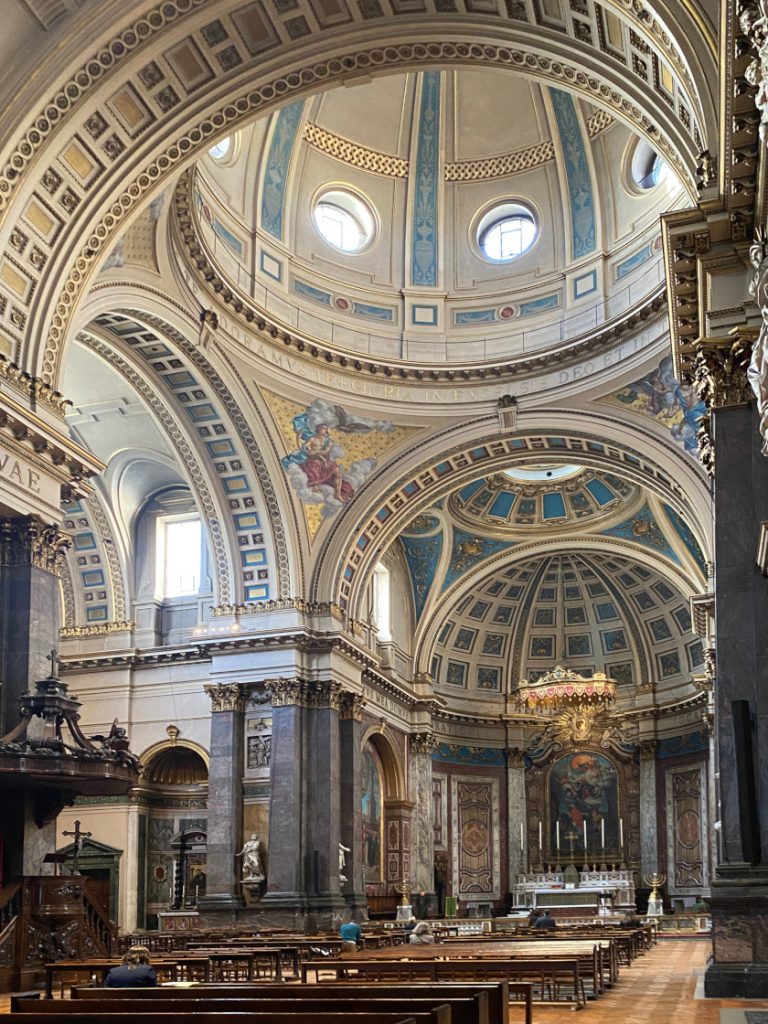
The London Oratory, Brompton
At the end of the event I made my to the London (Brompton) Oratory for a beautifully sung 6pm Mass, followed by a meal and a good chat with my long-standing New College friend, Patrick Russill, now retired from the RAM but still in post at the Oratory, where he has worked ever since leaving Oxford in the mid 1970s.
[St Mary’s Warwick – the enlarged Schwarbrick case]
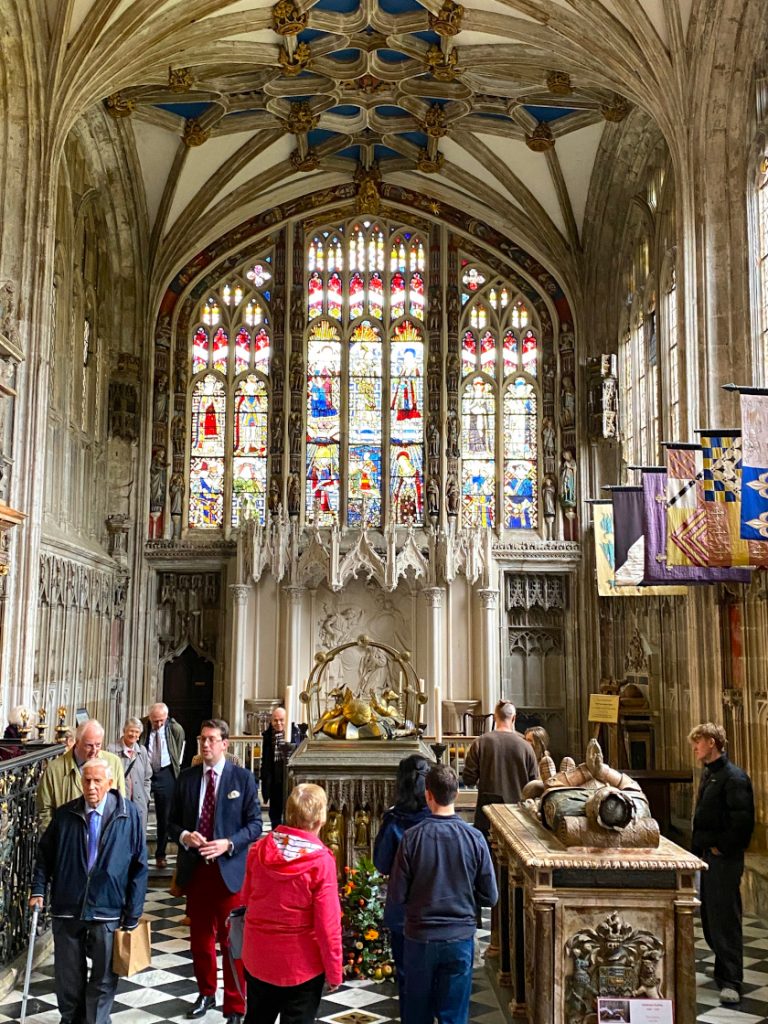
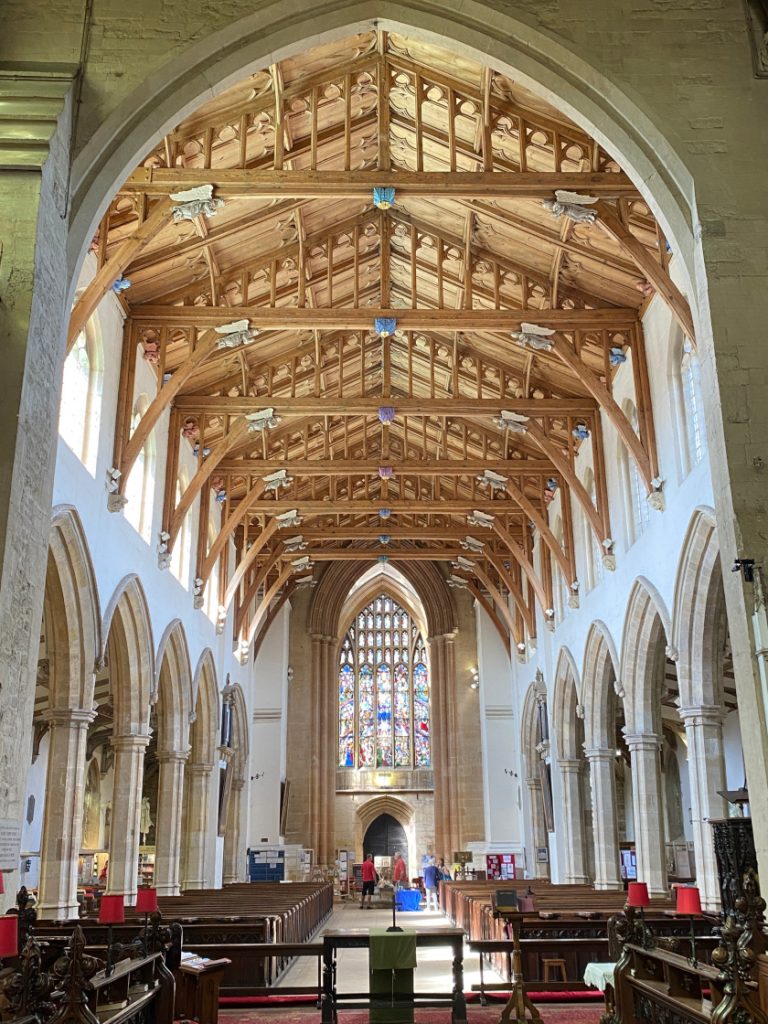
A week later, on Sunday 12th, I was at St Mary’s Collegiate Church, Warwick, for the AGM of the Traditional Cathedral Choir Association. This is a body with significant (though rapidly diminishing) funds which seeks to offer financial help to those cathedrals and churches which need such assistance to maintain a top line of boys in the choirs. Whilst welcoming the advent of girls of a similar age to boys in our leading choirs, the worry now is the number of boys singing is rapidly diminishing – to the great loss of our unique Anglican Choral Tradition. We enjoyed a convivial lunch and a fine Choral Evensong, with the AGM in between, presenting the St Mary’s Music Foundation with a cheque for a significant sum. These photos show some of the visual glories of this magnificent and unusual church.
St Mary’s Warwick – the three Hope-Jones casesSt Mary’s Warwick, the Beauchamp ChapelSt Mary’s Warwick, the nave
The following week we attended Thomas Trotter’s first-class opening recital on the fine Willis II instrument in what was known for most of its life as “St Monica’s Home of Rest”, just north-west of Bristol.
[Father Willis at St Monica’s Home, Bristol]
A few days later I was inspecting the empty organ cases at Gloucester cathedral – a sight repeated only every century or so, so I’ve included some photos here.
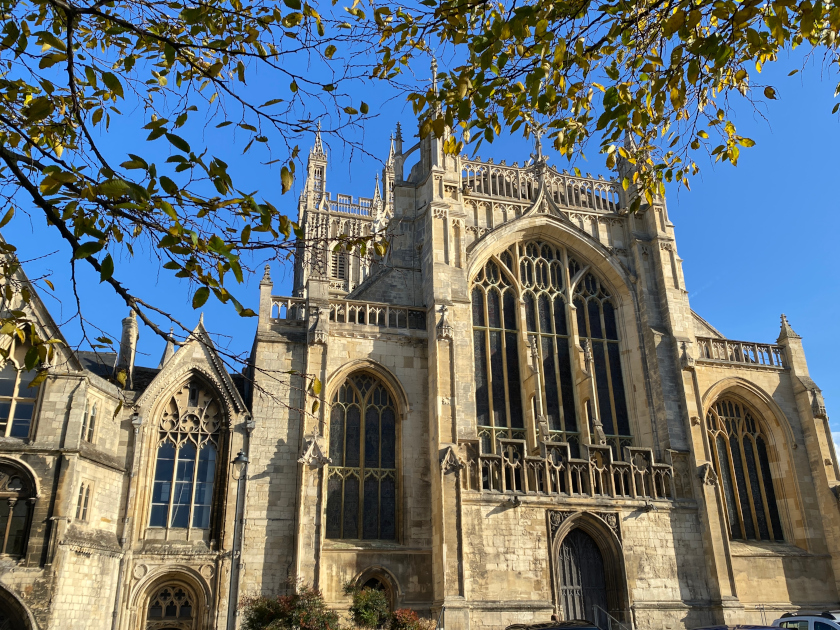
Gloucester Cathedral organ cases empty – from the east.Gloucester Cathedral organ case empty – from the westGloucester Cathedral organ – the space for the Pedal Organ within the screenGloucester Cathedral Chaire case empty – from insideGloucester Cathedral west end on sunny Autumn day
September has been a stimulatingly varied month. Here are photographs of some of the most interesting days, ignoring all the organ visits I’ve made.
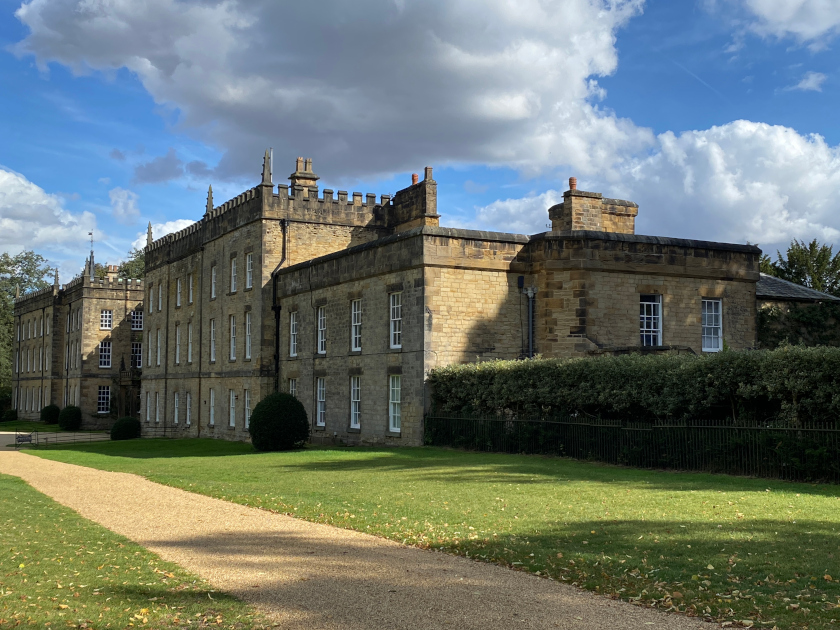
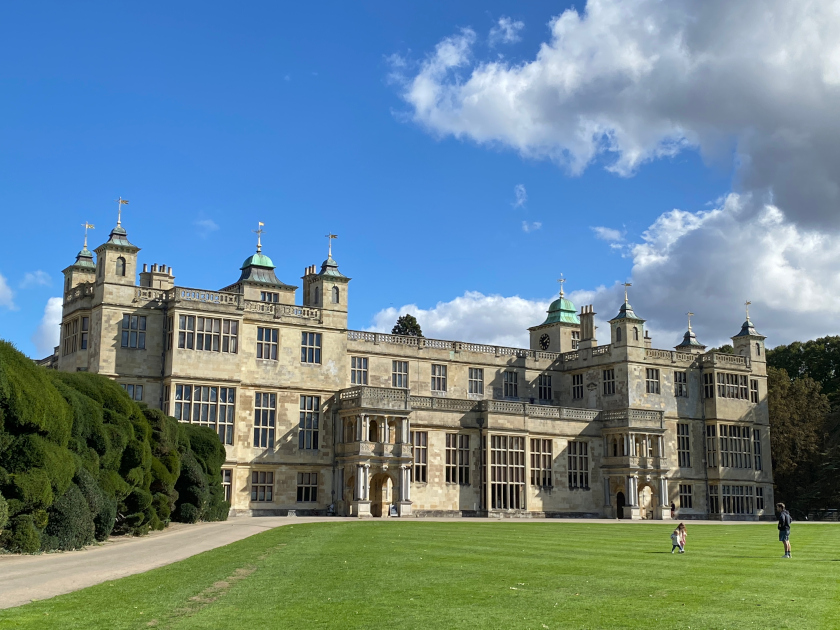
Early in the month we visited Renishaw Hall in Derbyshire. This beautiful house, begun in 1625 by George Sitwell, has been the home of the Sitwell family ever since and remains in their hands. Tours of the house reveal a remarkable abundance of artistic treasures, including many paintings by John Piper, and one can readily sense the presence of Edith Sitwell and of the regular visits by William Walton, who wrote his Façade suite to accompany Edith’s ‘entertainment’ of that name. Sumptuous gardens, too. No interior photography allowed (it is still very much a family house, with domestic items sharing space with art treasures), hence my having only this external image to show at the end of a delightful day. A visit / guided tour is highly recommended.
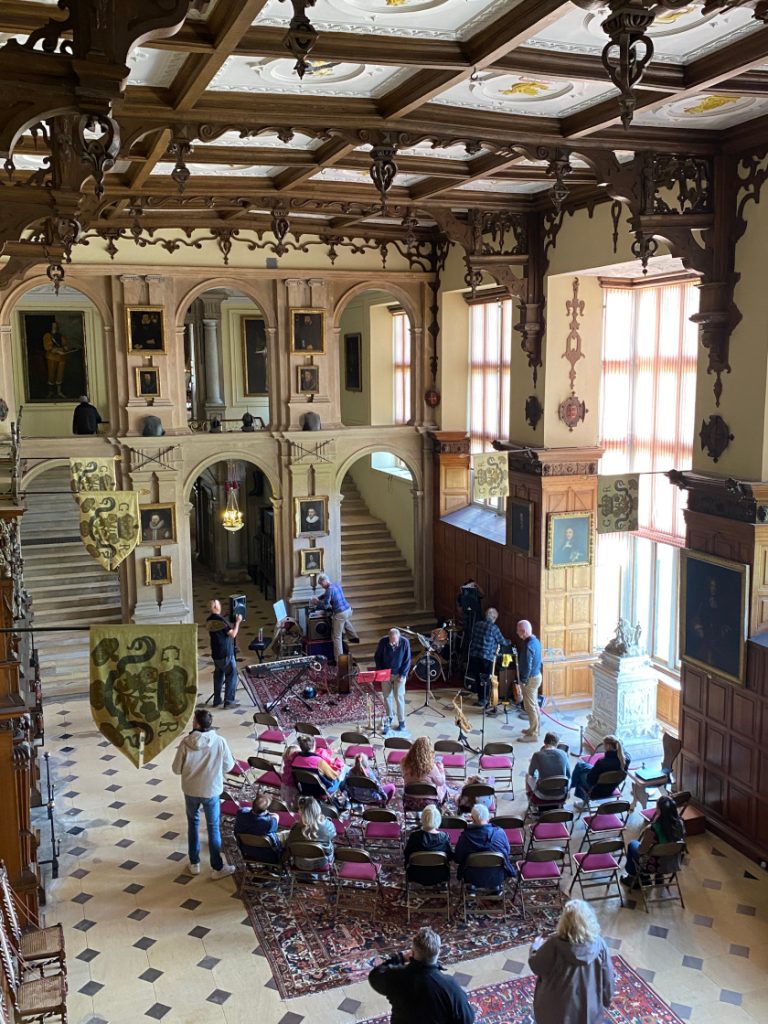
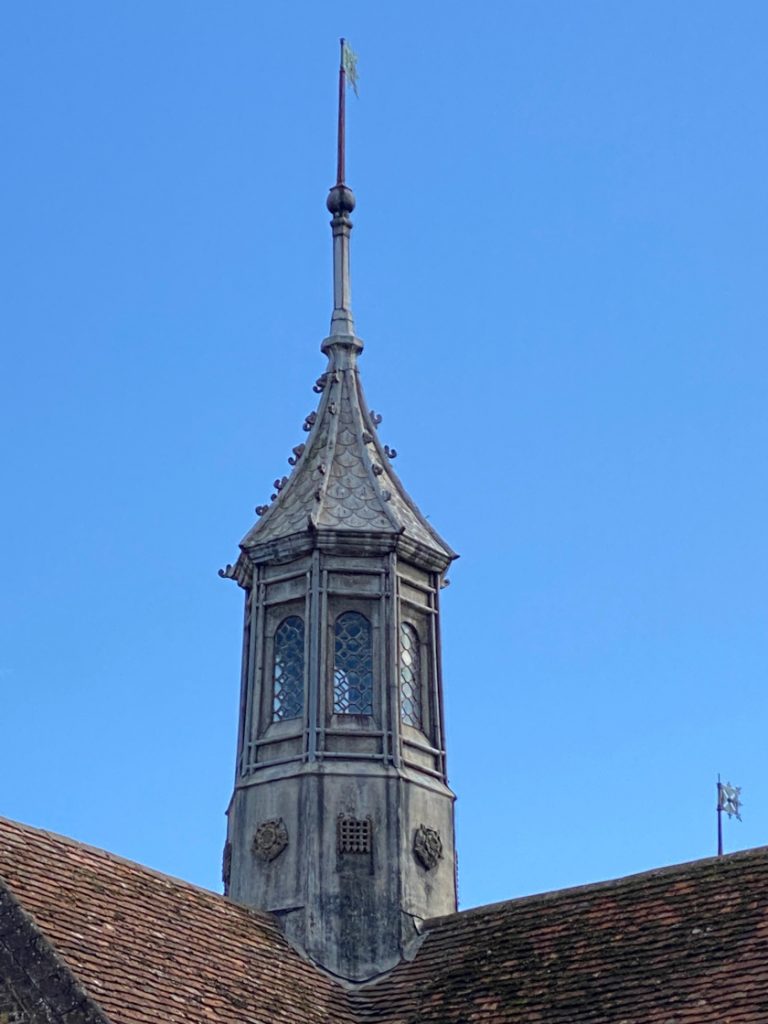
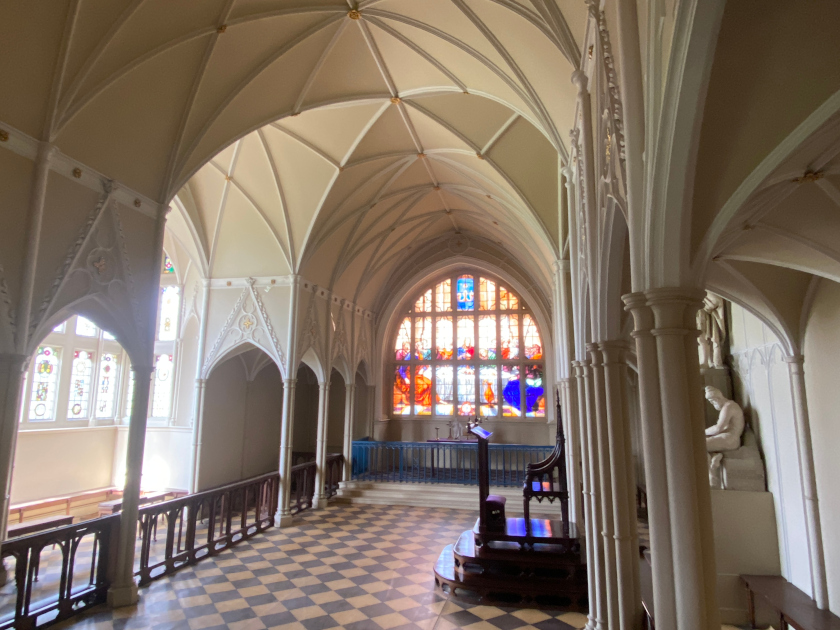
We visited beautiful Audley End on our way back from Canterbury, where I had given a speech at the Kent County Organists’ Association Annual Lunch. I joined the KCOA precisely 50 years ago when I started as Assistant Director of Music at Tonbridge School. Happy days!
Audley EndAudley End – the Great HallAudley End – flêche on stables blockAudley End – chapel
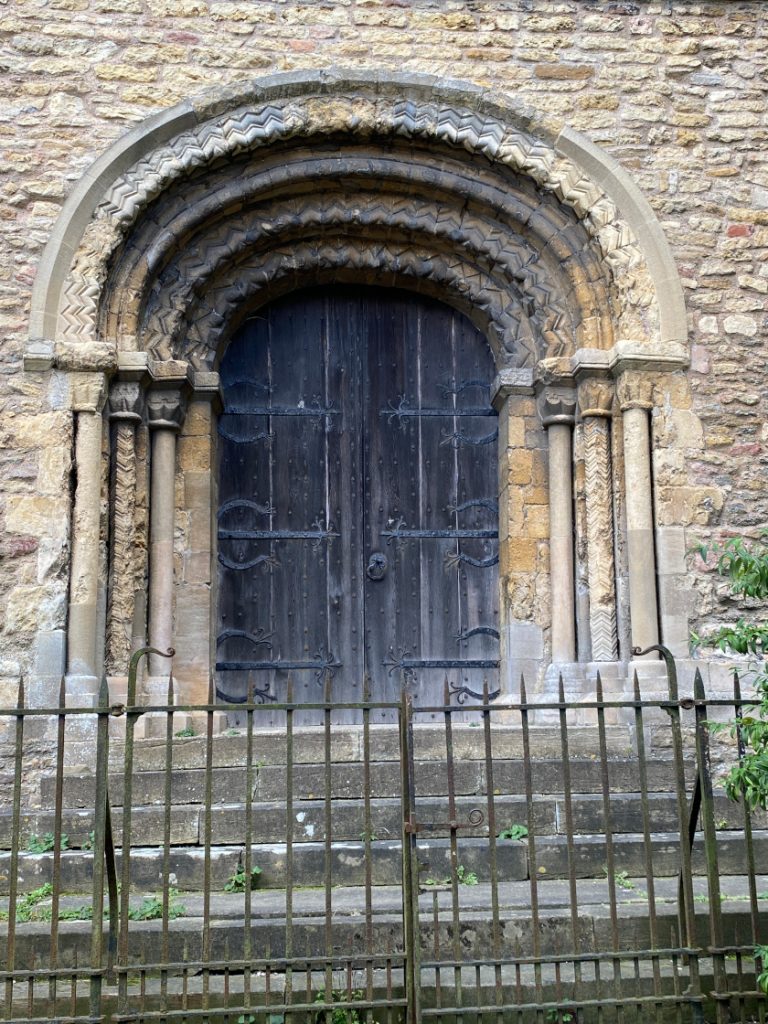
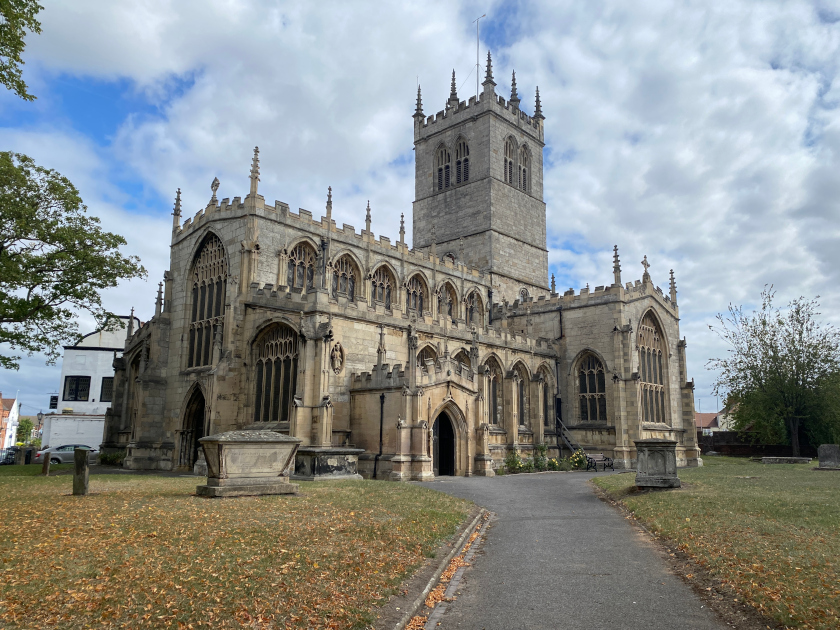
With the Friends of Southwell Cathedral we visited the extraordinary Stow Minster in Lincolnshire – a church which was actually the first cathedral there, before they built Lincoln. A selection of photographs show just how special it is and very much worth a pilgrimage.
Stow Minster facing east, with the Friends of Southwell CathedralStow Minster chancel, with vault by J.L. PearsonStow Minster internal view facing westStow Minster – west doorStow Minster, view from the SW
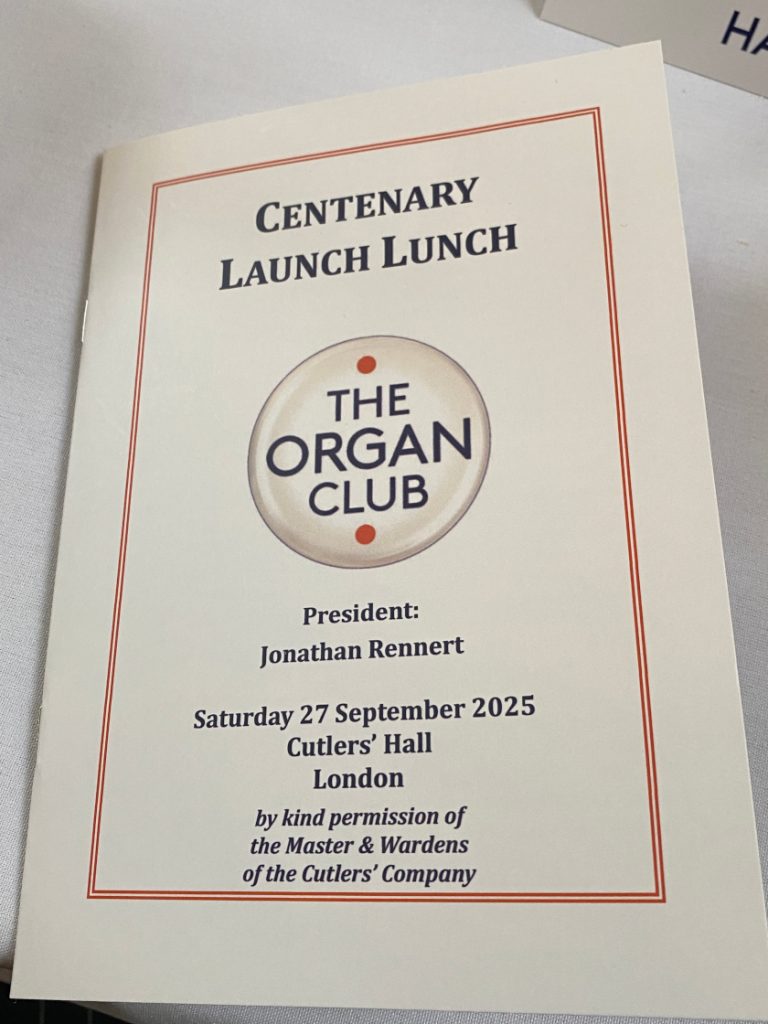
On Saturday 27th, the Organ Club launched plans for 2026 – its Centenary Year – during a splendid day in the City of London. Starting by visiting St Botolph, Aldersgate, the only City church organ never visited by the Club before (where its Samuel Green case impressed us somewhat more than the ailing organ within), we moved to Cutlers’ Hall for a magnificent Luncheon, where Michael, Lord Berkeley, was the well-received speaker.
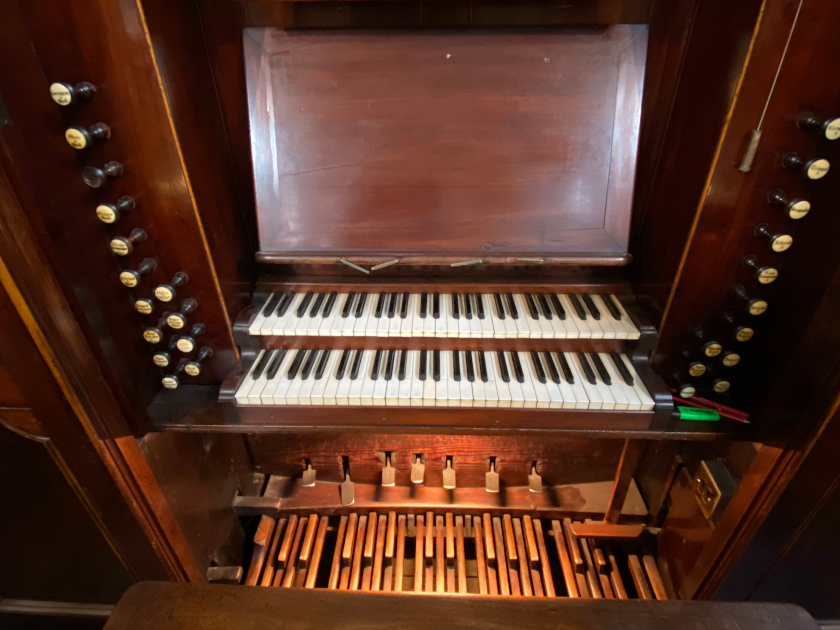
St Botolph, Aldersgate, 1778 Green caseSt Botolph – consoleOrgan Club Centenary Lunch programmeCutlers’ Hall lunch for The Organ Club
A leisurely walk took us to St Paul’s Cathedral nearby, where all the Evensong music was chosen with The Organ Club in mind, including works by former Vice Presidents, Herbert Howells and Sir George Thalben-Ball. A really memorable day, adroitly organised by President Jonathan Rennert, as are several significant events to look forward to in 2026 – the Centenary year itself.
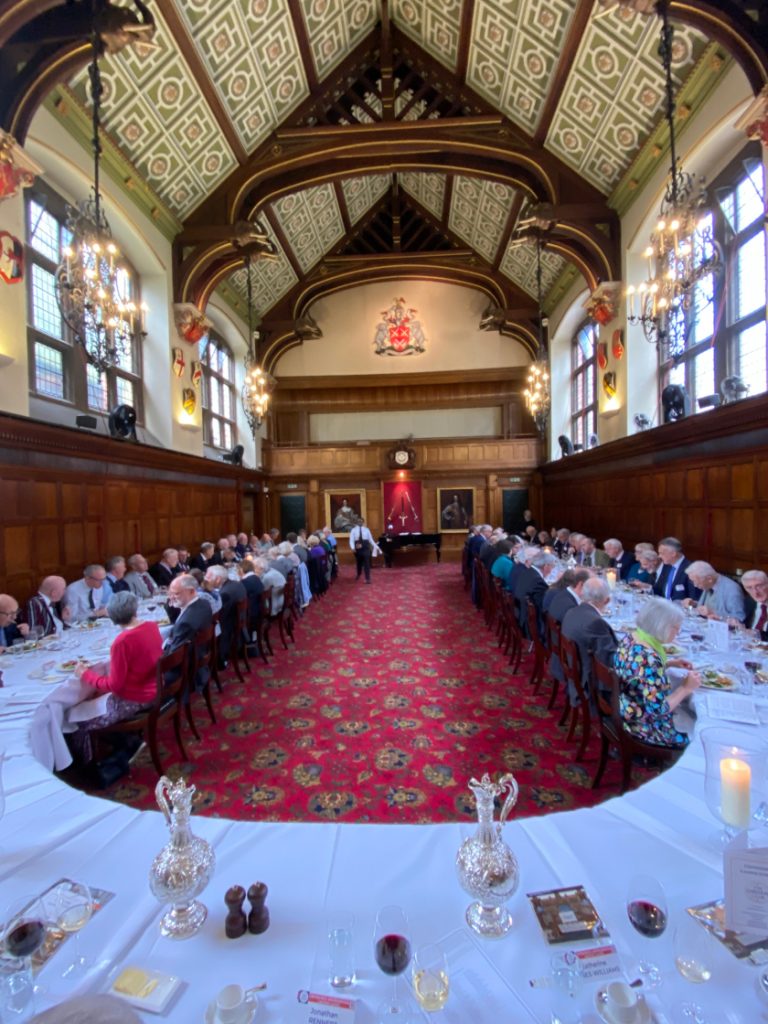
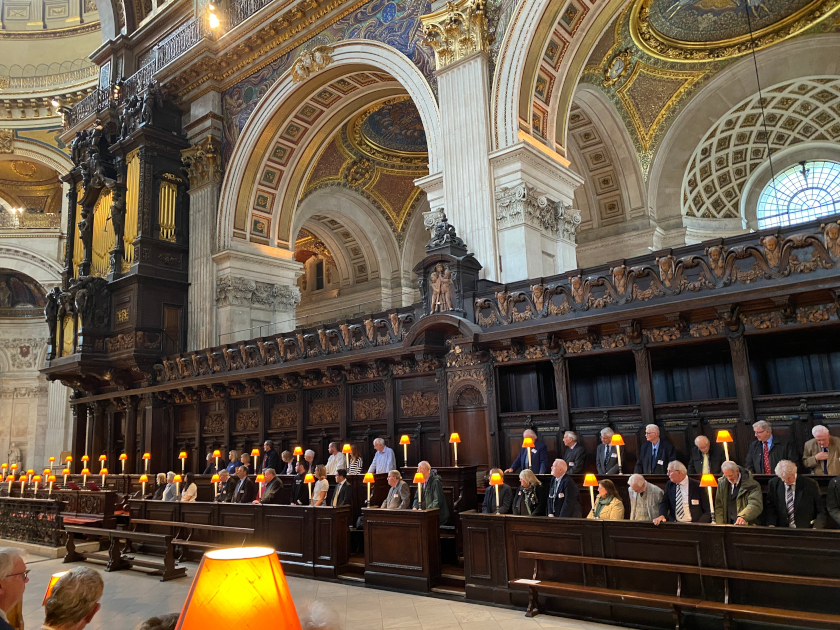
St Paul’s, with members of The Organ Club at Evensong in honour of the Club’s centenary
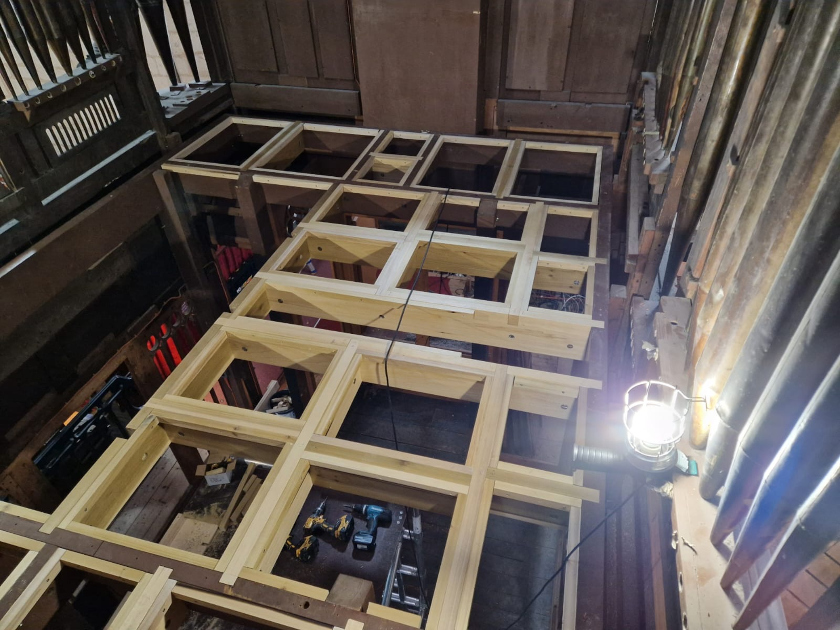
Finally, a taster of what is to come at Gloucester Cathedral: this image shows the first new work inside the historic organ cases. It is the building-frame installed during September to take the Great and Solo divisions. In October the 16ft Open Wood and 32ft reed will be installed inside the north side of the Screen. The main installation will begin in January 2026.
Gloucester Cathedral organ – new building frame installed for the Great and Solo
August has been notable for the number of beautiful buildings life has taken me to. Recitals, organ surveys and the annual Diocesan Organ Advisers’ conference have taken place in these wonderful buildings. What a privilege it is to work in this field? I never cease to take joy and inspiration from the settings in which I work. Enjoy the August images.
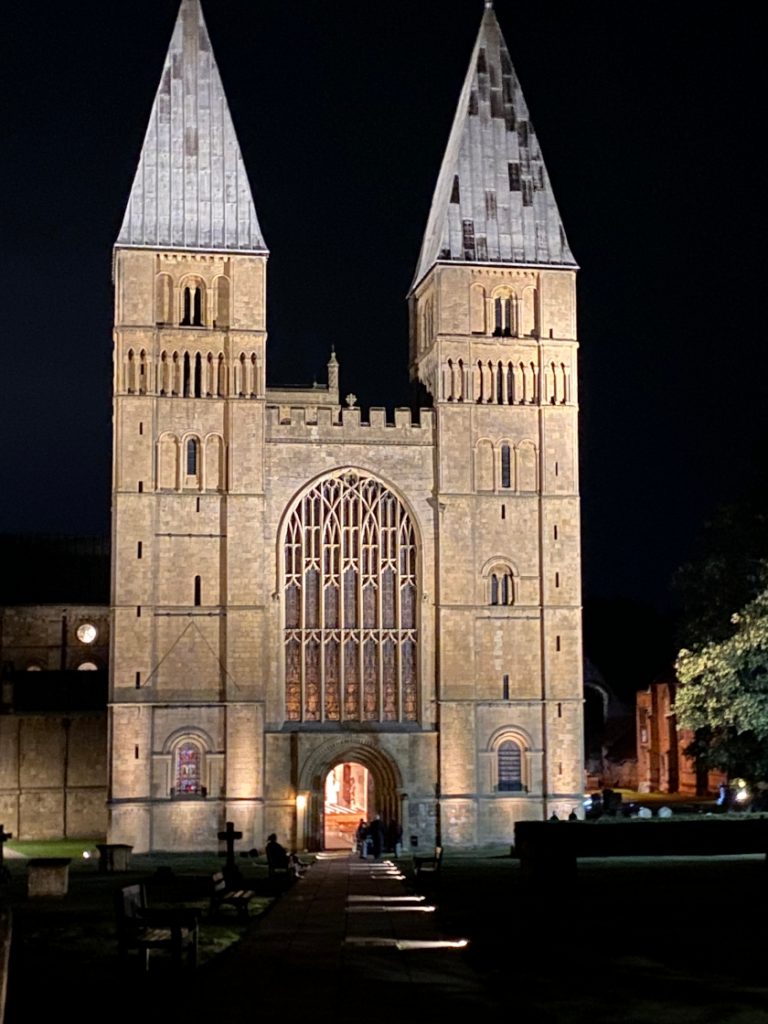
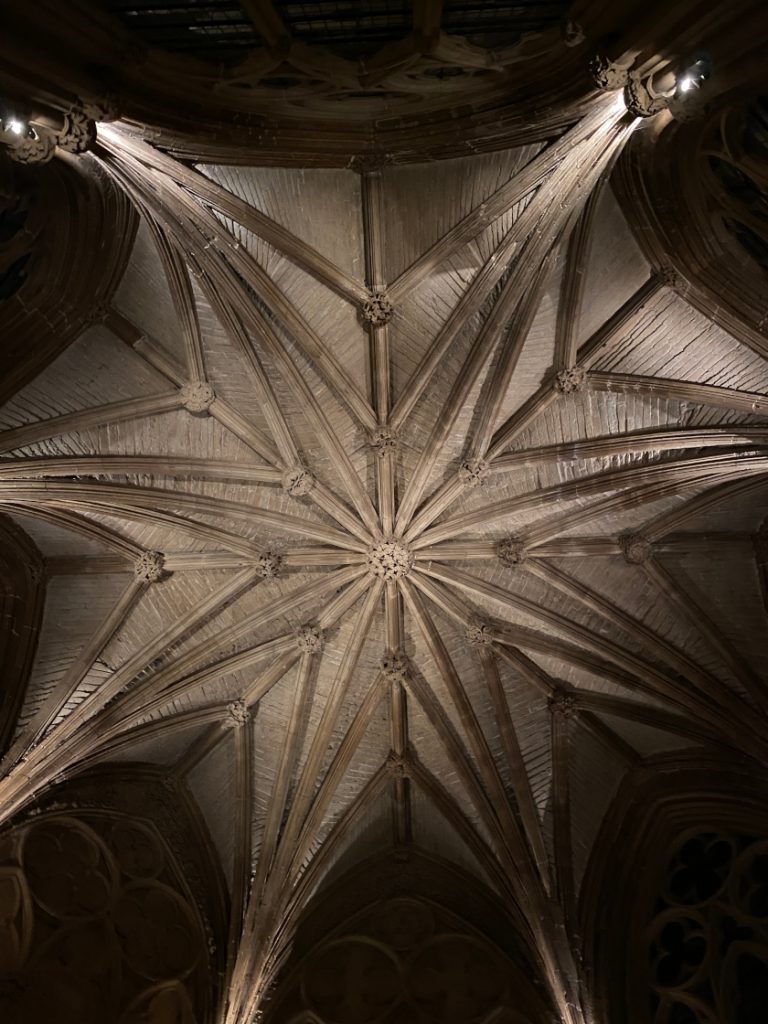
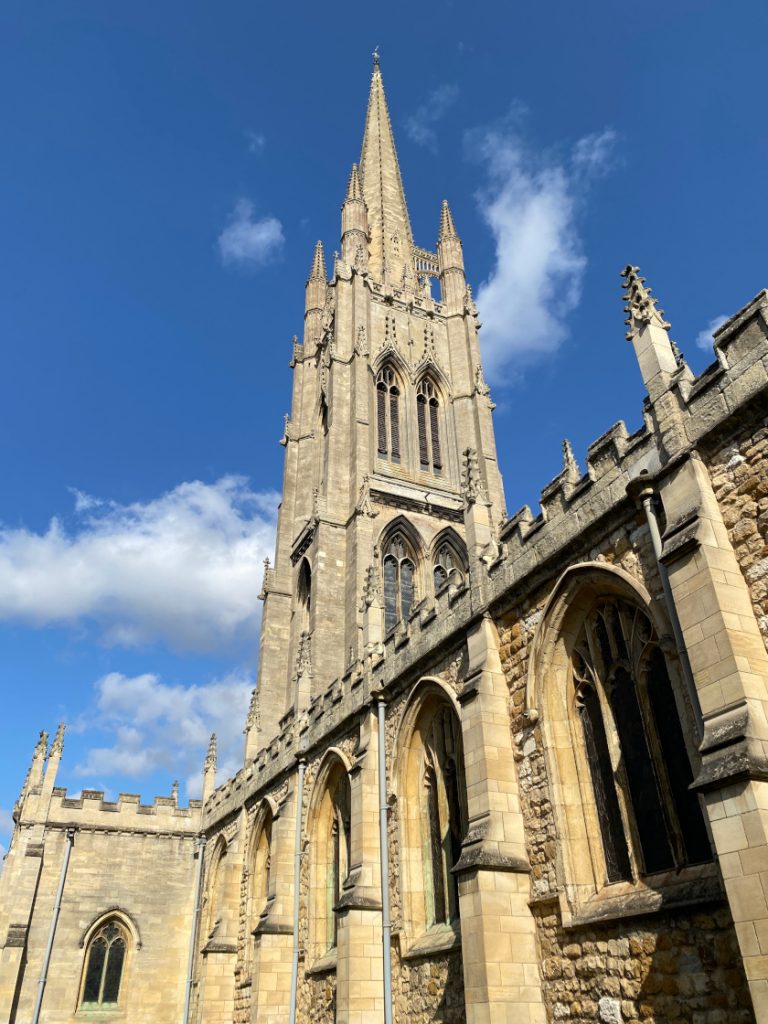
Middleton Hall (Tamworth), the moatMirfield, the Church of the Resurrection, exteriorMirfield, the Church of the Resurrection, interiorMirfield, the Church of the Resurrection, the Harrison & Harrison organ in the West gallerySouthwell Minster – late evening view of the nave after a Southwell Music Festival concertSouthwell Minster – late evening view of the West end after a Southwell Music Festival concertSouthwell Minster Chapter House ceilingSt James’ church spire, LouthSt James’ church, Louth – interiorSt Leonard’s church, NewlandSt Leonard’s church, Newland – the John Nicholson organSt Swithun’s church, Retford, Notts
This month, two recitals stood out for me: a return visit to the grand old Binns in the Albert Hall, Nottingham and a chance to demonstrate the wonderful Tickell organ in Manchester Cathedral, which stands as a more than worthy tribute to its designer, Ken Tickell, whose sudden death before construction had even started was a great shock to the organ world – and a great impoverishment, too.
Manchester Cathedral – Quire caseThe Binns organ in the Albert Hall, NottinghamBinns organ console
The 1910 Peter Conacher organ in Pontypridd Museum
On 16th July I made my first visit to Pontypridd, where one the town’s beautiful chapels has been very sensitively turned into a museum. The Conacher organ is loved and there is a determination to refurbish it; hence my visit. It’s a handsome piece of work, well worth a photo here.
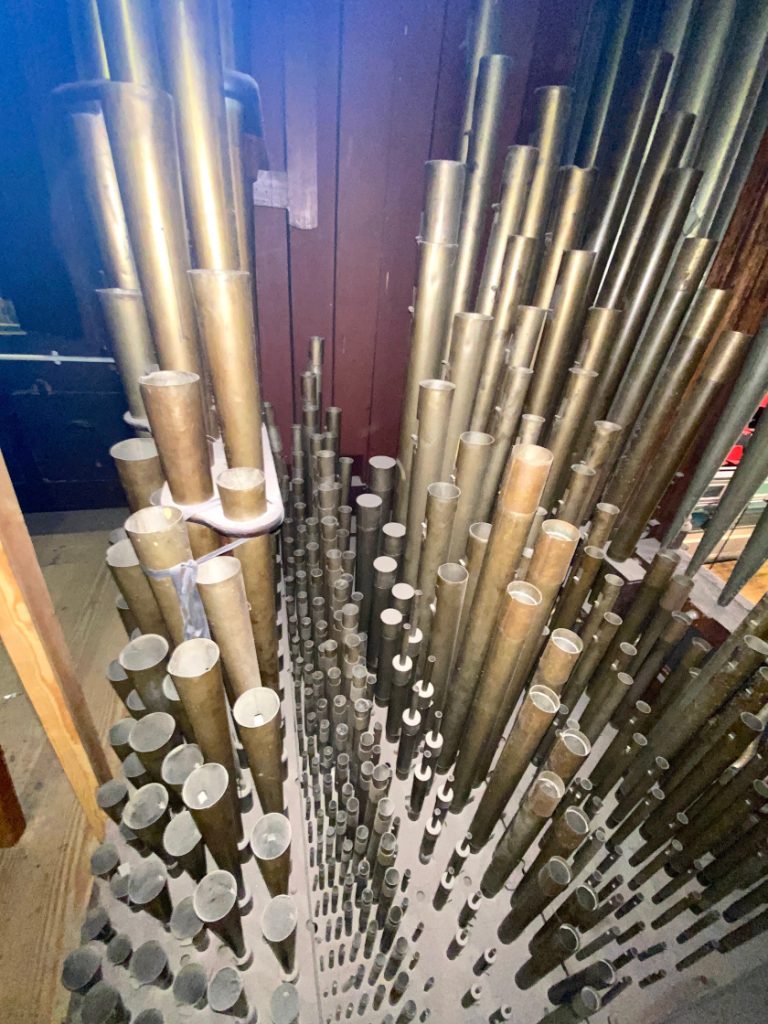
One of my most enjoyable days in July was revisiting the famous Cavaillé-Coll organ in Warrington’s Parr Hall, on Monday 14th. I had the very welcome chance to climb around inside as so could take photos, a few of which it is a pleasure to share here. The organ still plays pretty well, but is not often used and in need of some t.l.c.
Grande Orgue pipeworkPédale pipesRécit mixtureRécit pipeworkRécit reservoir