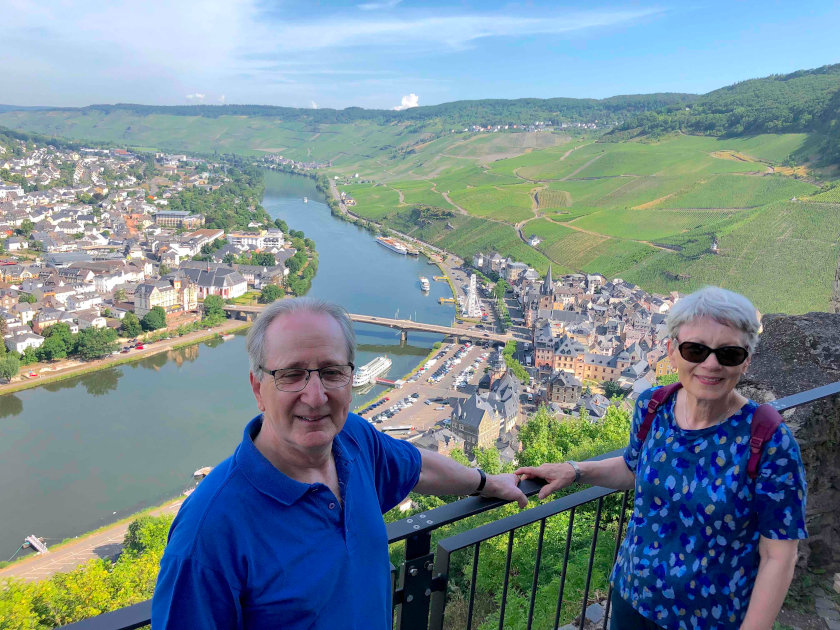
Returned a couple of weeks ago from a blissful fortnight cruising on the Rhine and Moselle. Took in churches, art galleries, castles and museums along the way from Amsterdam to Basel, including visiting Arnhem, Baden-Baden, Bernkastel, Colmar, Cologne, Heidelberg, Koblenz, Rudesheim, Speyer and more. No ordinary trip for us, as it was our 70th birthday celebratory ‘treat’ – followed on 8th July by Acis & Galatea at Nevill Holt Opera, and then on 14th July by Alcina at Glyndebourne, where our old and very good friends, Jeff and Alison Sutherland-Kay joined us for a glorious couple of days. Roll on our 75th, I say!
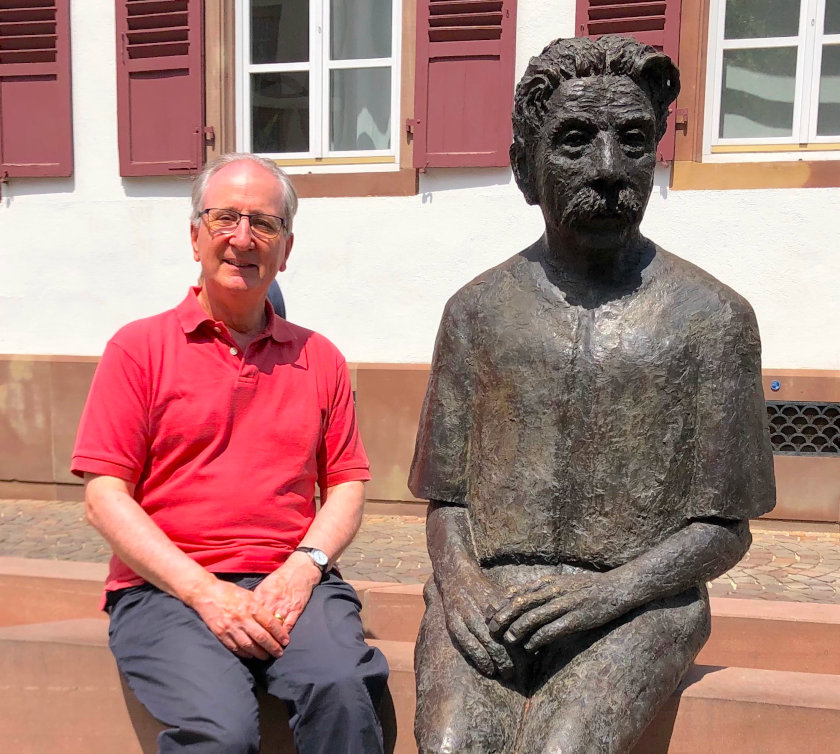
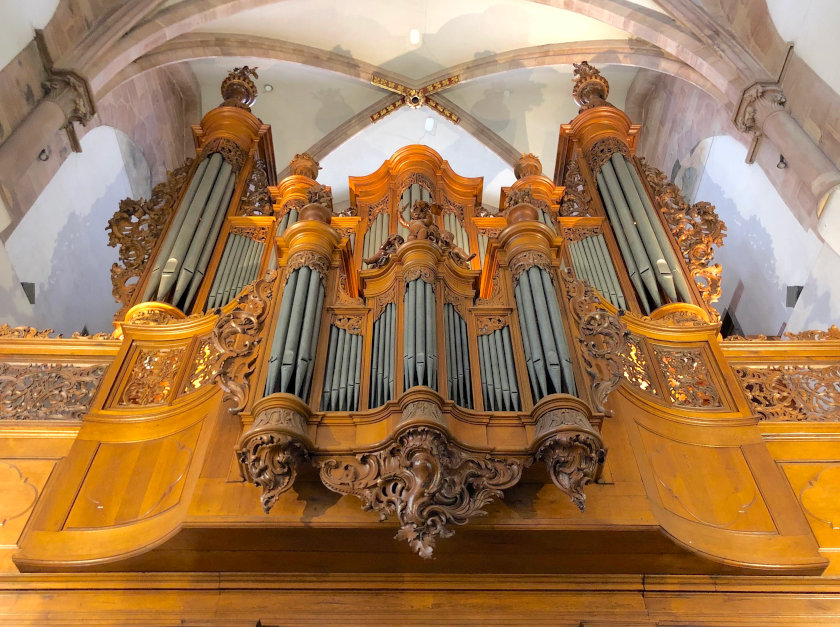
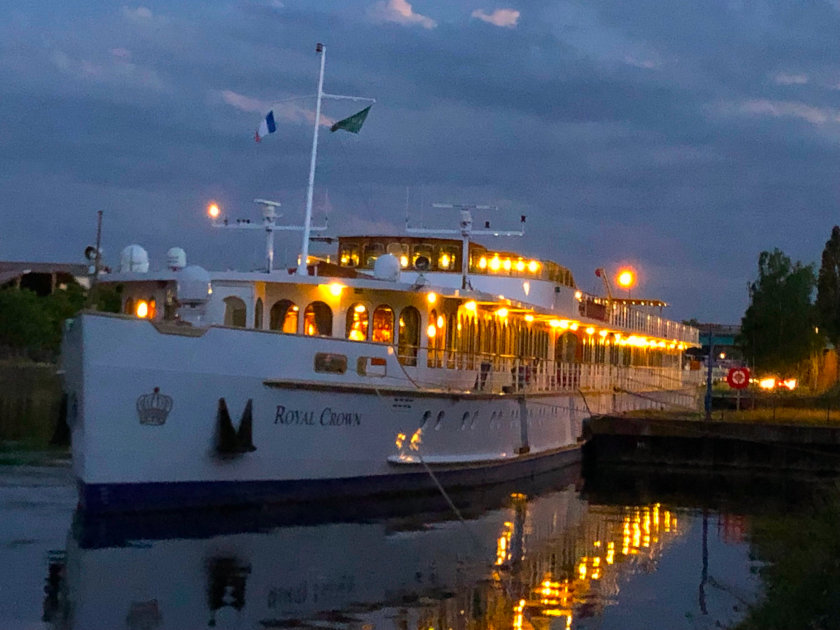
Paul with Dr Albert Schweitzer in StrasbourgSilbermann case in StrasbourgThe Royal Crown at dusk
The last three days have been a most welcome return visit to Christchurch, Dorset, with its beautiful Priory and famous Willis / Nicholson organ. I’ve always enjoyed playing it, especially so since the Solo Organ (planned by my good friend Geoffrey Morgan, now Emeritus Priory Organist) was added. My recital celebrated several special people with anniversaries in 2022 (HM the Queen, César Franck, Ralph Vaughan Williams) and also brought to mind two who have recently died – Francis Jackson and Simon Preston. All went well and Anne and I enjoyed a stroll in glorious sunshine around the marina.
Paul with Stephen Cooper, in the nave of Southwell Minster
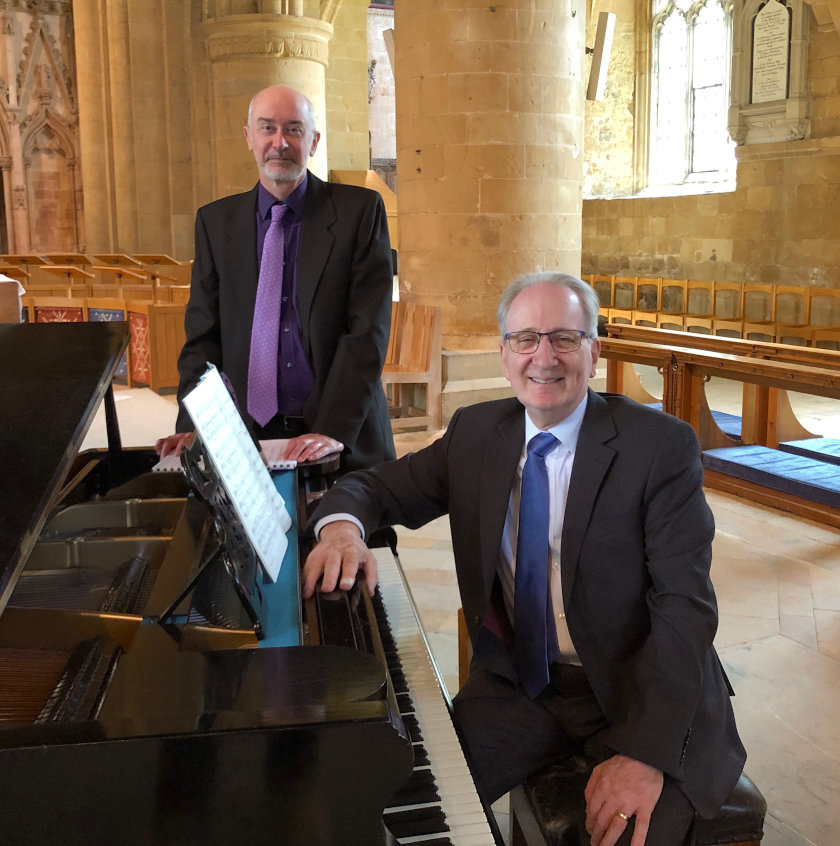
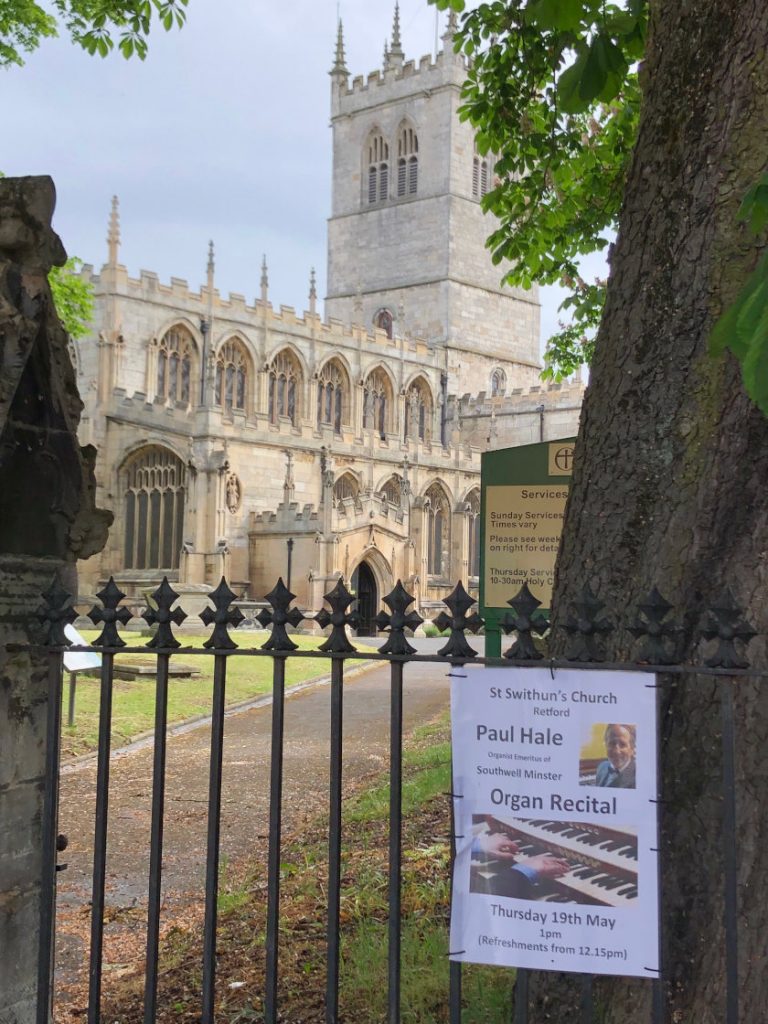
It’s been a busy few days since playing at Boston on Monday last week. First was a lunchtime recital at Retford last Thursday, then Saturday was spent in Guildford as President of the Organ Club, enjoying our cathedral and church visits. Off to the Isle of Wight after the weekend, to prepare a talk and demonstration programme (Jongen, Vierne, Franck & Hakim) on the very beautiful restored Mutin Cavaillé-Coll at Quarr Abbey. And then, today, I played the piano in a song recital with baritone Stephen Cooper at Southwell Minster. Dichterliebe was the centrepiece, preluded by songs by Quilter, Finzi and Southwell’s own Guy Turner. A real delight sitting again at the Bechstein grand in the Minster’s nave: a venerable piano, indeed, but perfect for song accompaniment. Next week it’s off on Wednesday to give a 12.30pm recital on Thursday June 2nd at Christchurch Priory. I always enjoy that organ, having first heard it as an organ-mad teenager, 54 years ago.
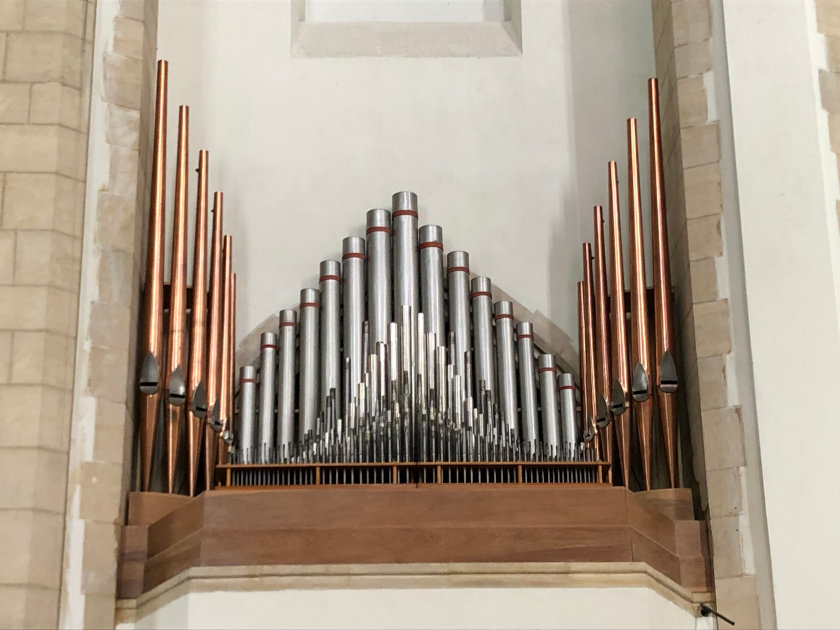
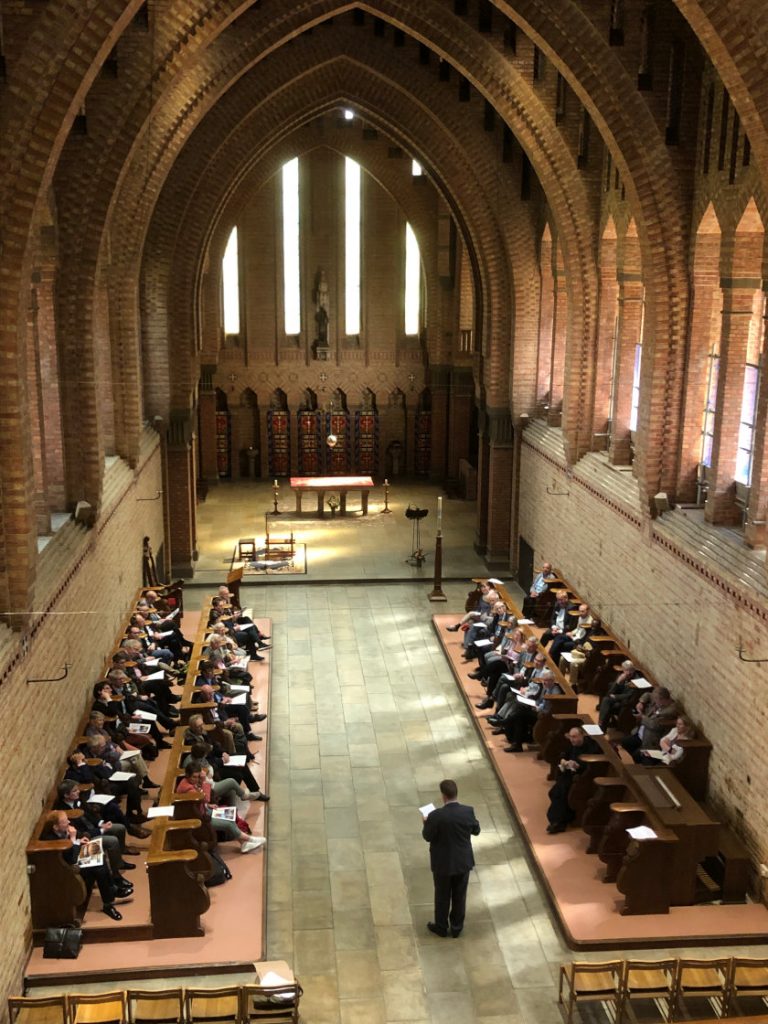
Paul’s poster outside St Swithun, RetfordThe attractive ‘functional display’ of Guildford Cathedral’s Positive OrganMembers of the Cathedral Organists’ Association in Quarr Abbey
Today I gave a lunchtime recital on an organ, the quality of which proved a very pleasant surprise. Centenary Methodist Church in Boston (Lincs) has the finest Cousans of Lincoln organ I have ever played. It dates from 1913 and was rebuilt very successfully by Bishop & Son in 2000, with the addition of a Great Mixture and Pedal Trombone. Beautifully voiced yet really powerful (rather like a big Binns) – one can readily imagine it leading 1,000 Methodists in full song – its heavy-pressure reeds are superbly voiced and added a real thrill to the louder works in my programme. Such limpidly beautiful flutes, too. I look forward with relish to a return visit to this grand building and its splendid organ.
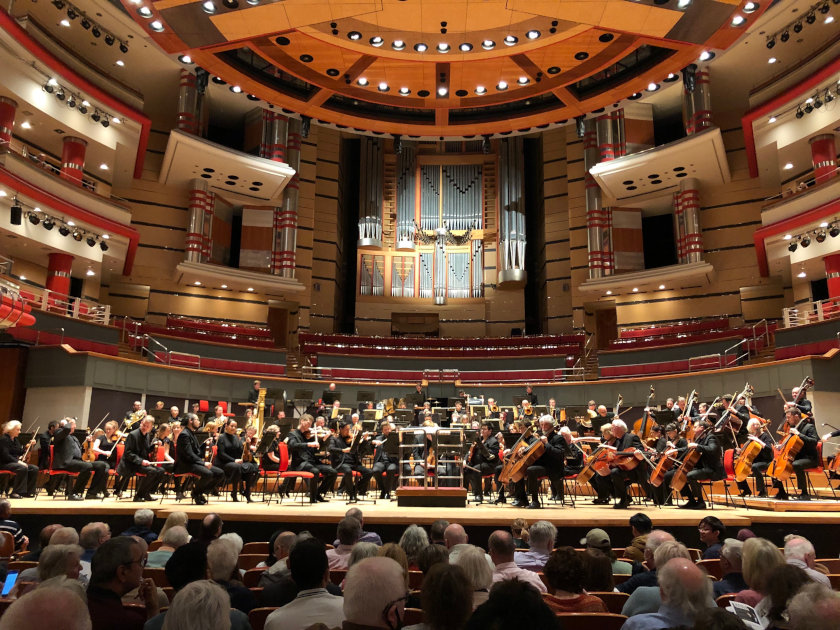
To my shame, I have never before today heard Mahler’s Fifth Symphony in a live concert – only in recordings and on the radio. However a CBSO concert this afternoon in Birmingham’s Symphony Hall rectified that in grand style. Conducted by Christopher König, the orchestra (my favourite, since teenage immersion in its Town Hall concerts under Louis Fremaux) was on top form and brought out the whole extraordinary musical and emotional depth of this glorious work. The concert opened with a delightfully poised, elegant performance of Mozart’s piano concerto No.27 in which the soloists was Paul Lewis, whose crystalline touch enchanted and delighted a large and enthusiastic audience. It’s such a thrill that a degree of normality has now returned to the concert hall – somehow it makes hearing such masterpieces all the more special.
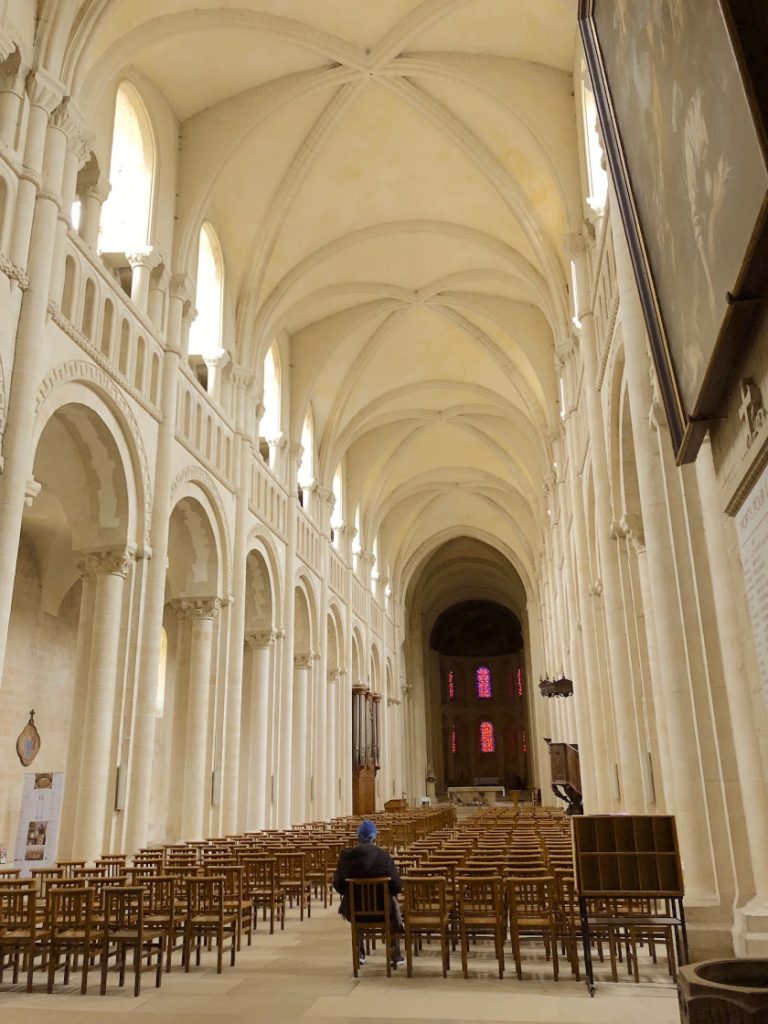
One of the benefits of Anne’s and my birthdays being only two days apart (March 6th & 4th respectively) is that we can usually justify an excellent joint celebration – especially for ‘significant’ birthdays like this year’s. So off we sailed to Caen on March 1st, to stay with some old friends in their delightful old house near the city centre. Our time there was fuelled with stimulating company, liberal quantities of champagne, glorious food – and ‘British’ weather (well, you can’t have it all). Organs did not figure, though as we’d not visited the austere but beautiful Norman Abbaye aux Dames before, we did just that, hence the photograph. It was founded in 1062 by Matilda of Flanders, wife of William the Conqueror, who built the larger Abbaye aux Hommes (1066 – yes, that year) half a mile away. The latter has a famous Cavaillé-Coll in the west gallery, whereas the former nuns’ church makes do now with a more modest Orgue de Chœur. Such a delight to travel abroad again after two years of being under restrictions.
Over the past fortnight I have visited and surveyed two interesting organs. All are in buildings of considerable beauty, perhaps little known to organists. I mention two here: All Saints, Basingstoke, and Beaulieu Abbey. All Saints, with its sturdy Hunter organ, was built in just two years during the first world war, and is a fine example of the work of Temple Moore; the sort of church which brings you to your knees when entering. Beaulieu Abbey church is most unusual in that it is the former refectory of Beaulieu Abbey, built in the thirteenth century. It retains the stone Reader’s Pulpit from which a monk would have read Scripture at meal times. Needless to say, there is nowhere sensible for an organ, so J. W. Walker contrived a compact instrument for an elegant freestanding case designed by Blomfield.
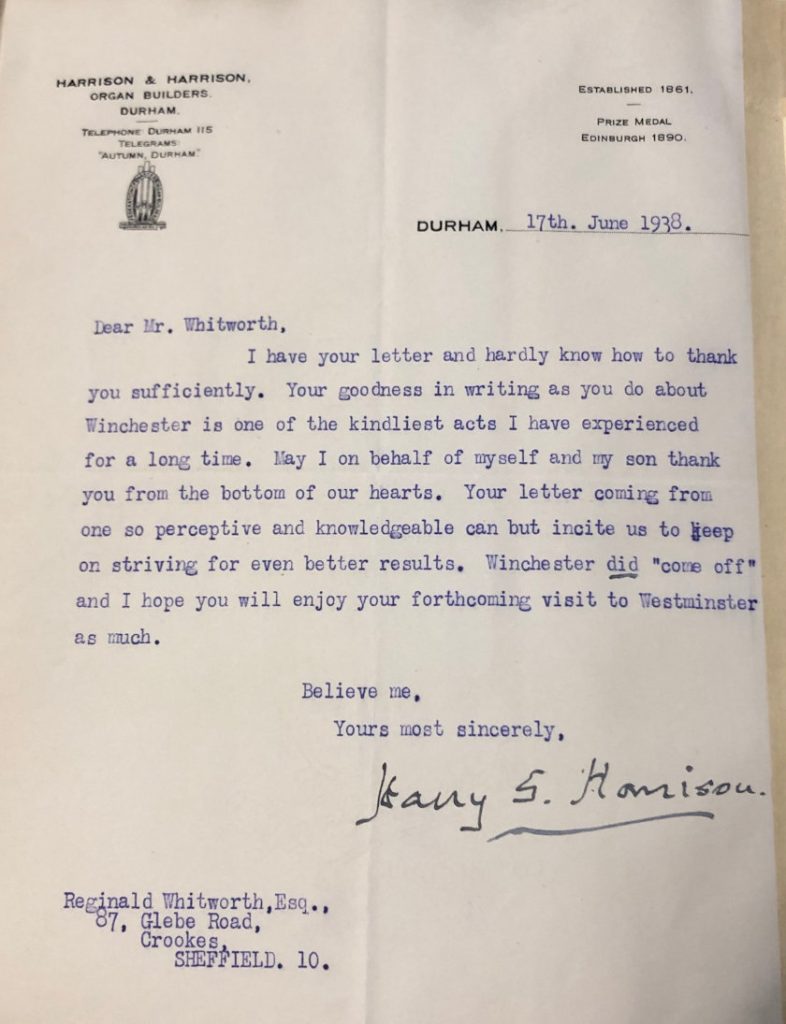
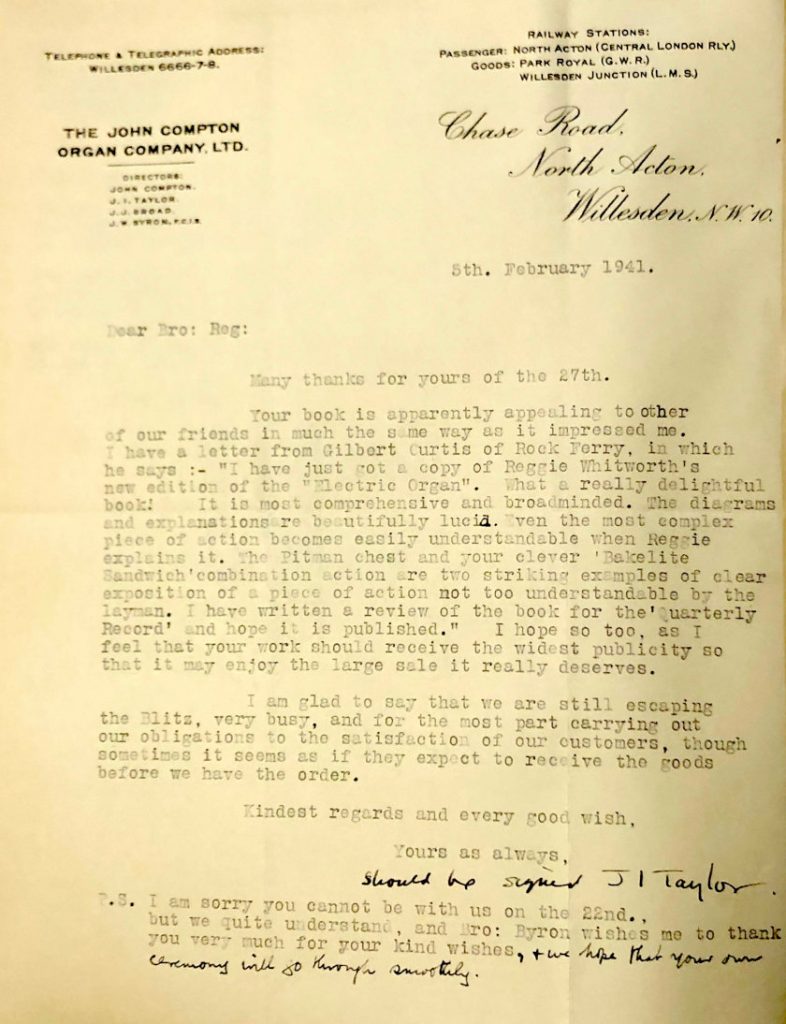
On January 11th I spent the day in the Sheffield City Archives looking at a treasure-trove of correspondence by the renowned organ expert Reginald Whitworth, who died in 1953. I have long enjoyed his books and articles on the organ – not least his splendidly clear drawings of organ mechanism – and was amazed to find several fat volumes of letters written to him by a vast range of organ-builders and organists from c.1918 up to his death. A return visit to the archives will be necessary, as I could work through only half the material in a day, but here are two letters which may be found of interest.
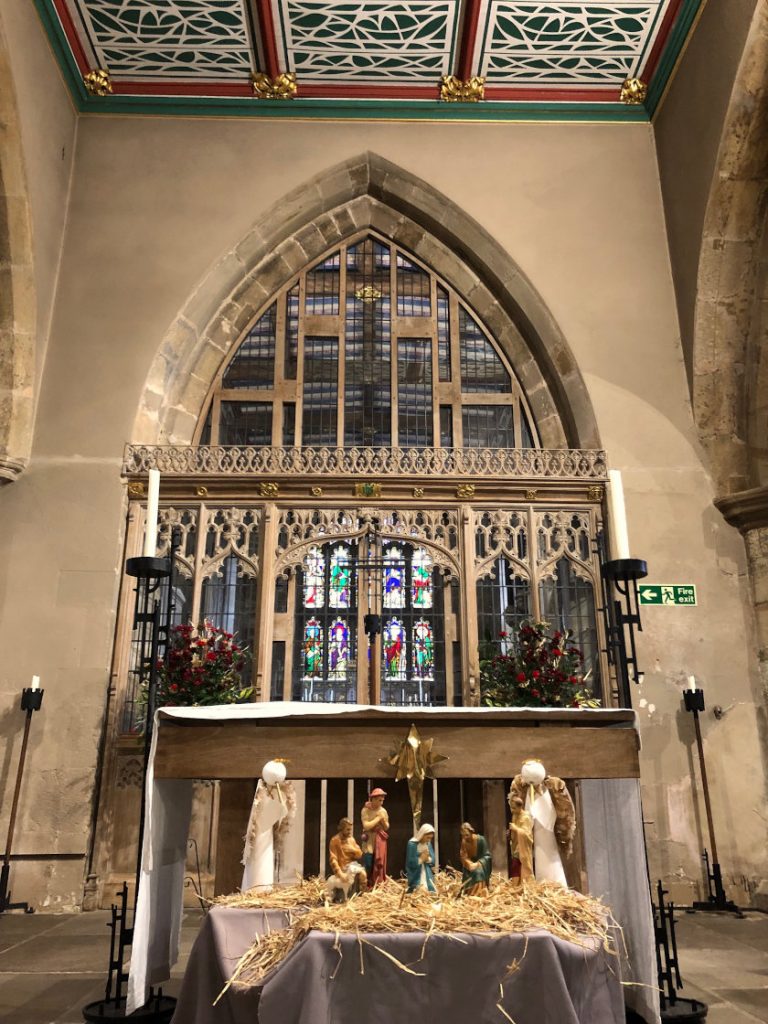
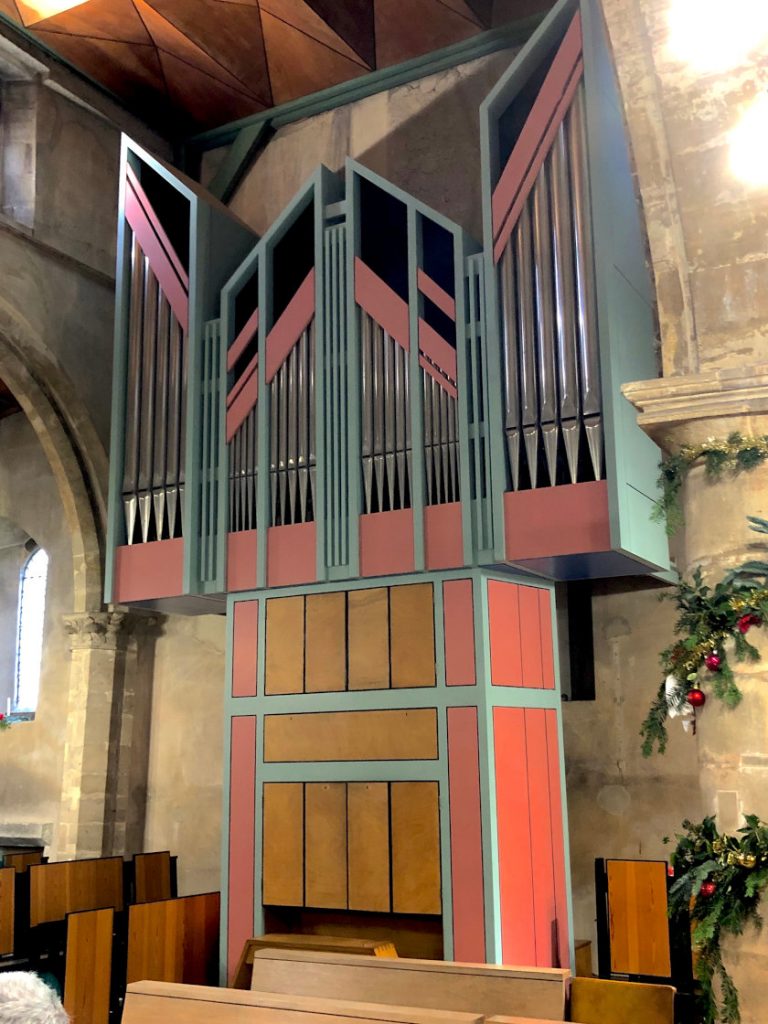
It’s been a good few years since I visited the ancient church of St Mary, Clifton – just outside Nottingham. On Saturday December 18th I had the pleasure of leading a choral workshop based on early a cappella music for Christmastide (Philips, Sweelinck, Händl, Clemens non Papa, Mouton, Byrd, et alia) in its nave. Pleasantly resonant, it boasts a fine west end organ (Marcussen, 1973) and a beautiful chancel, decorated by Bodley, glimpsed here in a photograph of the Crossing with crib in place, above which can be seen part of a typical decorated ceiling by the York architect George Pace.
Paul talking to the York & District Organists’ Association
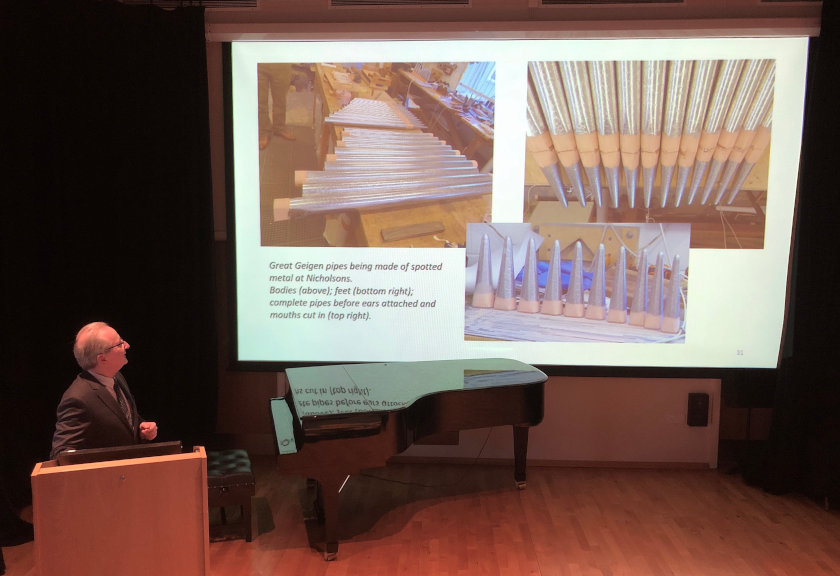
This is proving the busiest Autumn for several years. Over the past week, three more trips: two to perform, one to observe. On Saturday November 13th I was in York, to deliver a talk on my recent organ project to the York and District Organists’ Association. It was much the same talk as I gave in Taunton a week ago, but greatly enhanced by being in a fine room in the new Music Department at Bootham’s School, which boasted an enormous screen.
The Gray & Davison organ of St John of Beverley, Whatton
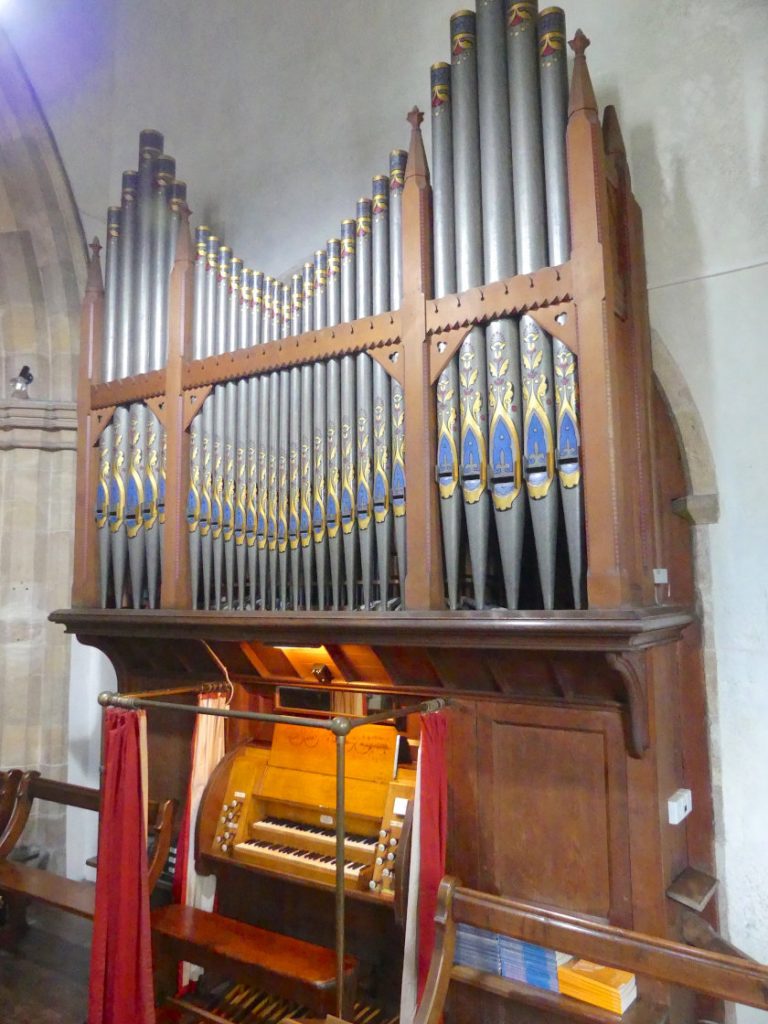
The next day I was ‘opening’ a charming little 1877 Gray & Davison at Whatton – close to our Bingham home – along with the excellent Cranmer Singers and their conductor Deborah Davies. The tenor-C Swell was a handicap but the restoration had been done immaculately by Chris Hind and Lewis Paul.
The nave of Worksop Priory, looking East
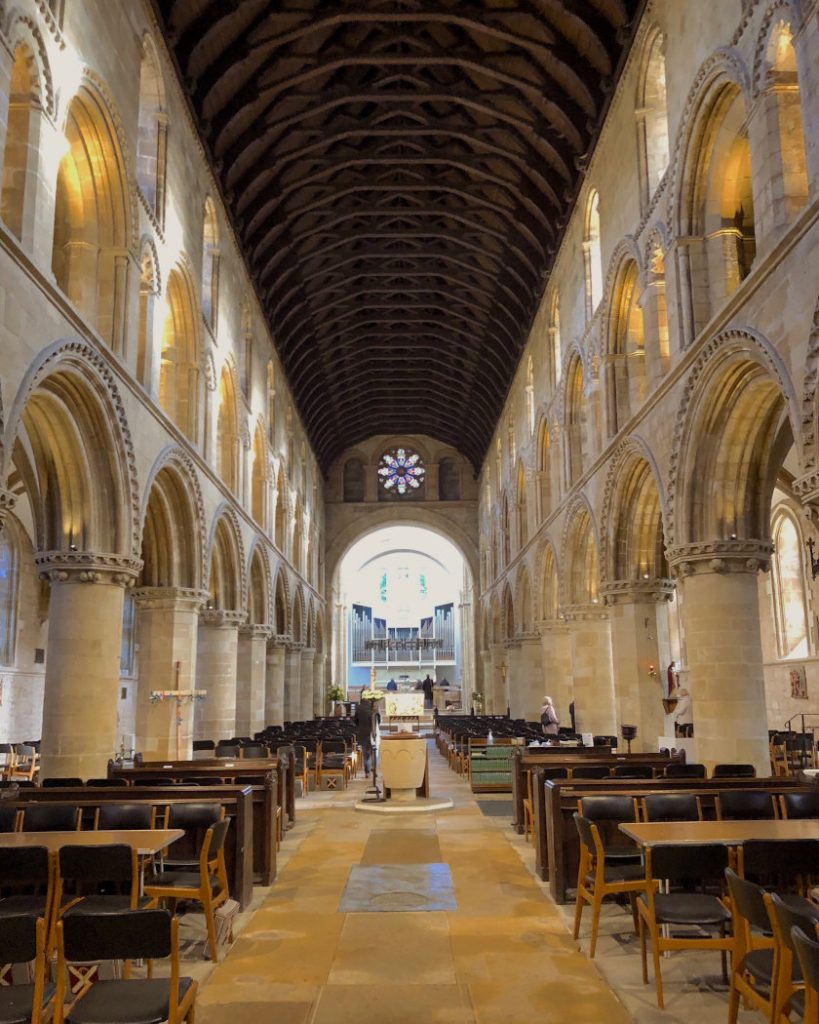
On Wednesday this week I joined my friends in the Nottingham & District Society of Organists for part of their trip to Worksop. First stop was the impressive Norman Worksop Priory, with its early Peter Collins organ standing proudly in front of the east wall, in an extension to the Priory church created in the early 1970s. Though its action has had to be reworked over the years, its tone carries surprisingly well down the lengthy nave, despite the lofty wooden roof. Then we visited the workshops of Goetze & Gwynn to observe interesting restoration work in progress (including a fairground organ). I peeled off after that but the NDSO visited Worksop College in the afternoon, where I had been involved in the organ rebuild a number of years ago. Alas, this coming weekend’s two activities have had to be postponed as my back has decided to say ‘enough is enough’ for a while.